
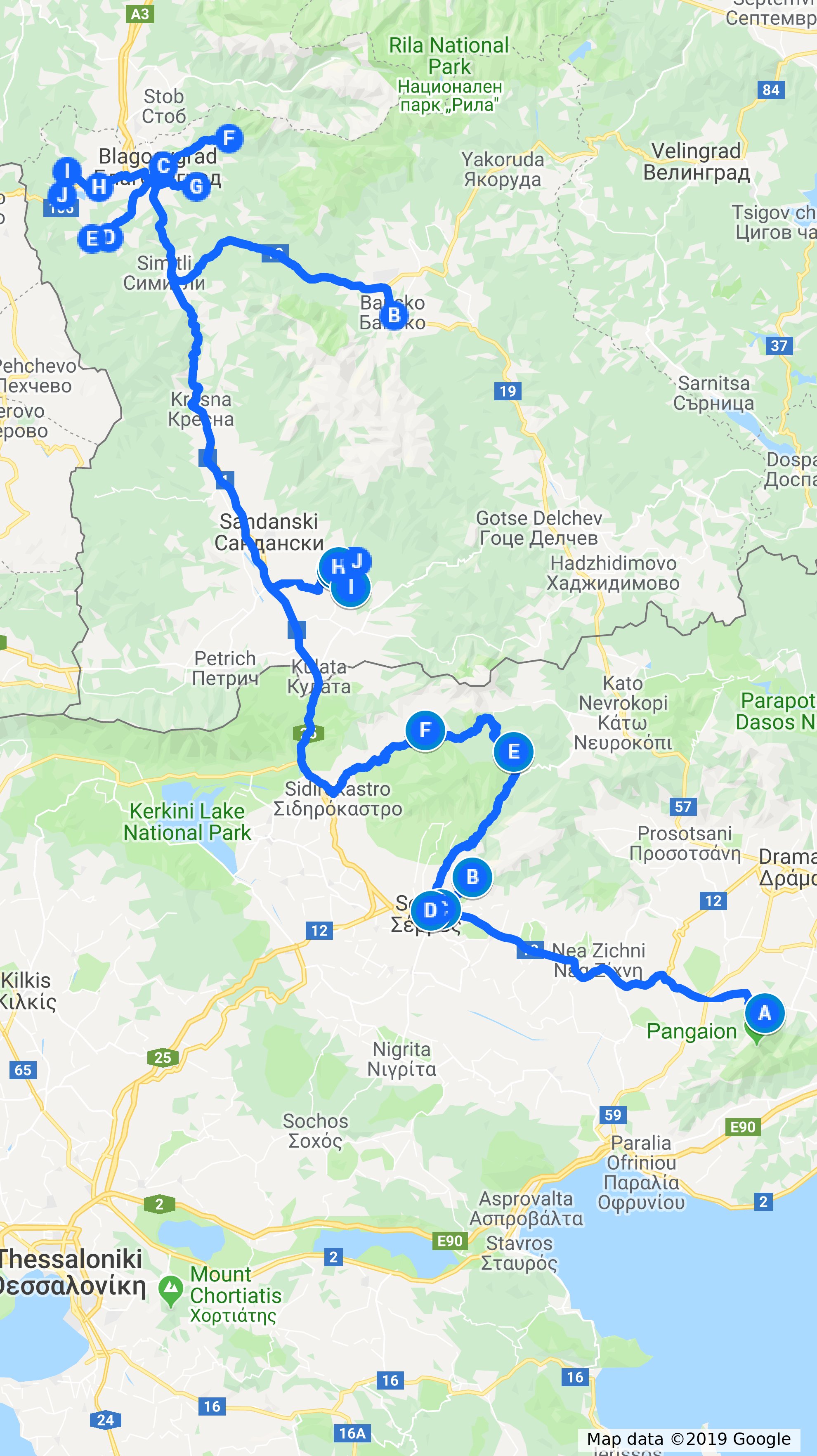
The valley of the Struma River and its adjacent areas offer extremely rich opportunities for religious tourism. Starting from the mouth of the river in the Republic of Greece, the first place to visit is the Monastery of the Holy Mary Eikosifoinissa.
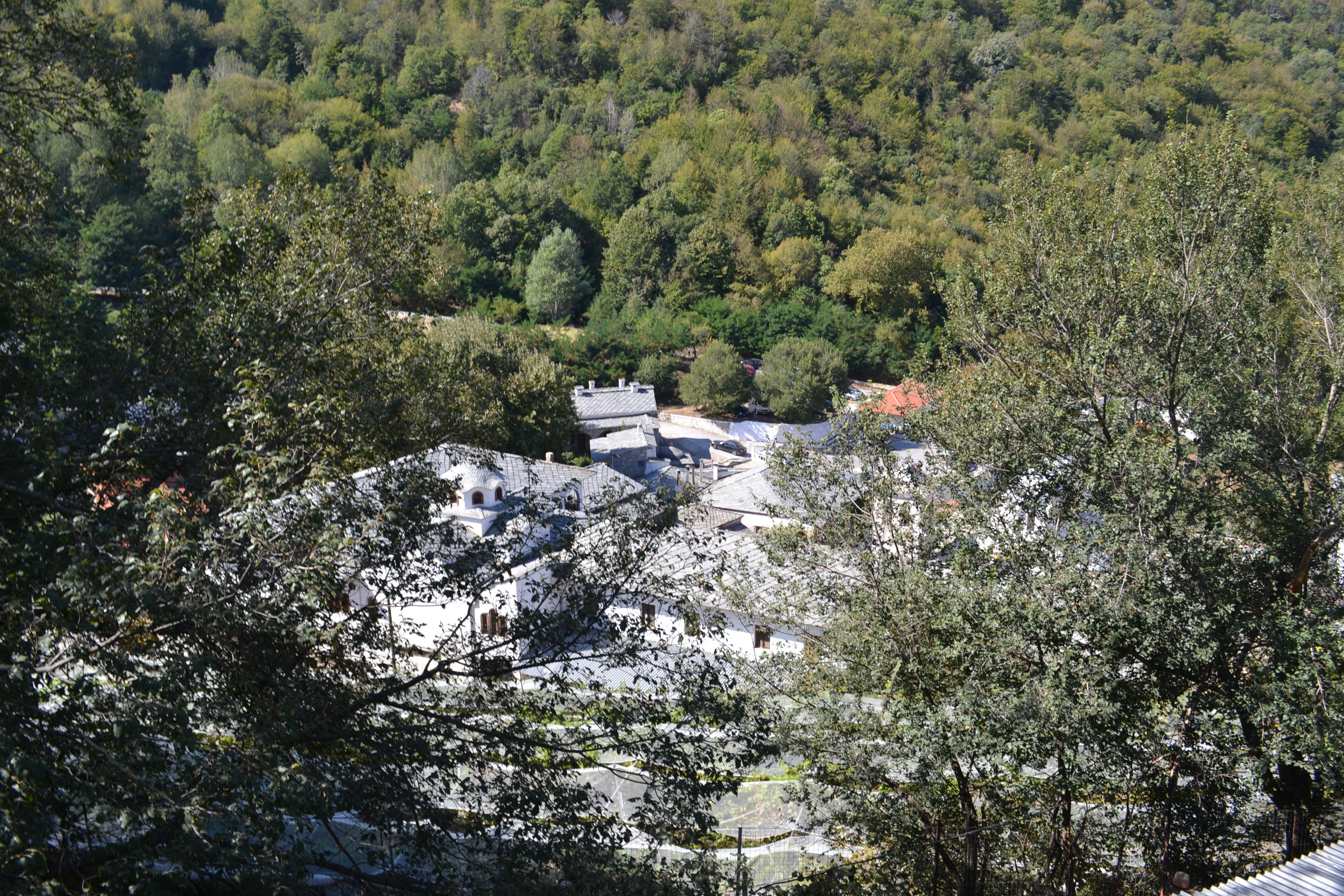
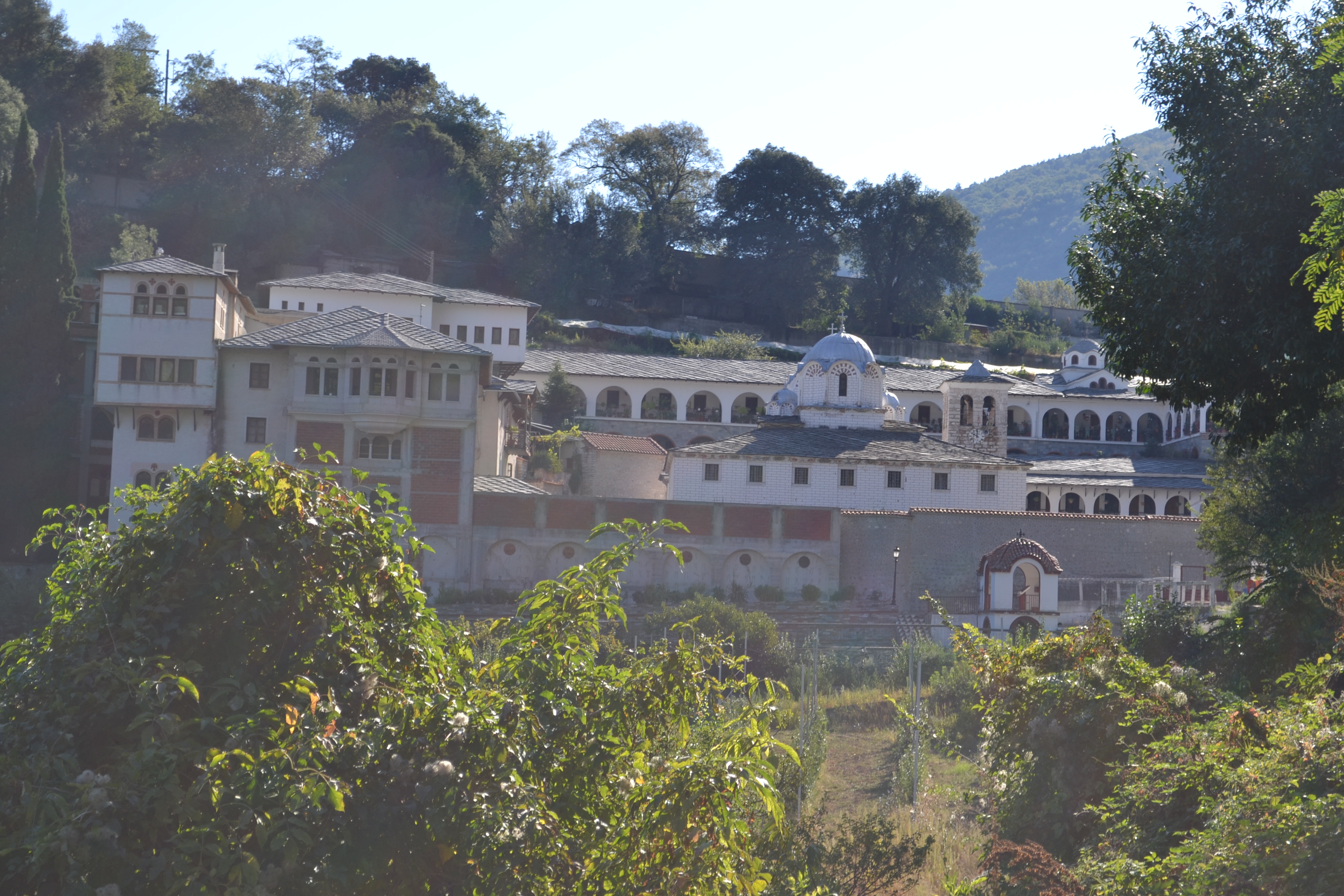
Monastery of the Holy Mary Eikosifoinissa in the Pangaion mountain
The Monastery of the Holy Mary Eikosifoinissa is a majestic medieval monastery. It is located 6 km northeast of Kormista village and is reached by beautiful curves on the road through the Pangaion Mountain.
According to various legends the monastery was founded in the 5th or 6th centuries. Its founder is Saint German who received a dream of his pleasing of god activity. The second donor and founder of the monastery was the abdicated patriarch of Constantinople Dionysius I. During his time the monastery flourished and became known to the Orthodox population. The two great donors are depicted above the second gate of the monastery.
The great renovation of the monastery happened in the nineteenth century when the main church was restored and the clock tower was erected.
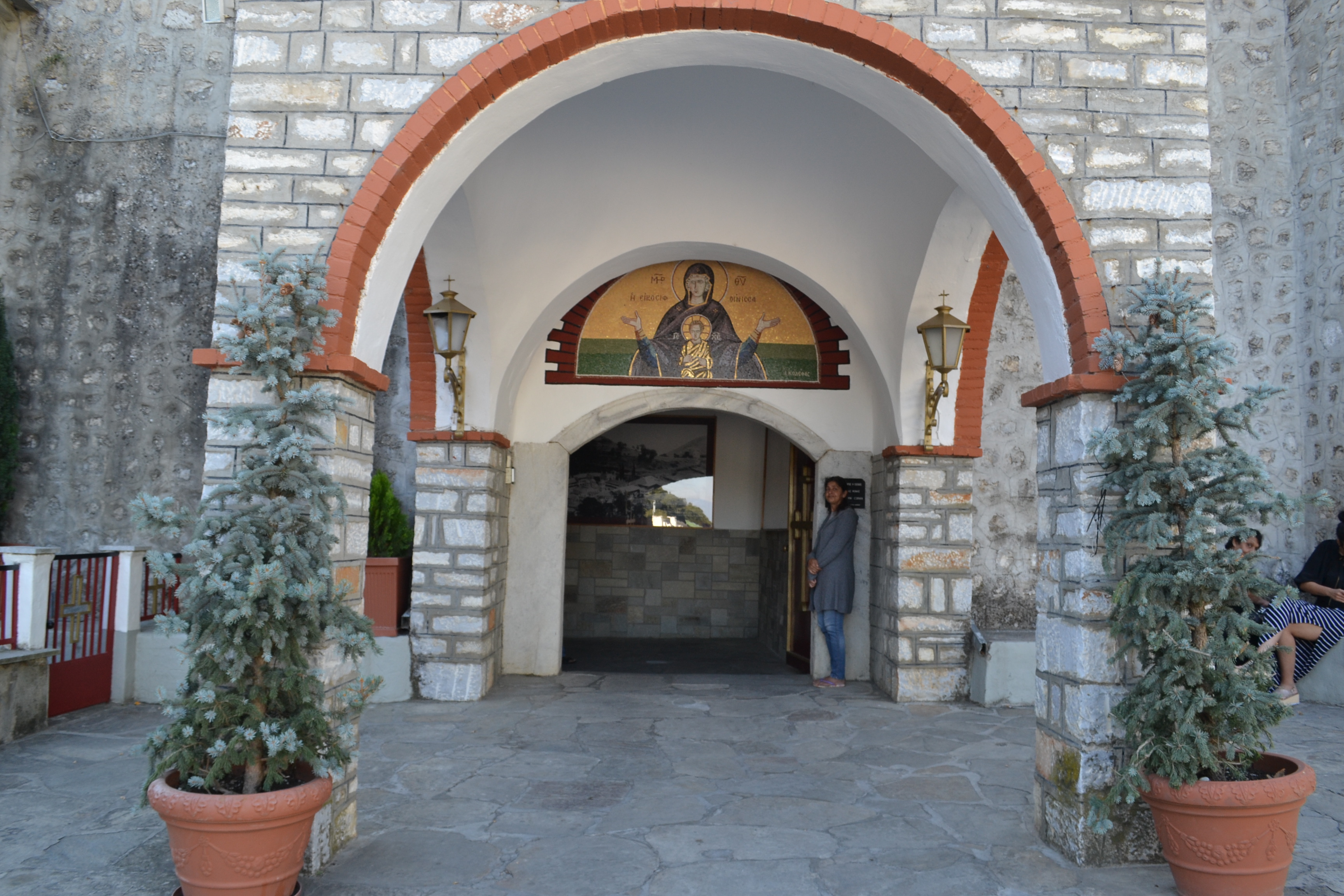
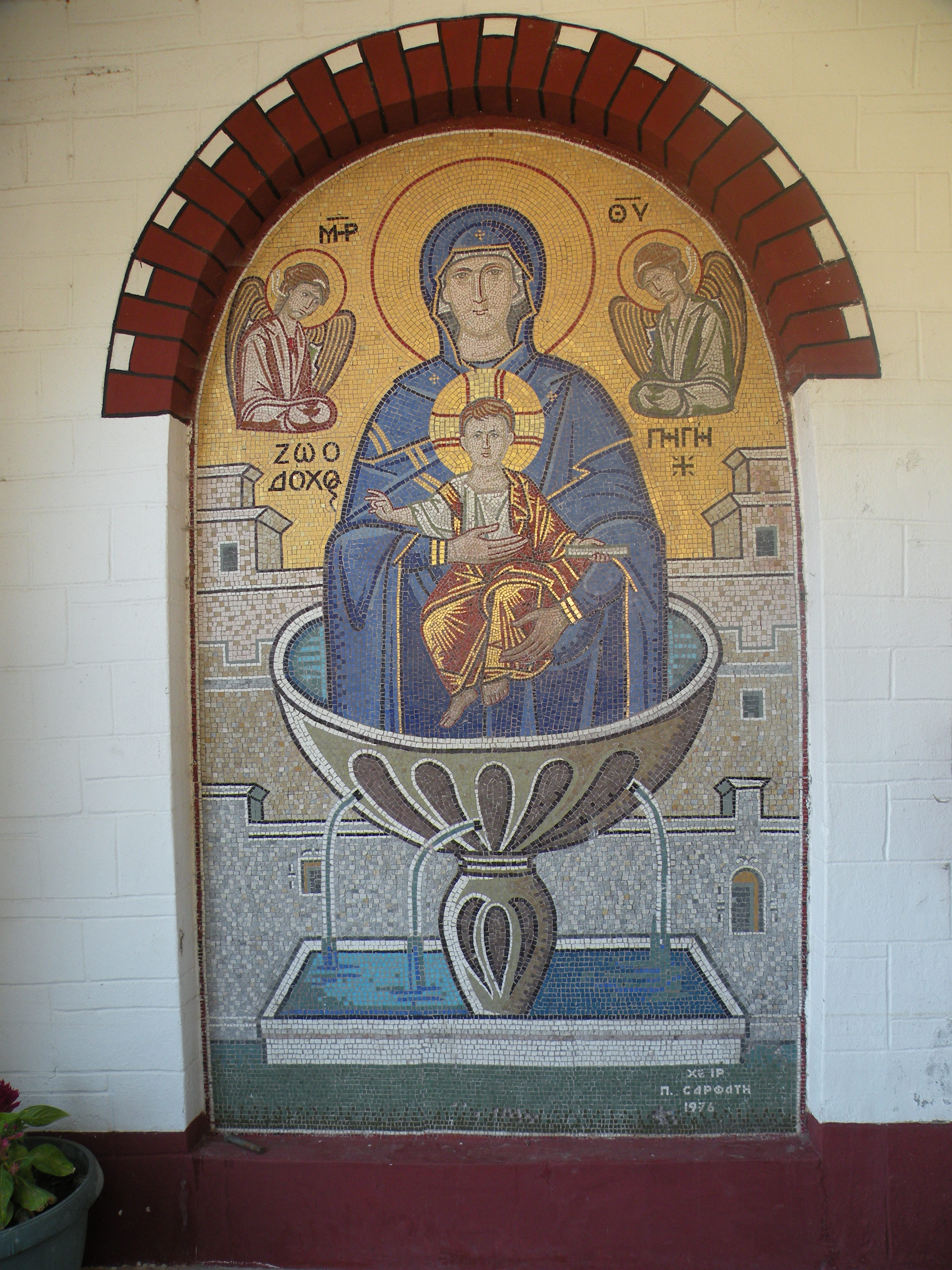
The frescoes in the Katholicon (the main church) are of particular value. They are painted by Matthias Ioanou and his assistant – the monk Ananius. The frescoes in the open arcade show the typical for the time scenes from “The Judgment Day”, “The Apocalypse” of John the Theologian, “The Six-Day”, “Right and Wrong Confession” etc.
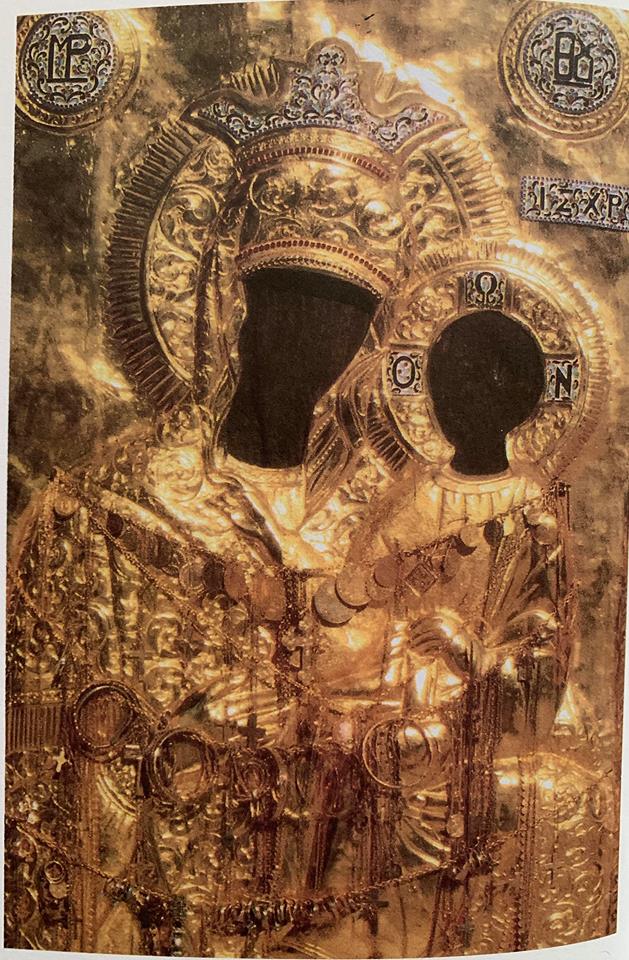
The greatest value – object of worship is the miraculous icon of Holy Mary Eikosifoinissa. According to one of the legends it is one of the icons drawn by Luke the Evangelist personally approved by the Mother of God, and according to another it is not created by hand but by a miracle of a purple light that gives her name. It is located a few meters east of the present monastery next to an old windmill. Its gold facing speaks about the special respect for the icon.
The main church has one of the most beautiful gold-plated iconostasis made with a very strong western influence. The monastery has a lot of remarkable objects, church plates, liturgical books and manuscripts.
Monastery of St. John the Forerunner (Prodromos), Serres
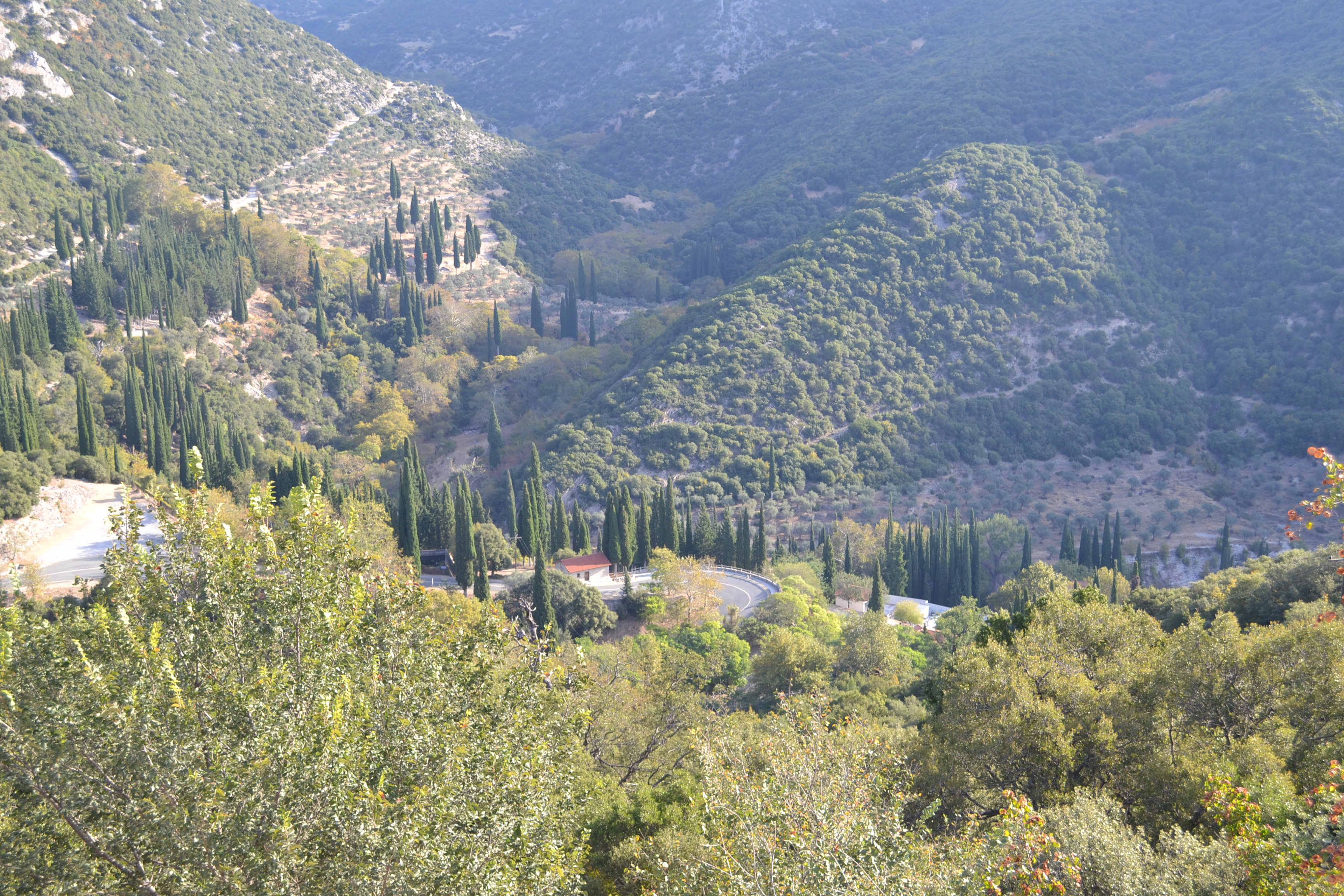
Traveling north along the main road we reach the town of Serres. There is another holy monastery in the city surroundings – the monastery of St. John the Forerunner (Prodromos). It is located 10 km northeast of the town of Serres, at the foot of Menikio Mountain. It is reached by an asphalt road. The preserved huge cypresses around the monastery strengthen the tourist’s sense of being in a divine place.
The monastery was founded by Ioannikios after he stayed in Mount Athos and in a desert cell in Mountain Menikio (Menikion). In 1270 he decided to found the monastery of St. John the Forerunner (Prodromos). His nephew Joakim extended the monastery. In 1332 the monastery acquired a staturopical status and was owned by Mount Athos.
After the fall of the region under Ottoman rule many of its privileges have been destroyed but the local population continues to maintain and protect it. In the period from 1457 to 1462 the holy cloister accommodated Gennadius Scholarius, the first patriarch after the fall of Constantinople who died and was buried in the monastery.
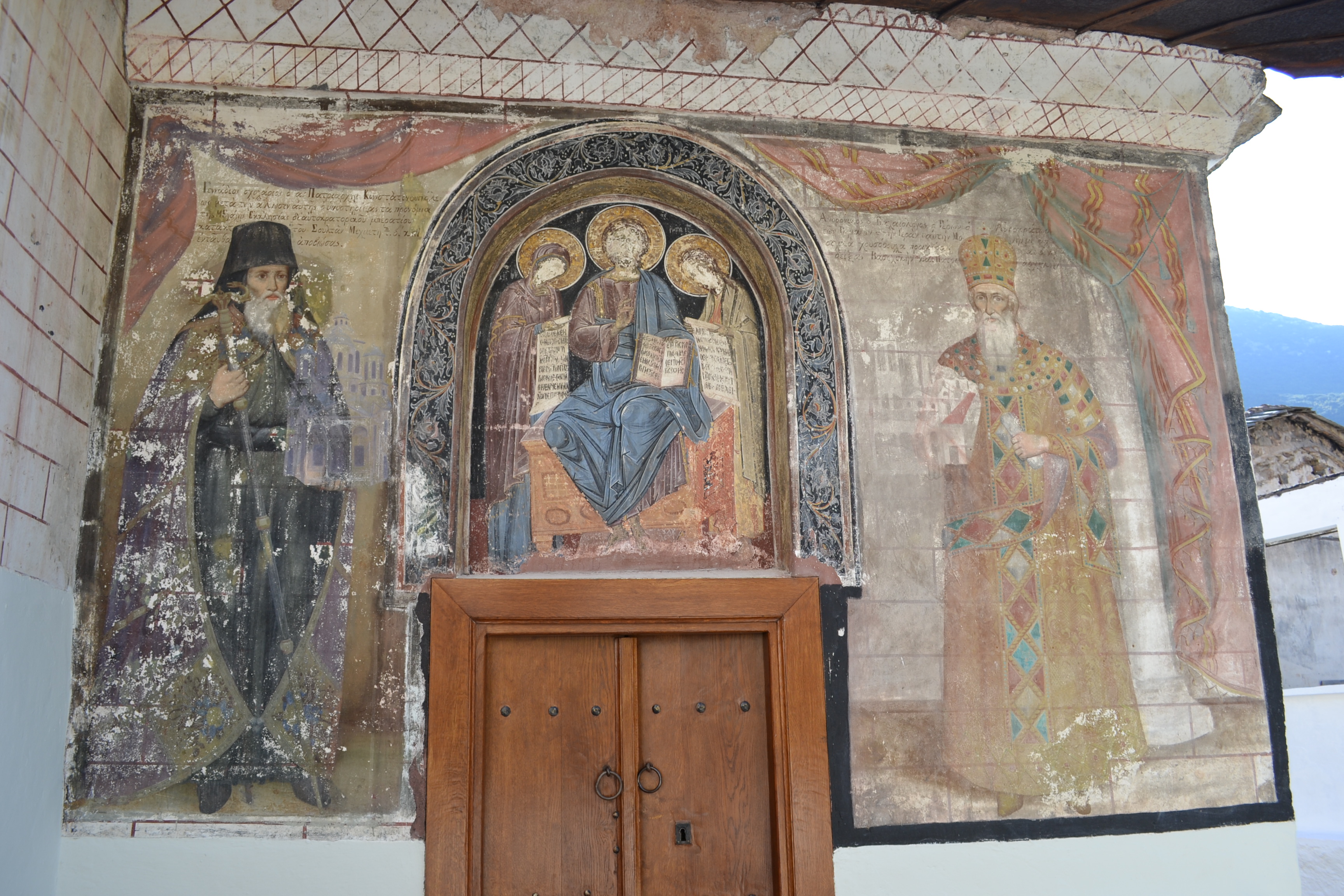
We see the portraits of the two great donors Ioannikios and Joakim right at the entrance of the monastery.
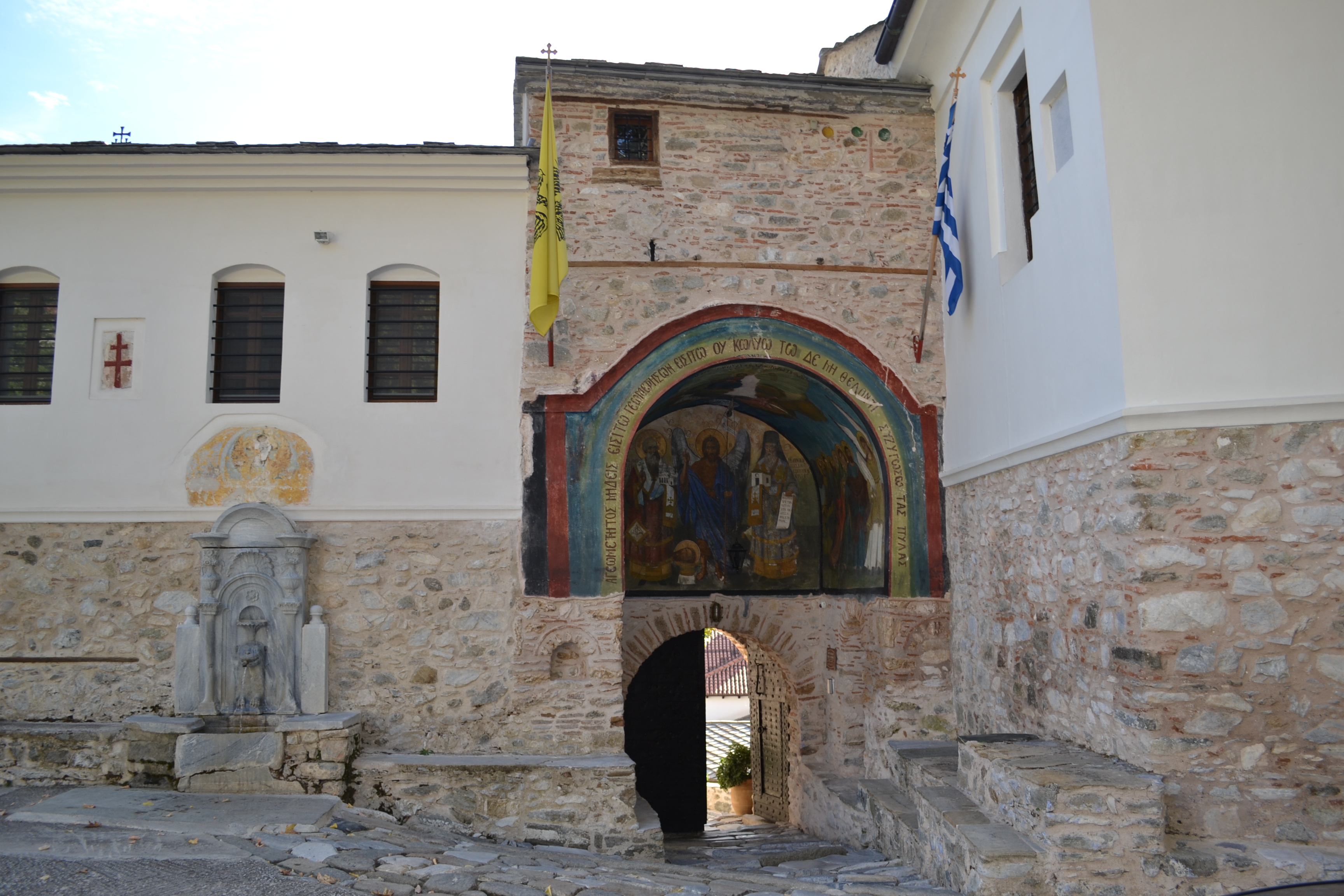
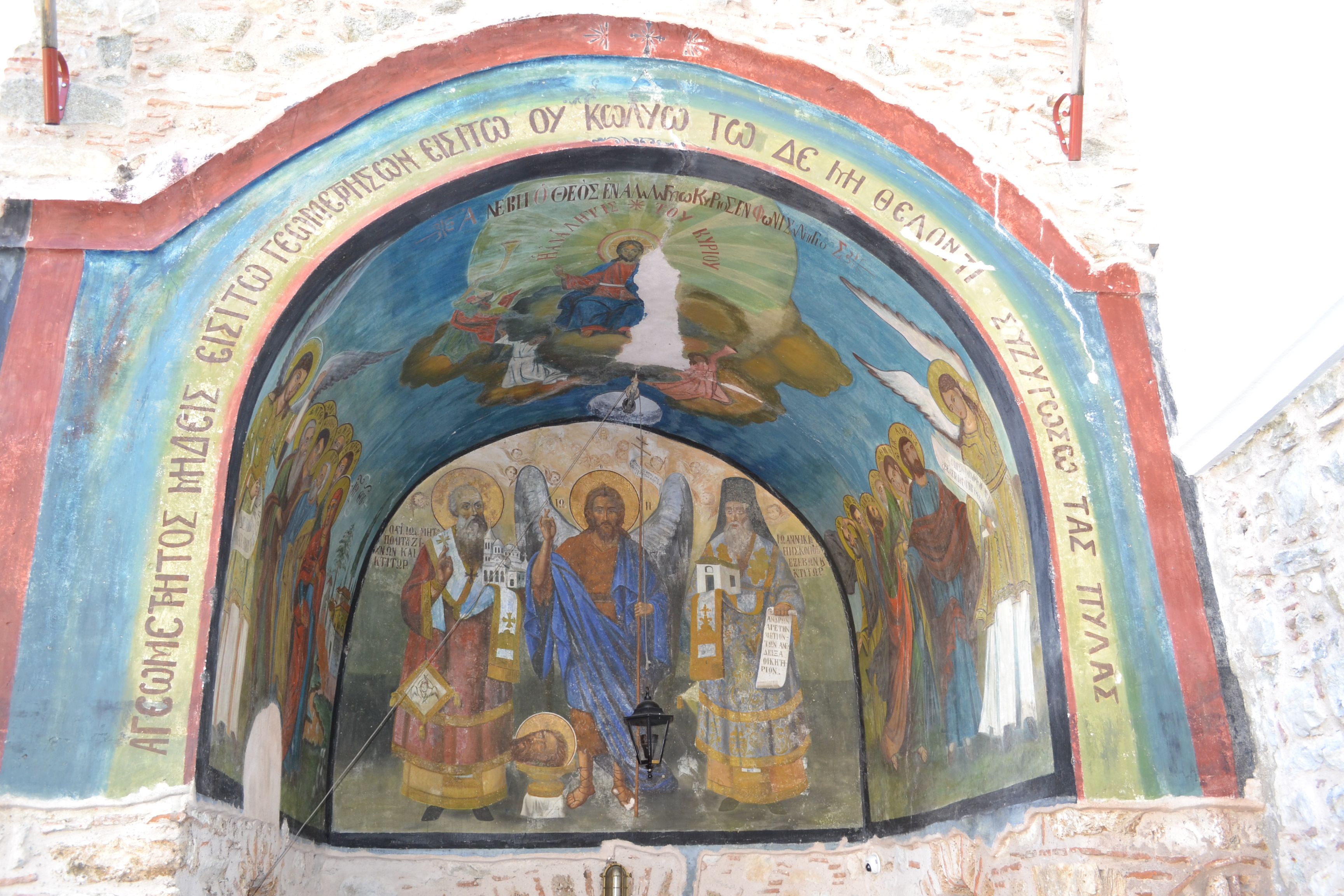
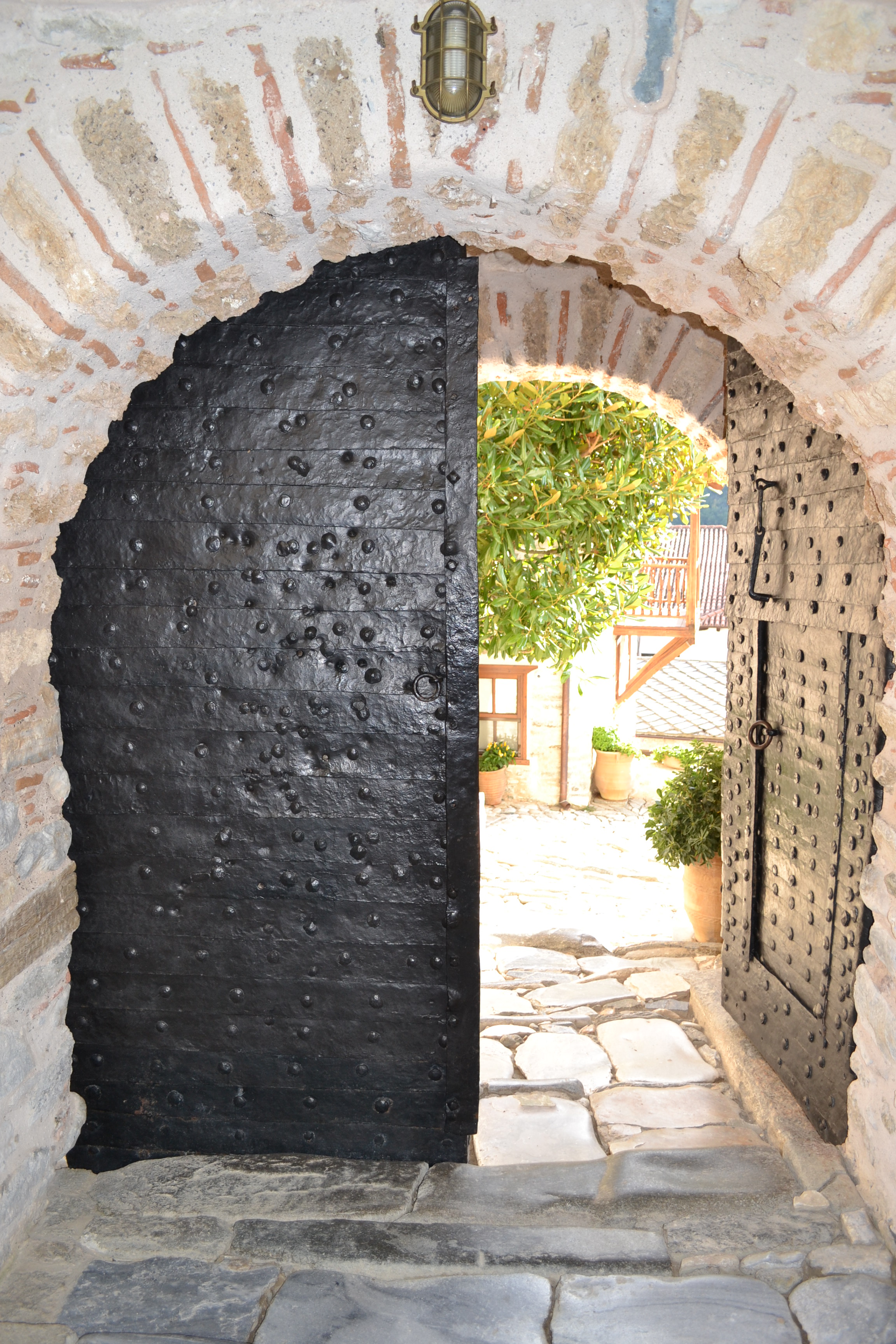
The monastery’s gate is massive and strong, typical of the Ottoman period, due to the uncertain life of Christians.
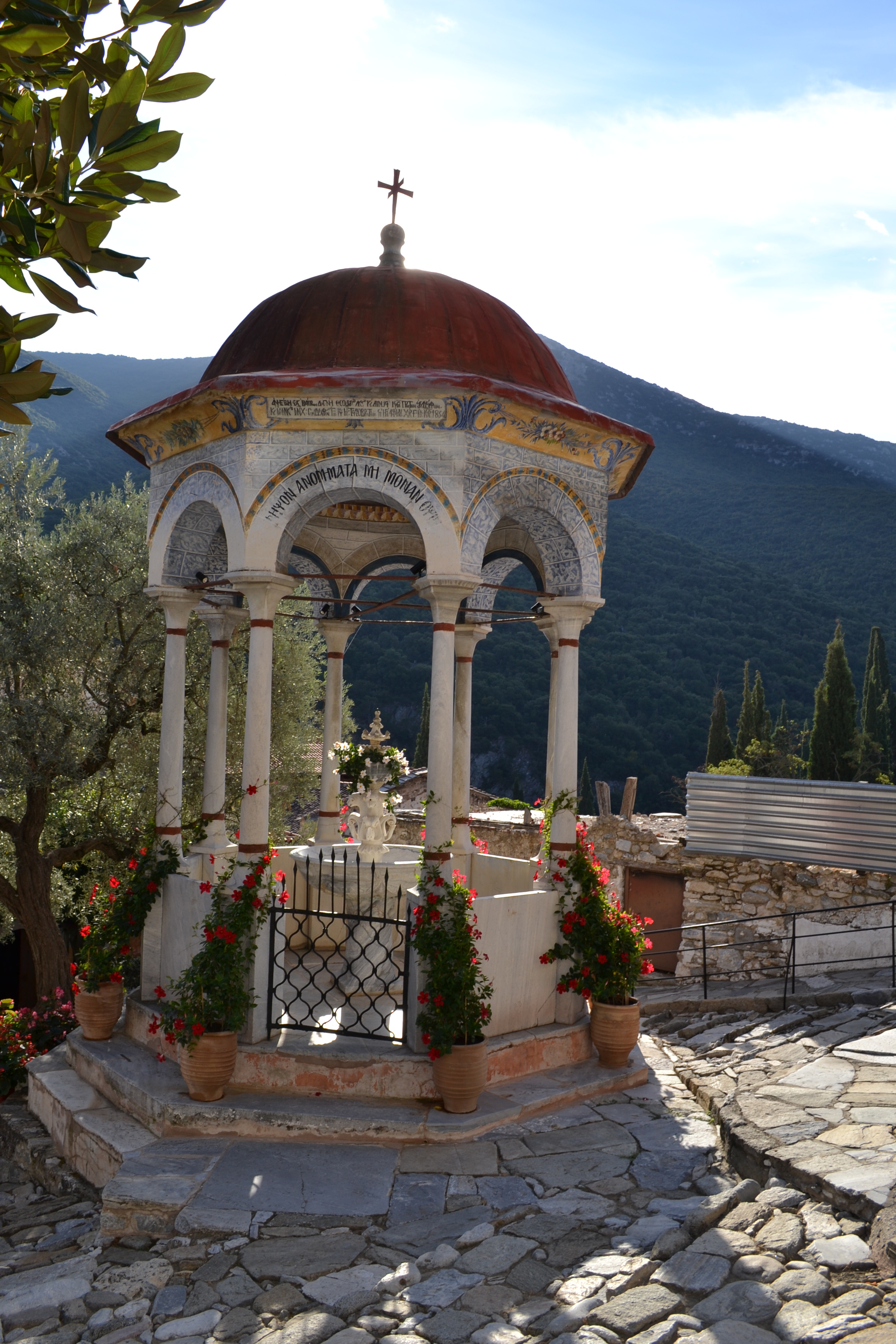
The center of the monastery courtyard is occupied by the church (Katholicon), to the west of which is the phiala built in 1854. It was used for the blessing of the waters during the Epiphany feast and the first day of each month.
The church is surrounded by monastic cells, the abbot’s room, the building of the monastery school and the dining room.
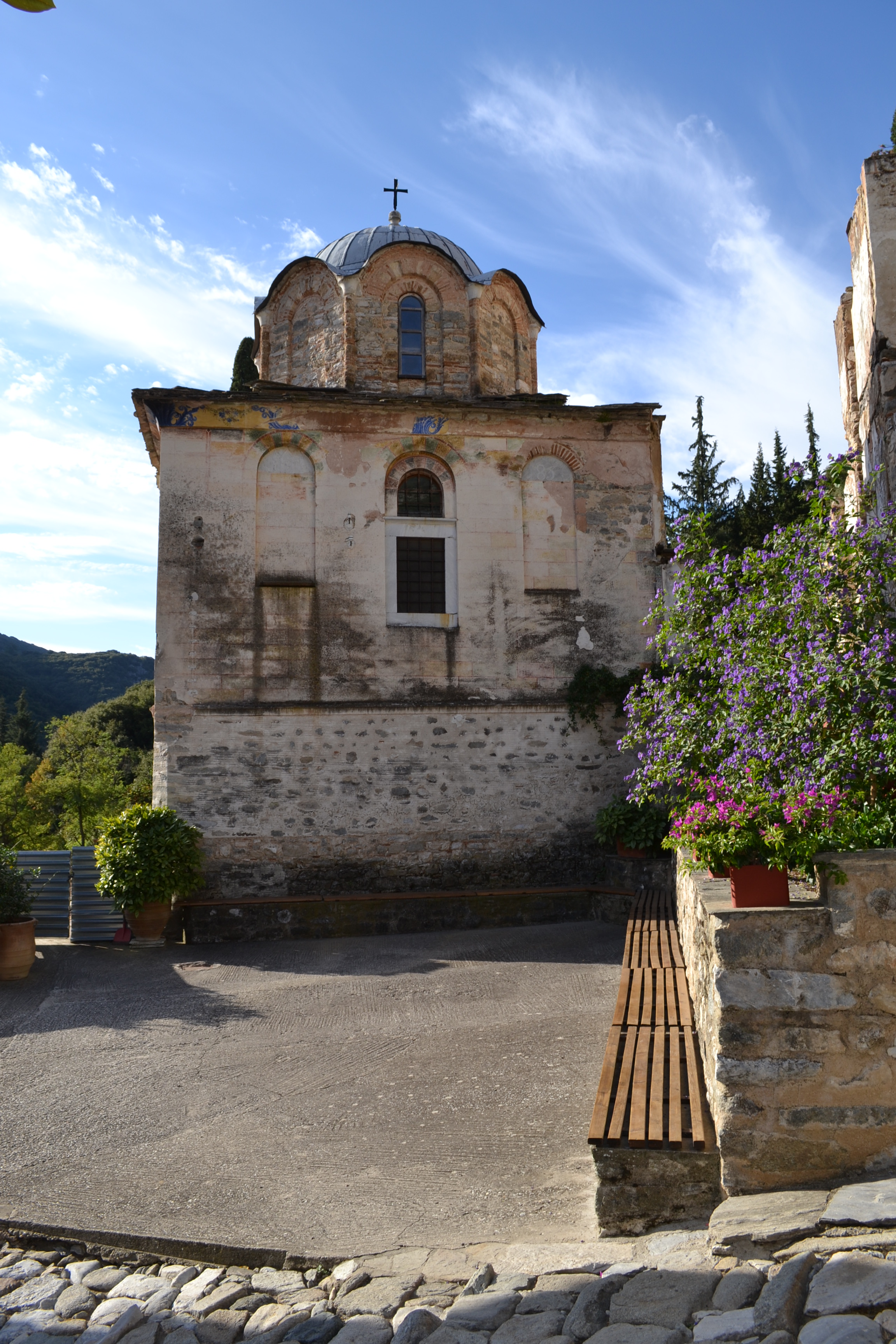
The monastery church dates from the beginning of the 14th century and has been reconstructed many times over the centuries.
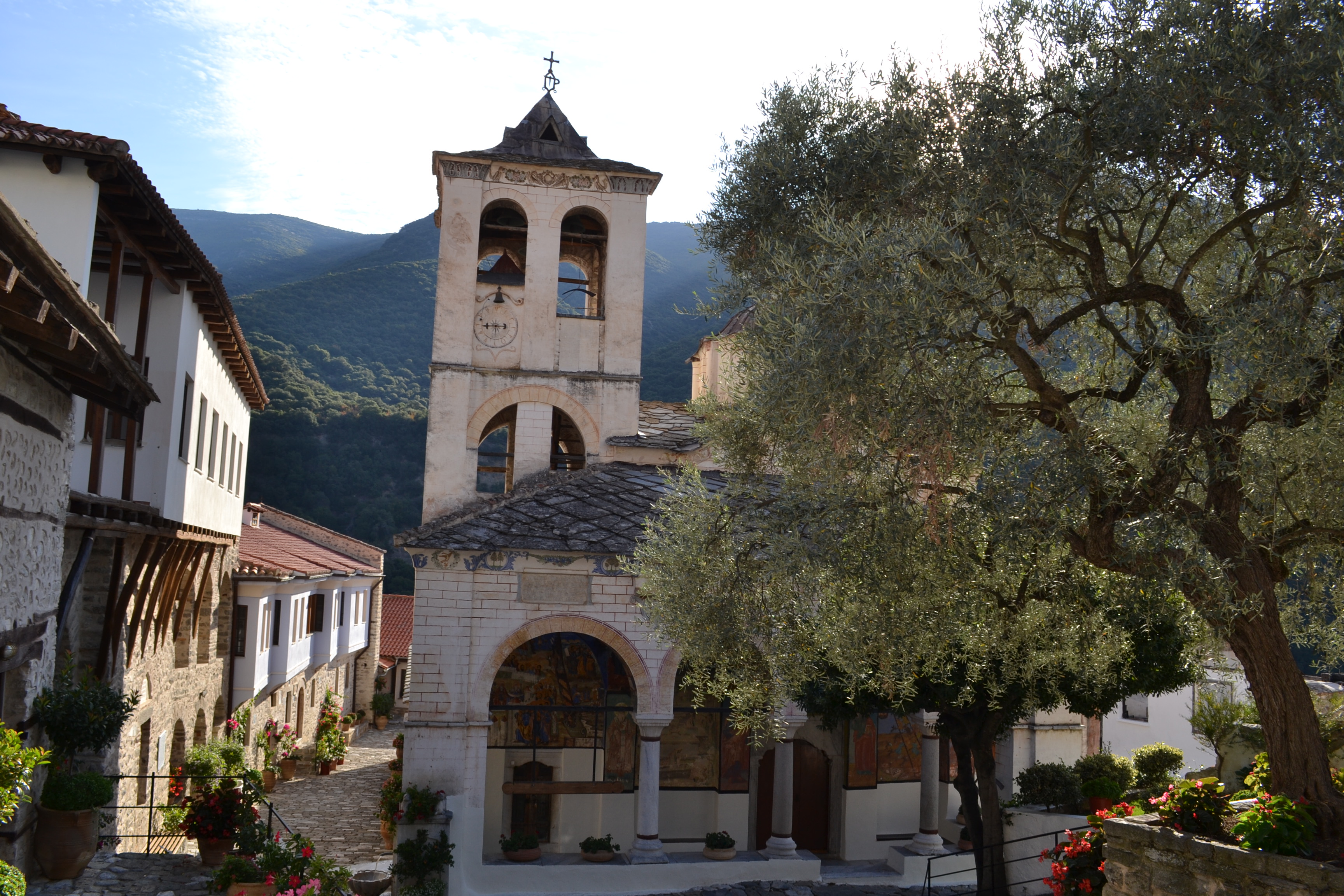
The beautiful tower was built in 1849 along with today’s esonarthex; its base was the tower that originally enclosed the ladder leading to the chapel of St. Nicholas, just above the first naos.
The church frescoes are performed in different periods and by different icon- painters. The oldest of them dates back to the time of the second donor Joakim and they are in the naos of the temple.
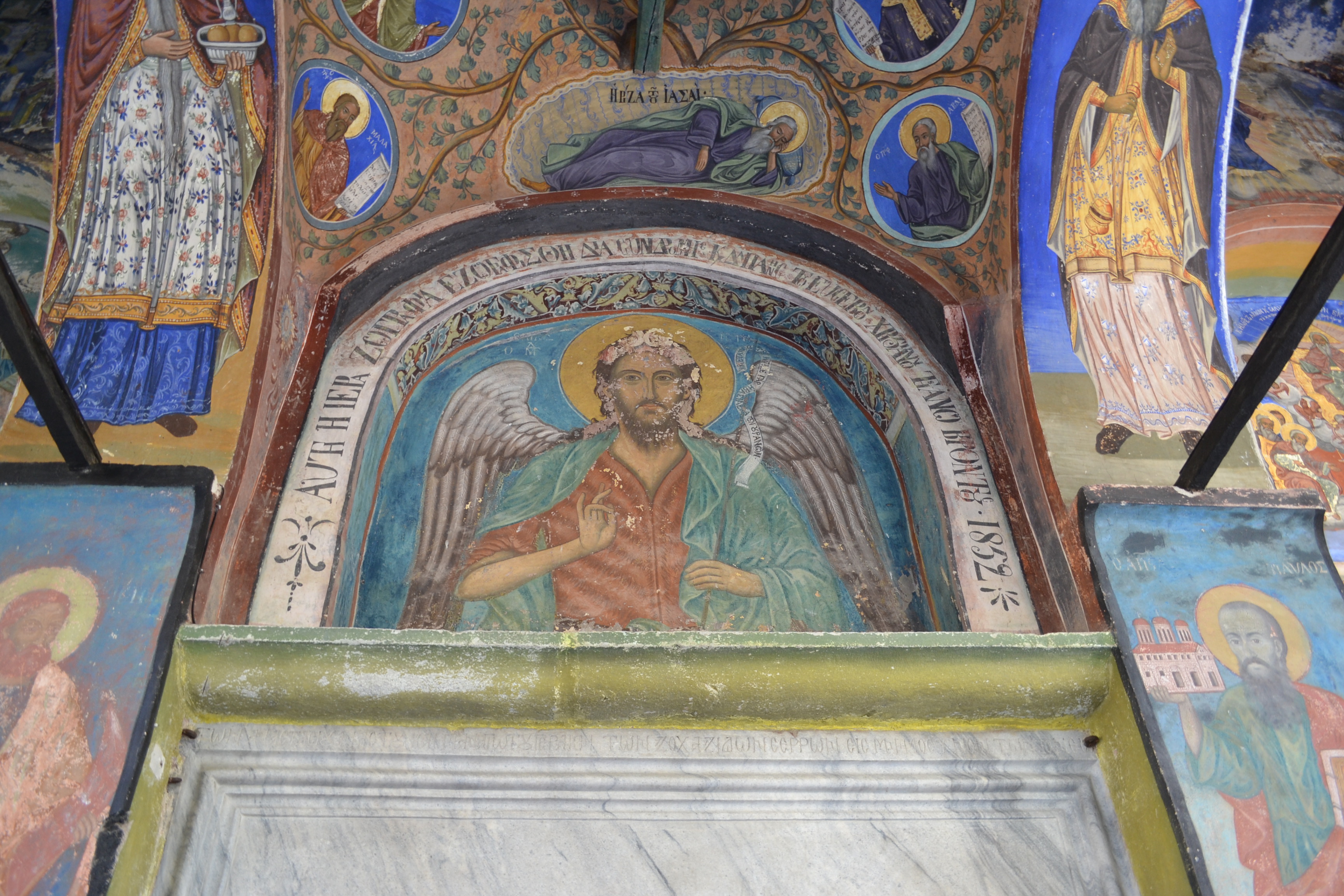
The image of the patron St. John the Forerunner is traditionally depicted over the entrance of the temple.
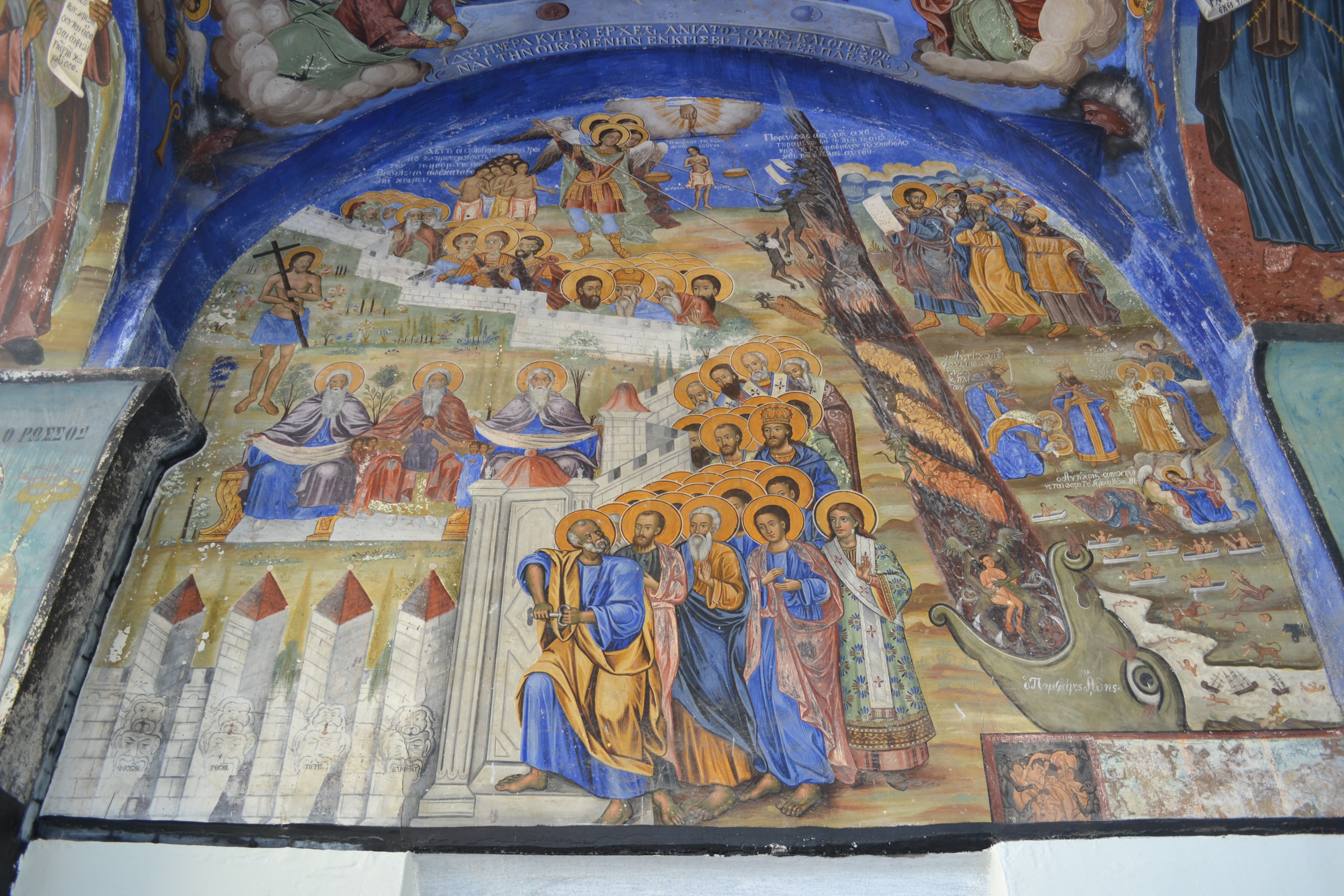
The frescoes in the open western gallery are of a didactic character such as the composition “The Judgment Day”
The donors’ portraits are painted on the outer west wall of the temple.
Monastery of St. George Kryoneritis, Serres
After visiting the monastery of St. John the Forerunner you can ask the kind nuns to show you the monastery of St. George Kryoneritis in the town of Serres which is under their management. The monastery of St. George Kryoneritis is located in the eastern district of Serres – Agii Anargiri (Holy Unmercenaries). It is called Kryoneritis (Freshwater), because of the spring that was once located near it.
The monastery was founded in 1298.
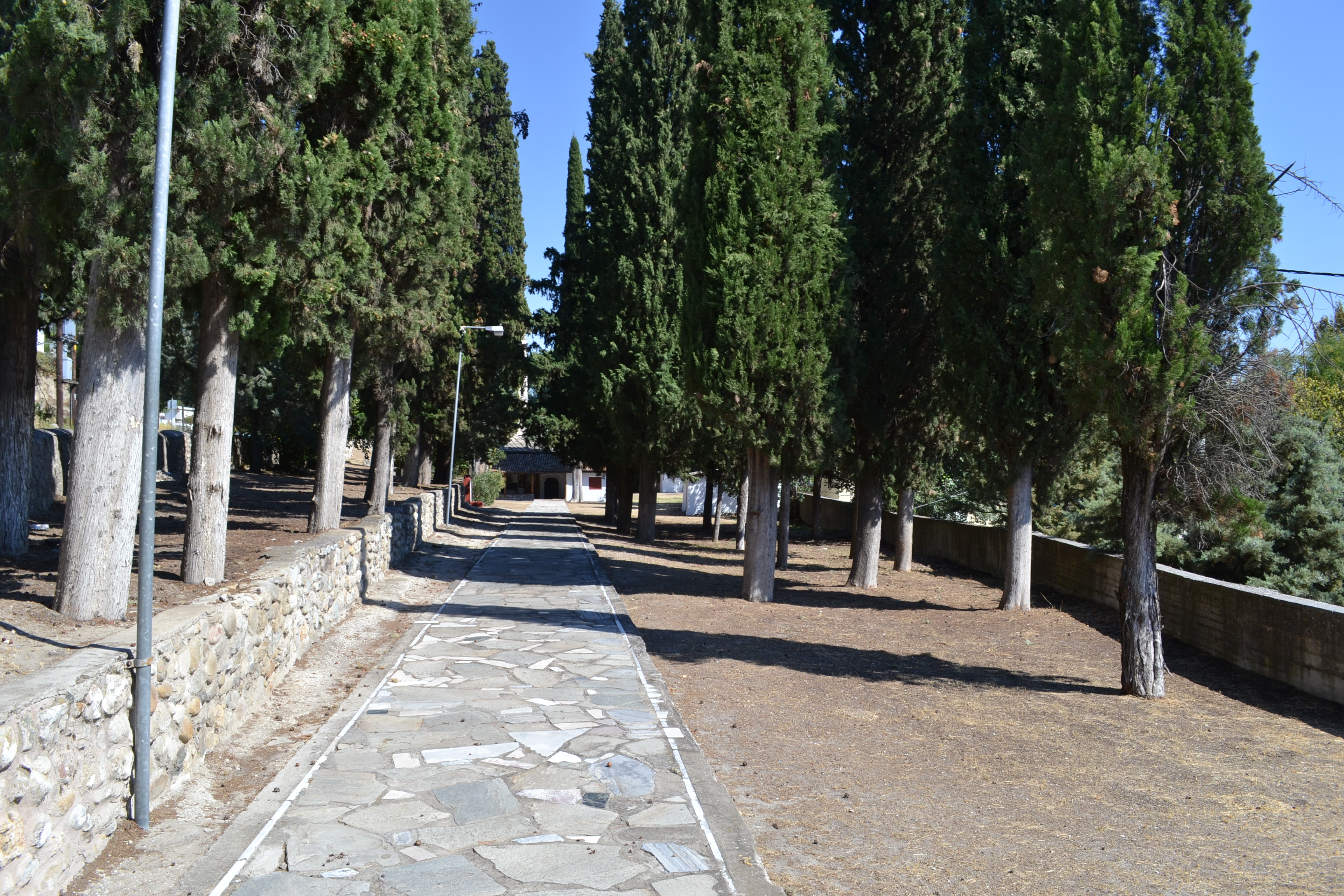
Its church is a typical medieval monastery church – a central square, with the semi-circular apses on the north and south walls. In 1344 it became a monastery dependency of the monastery of St. John the Forerunner (Prodromos). It was donated by Ypomoni, the wife of Serres archon, Sakellarios Mourmouras. During the Ottoman rule it went through a number of reconstructions.
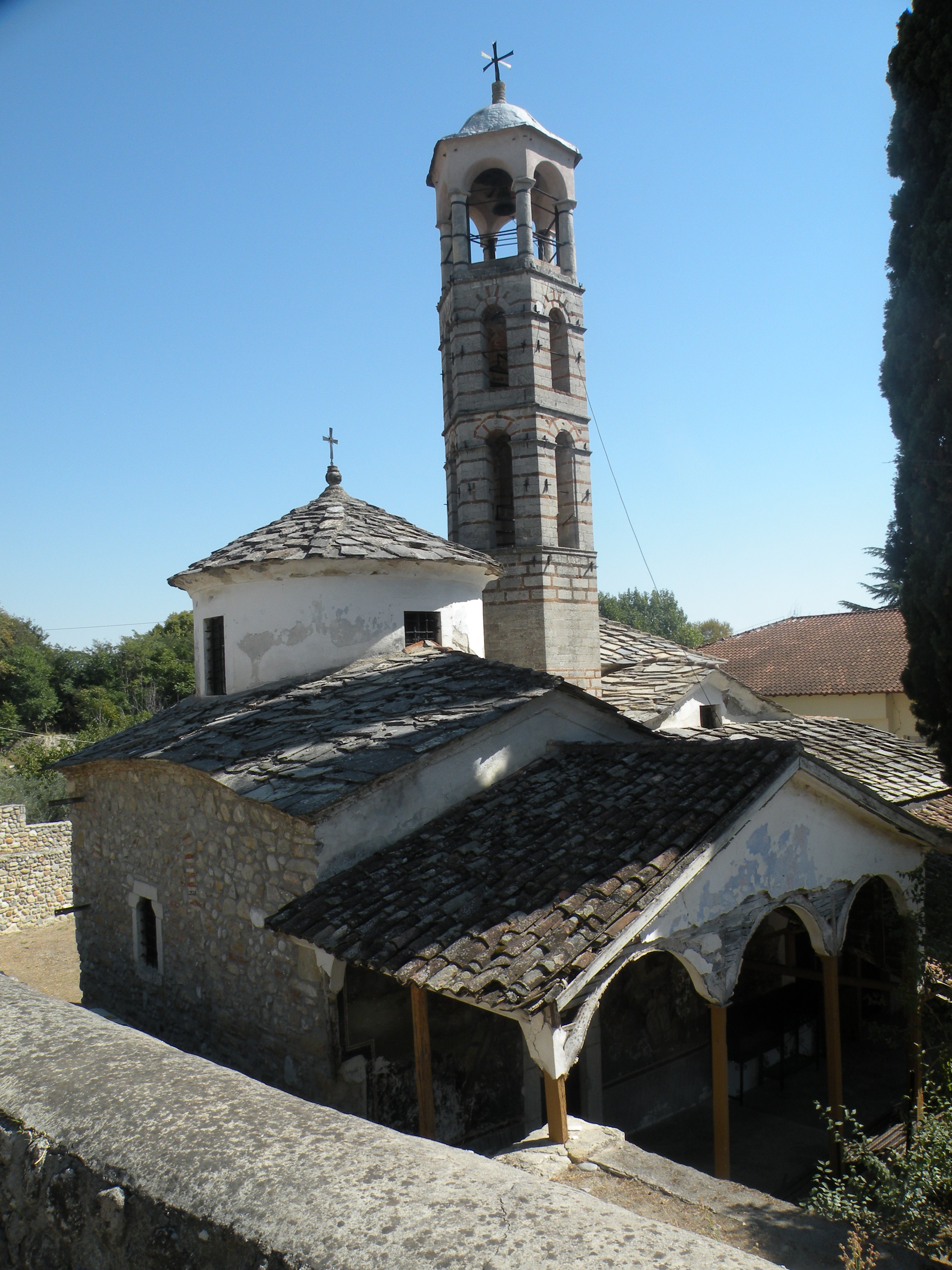
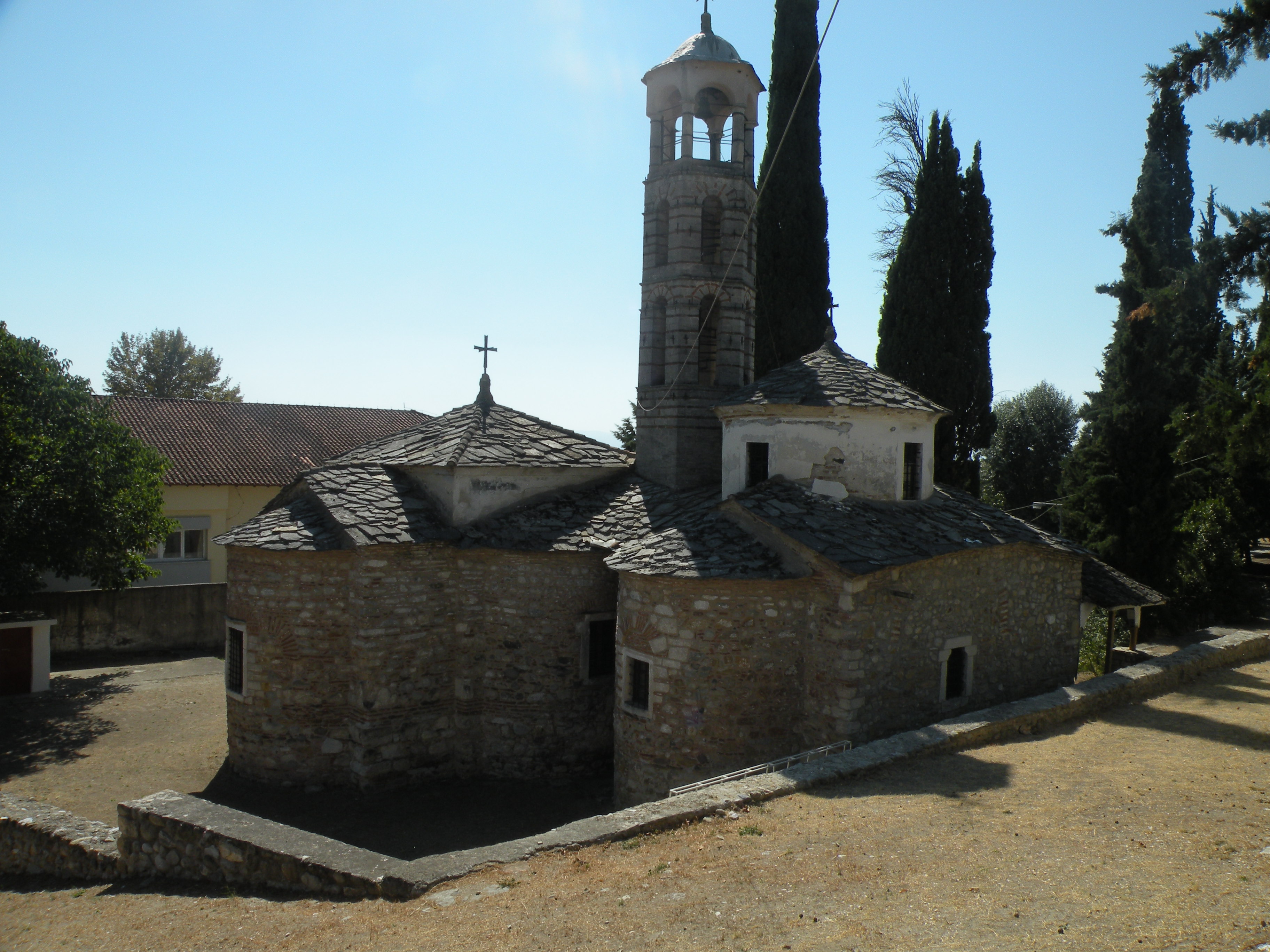
It is clear that the temple was repaired in 1864 from an inscription located on the western outer wall.
The compositions “The Judgment Day” and “The Jacob’s Ladder”, typical for these places, are located in the open western narthex.
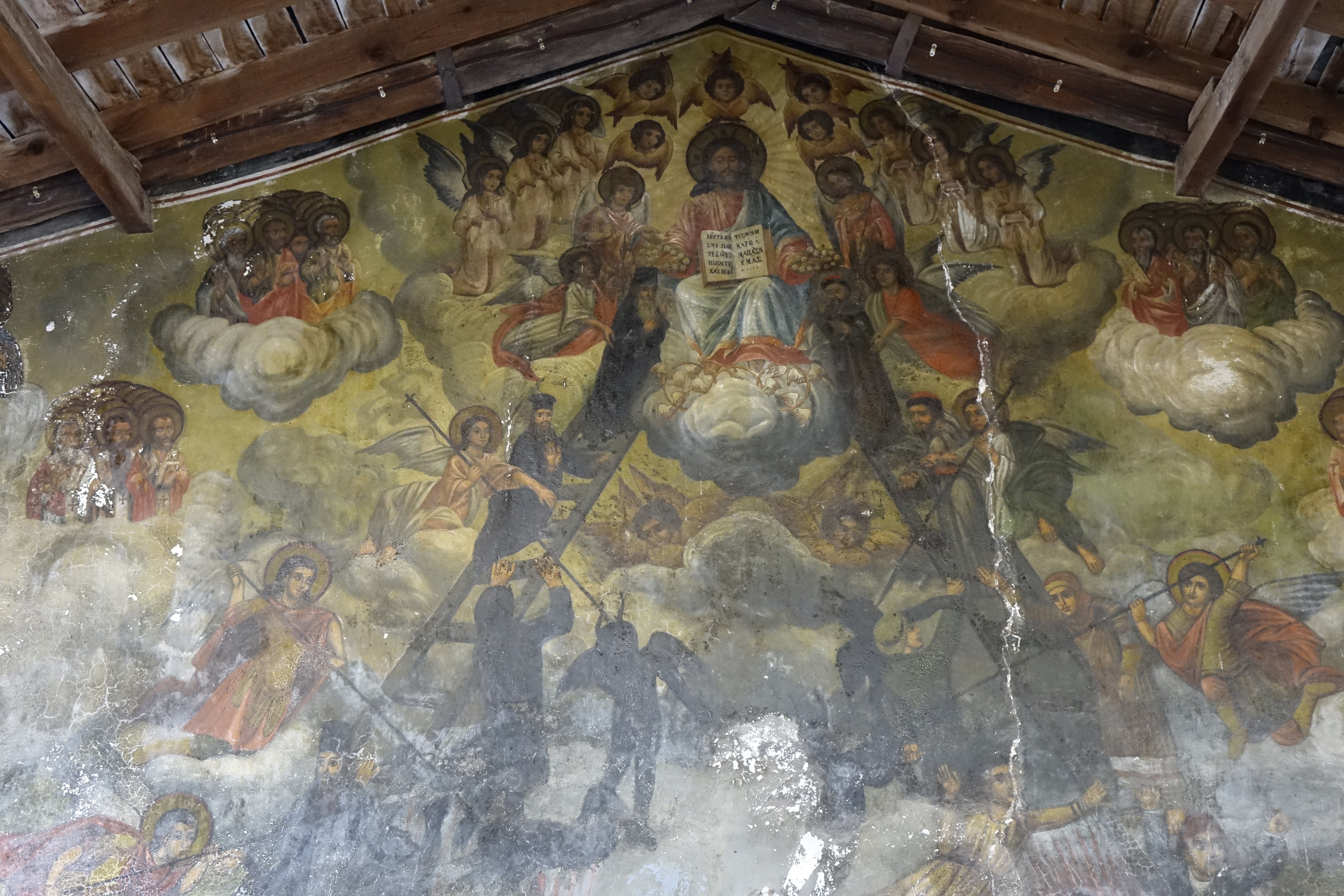
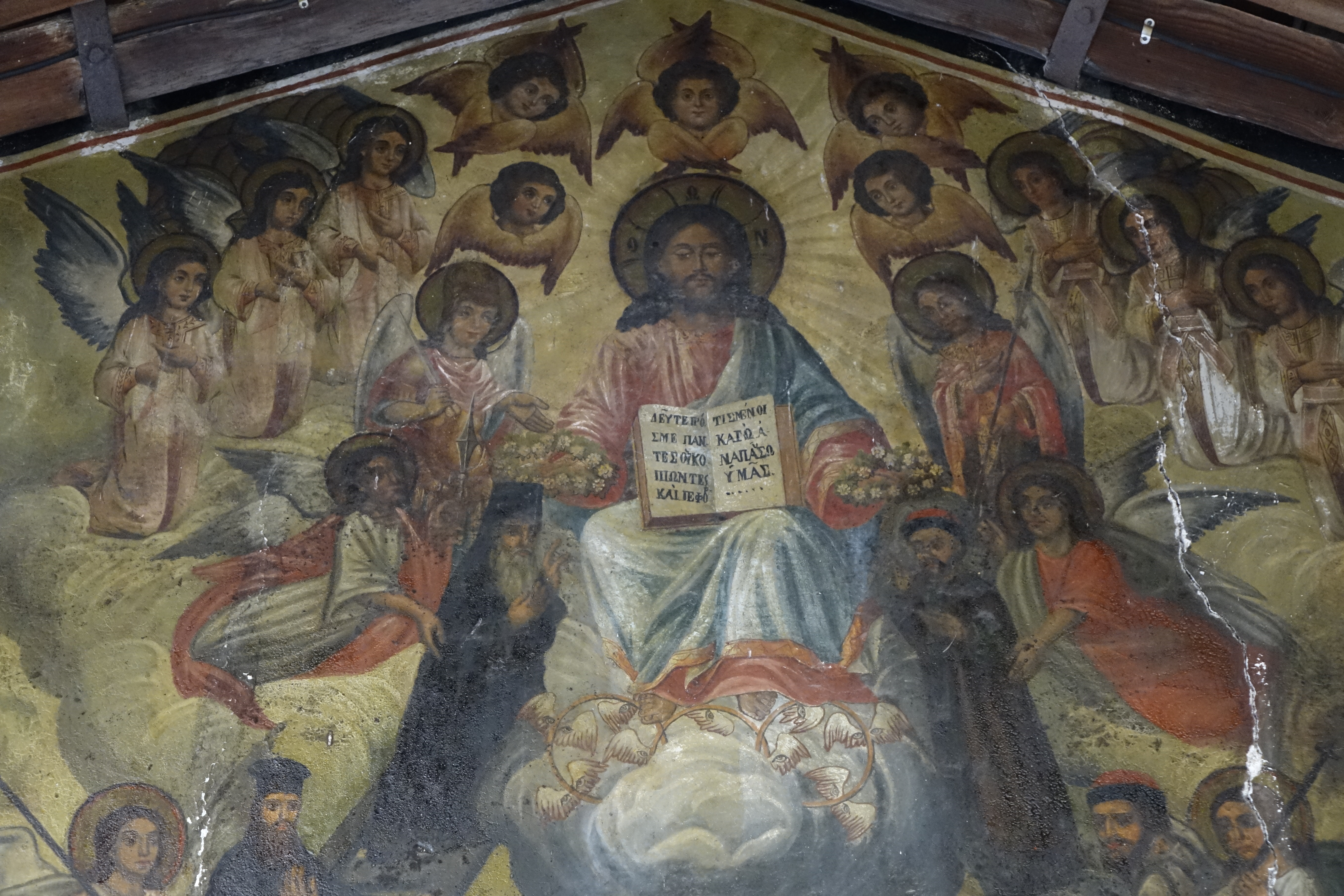
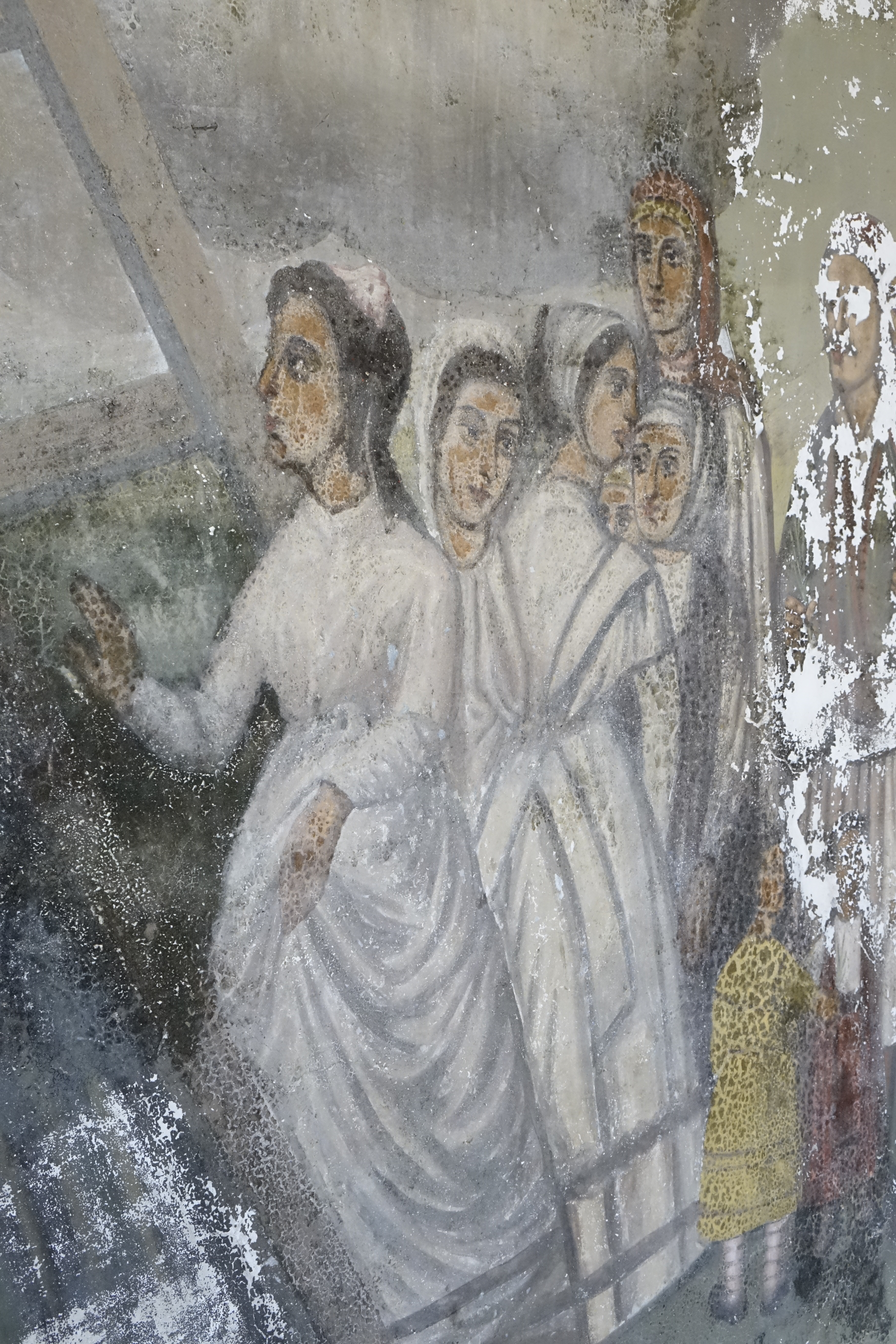
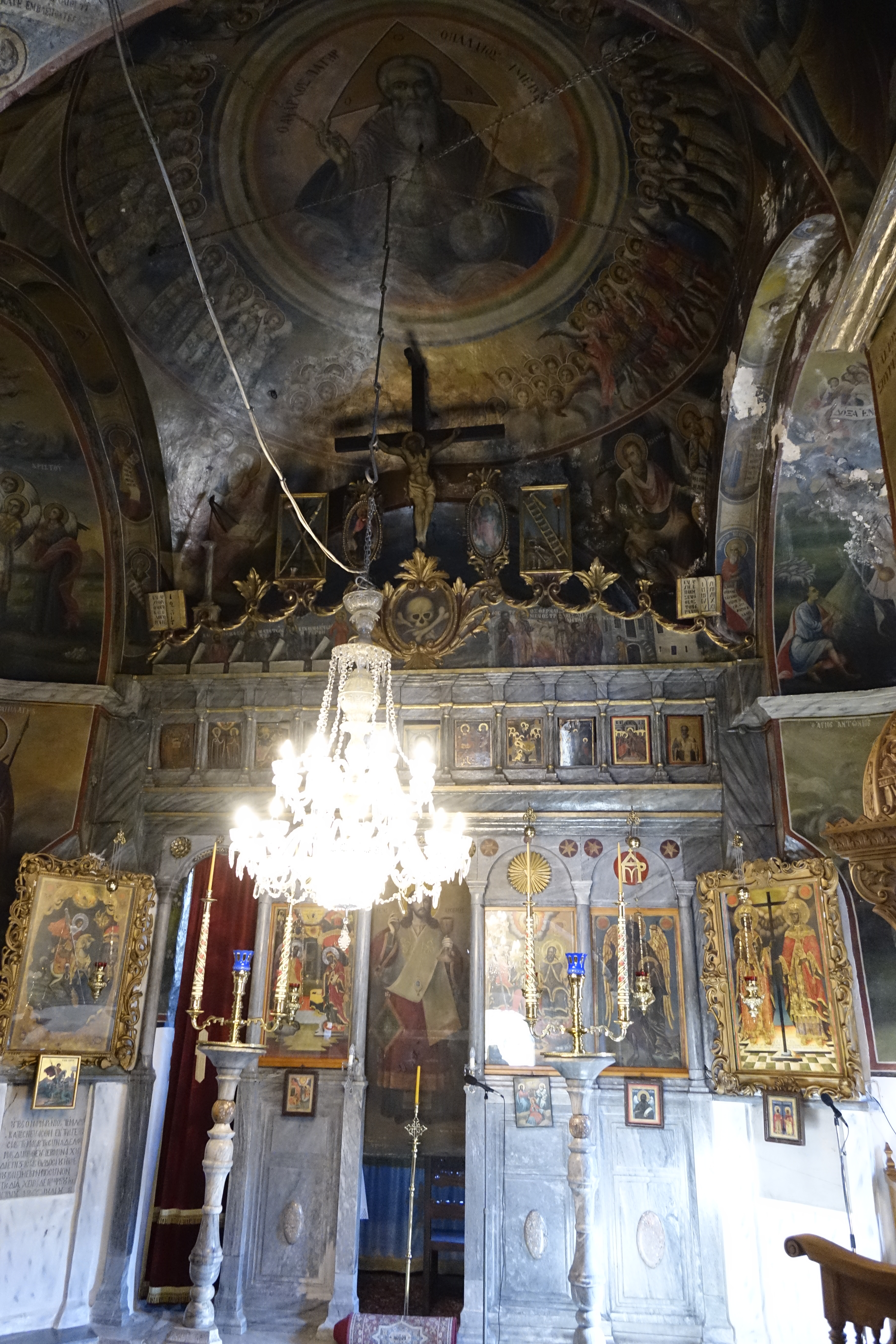
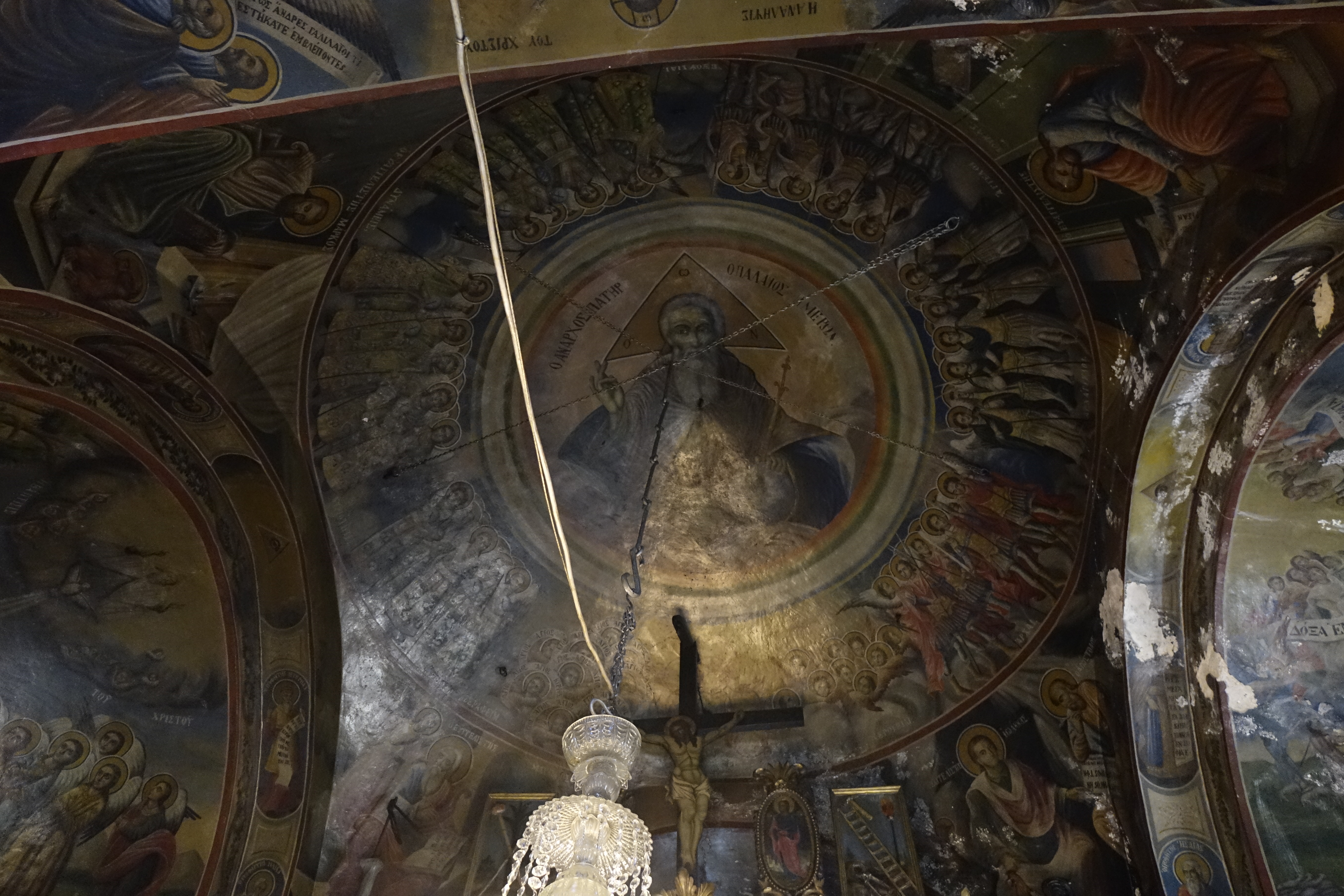
The interior of the temple is also decorated with traditional frescoes.
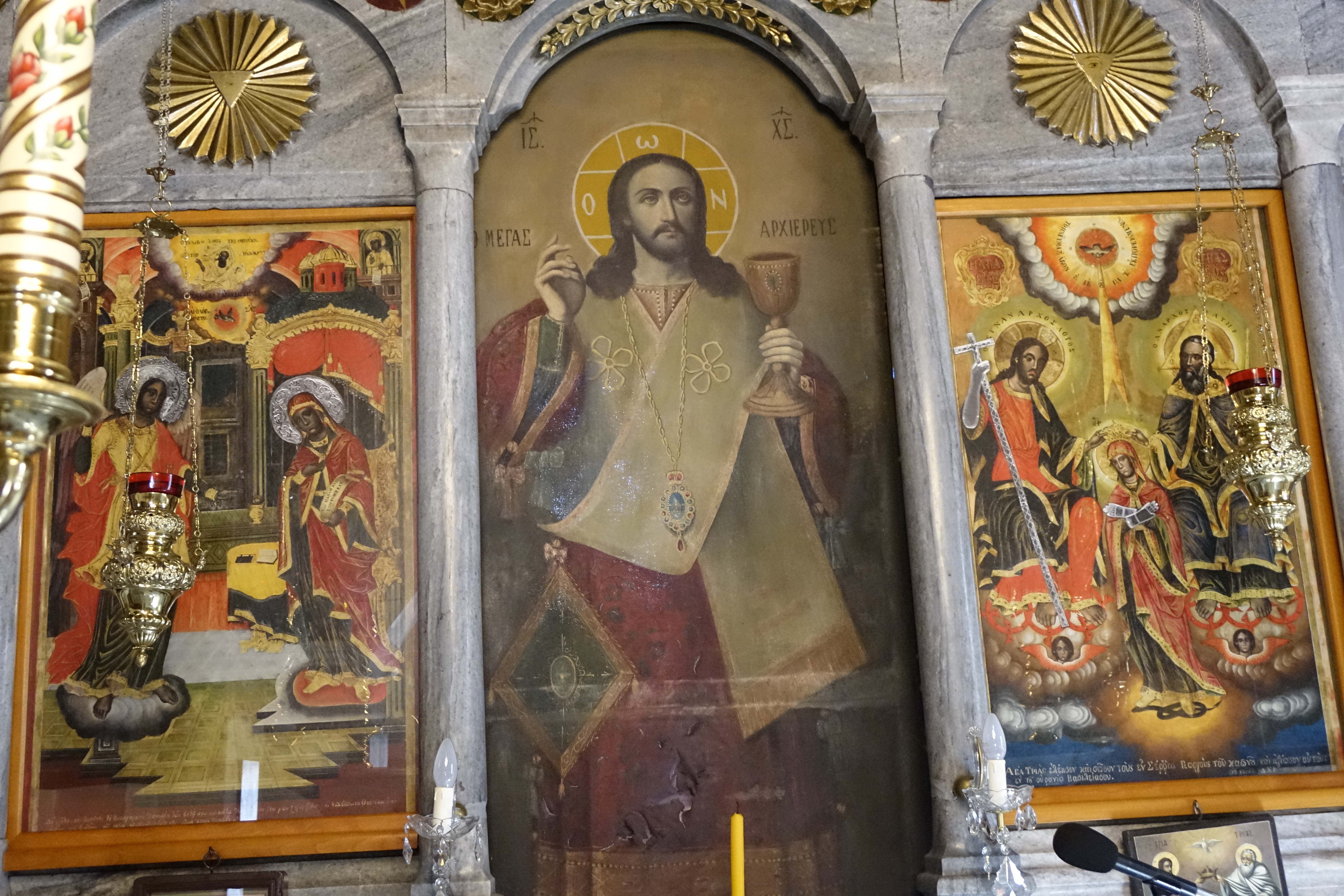
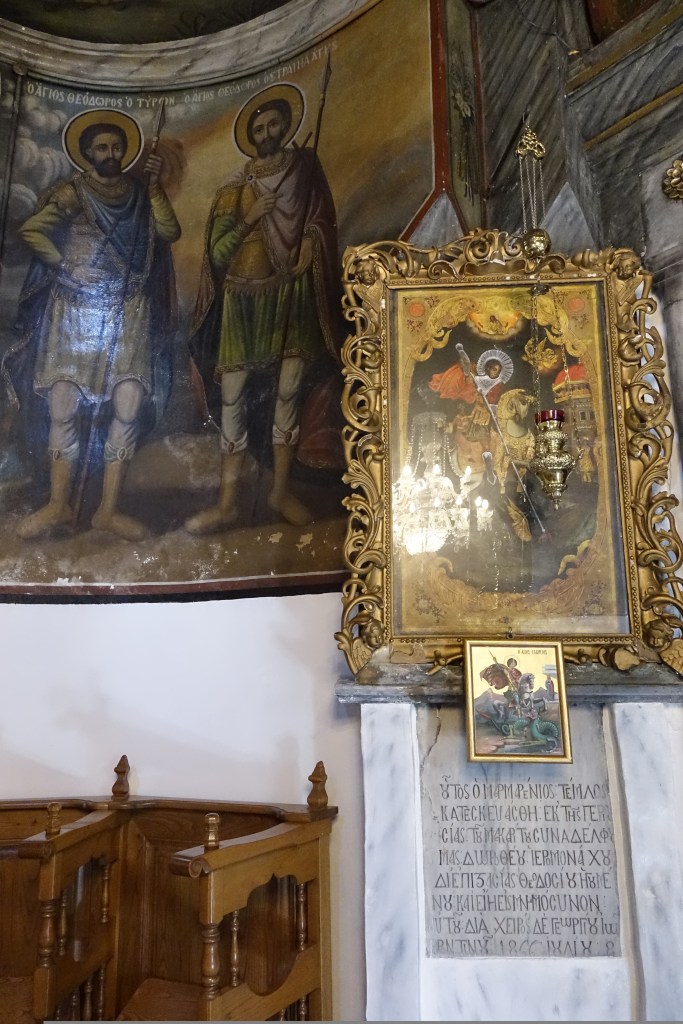
Museum of the icon in Serres
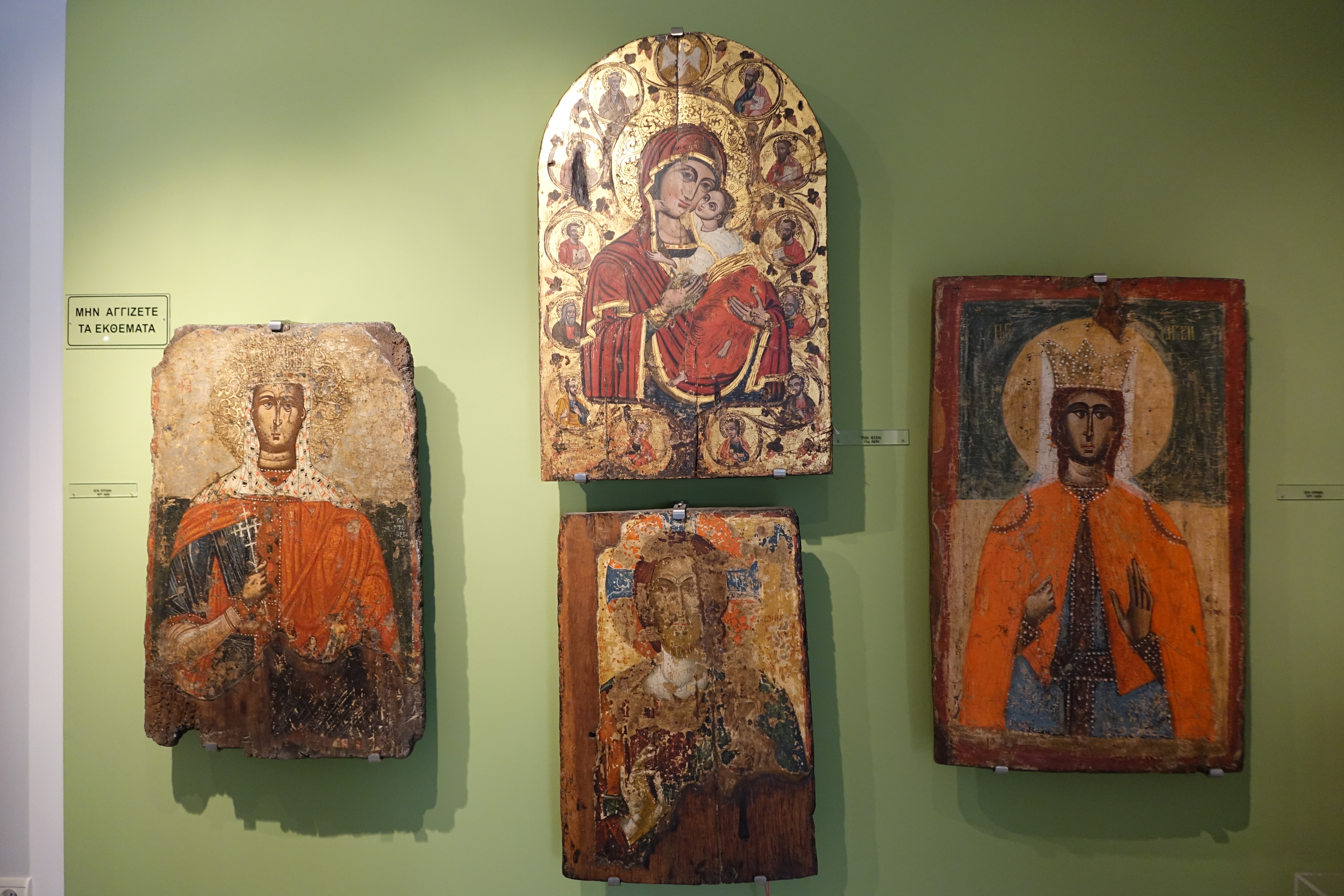
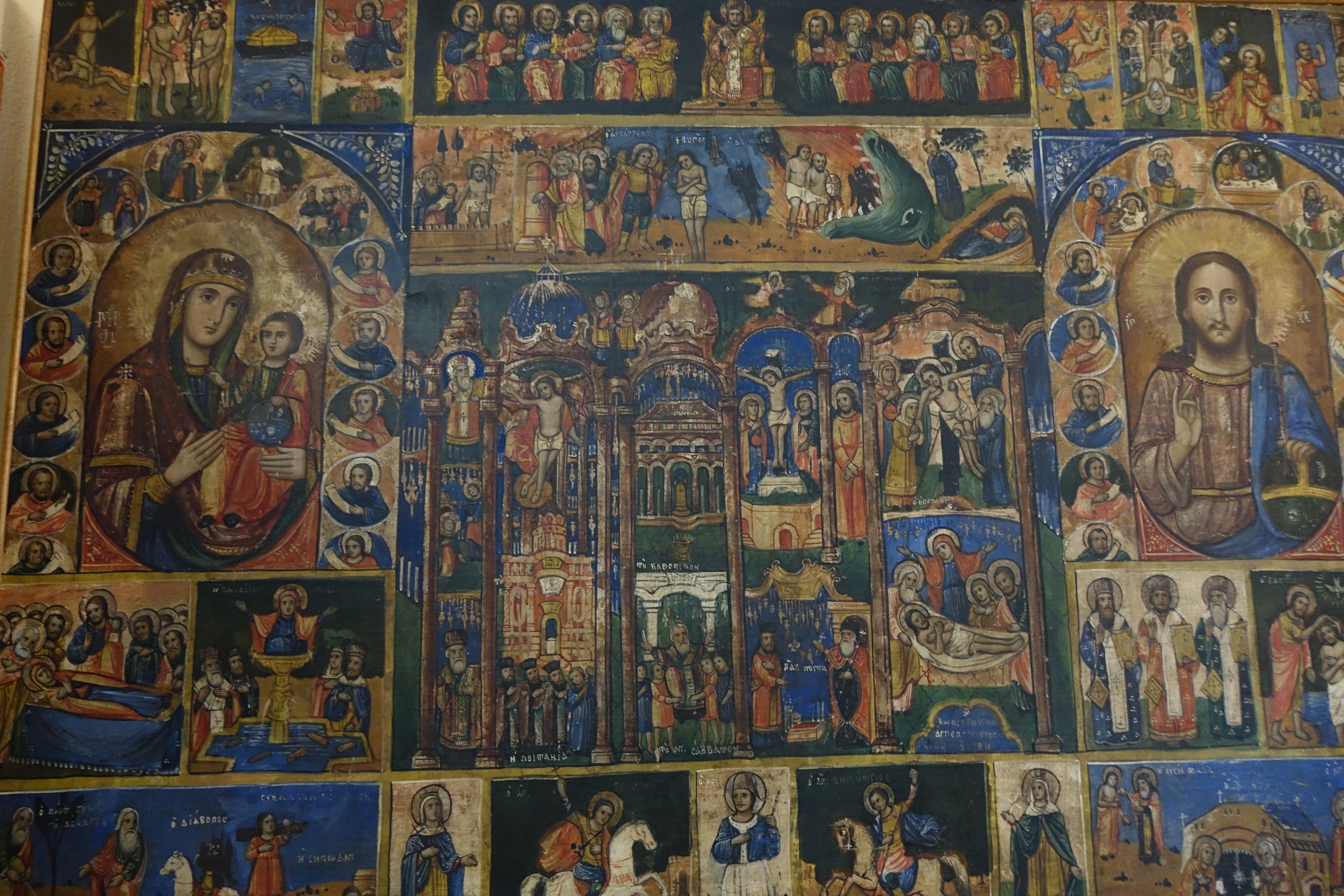
A large number of icons, altar doors and church plates from a number of temples in the region are located in Ecclesiastical Museum in Serres. Icons from the Renaissance period (18th and 19th centuries) predominate. These high-professional works are real pleasure for the visitor.
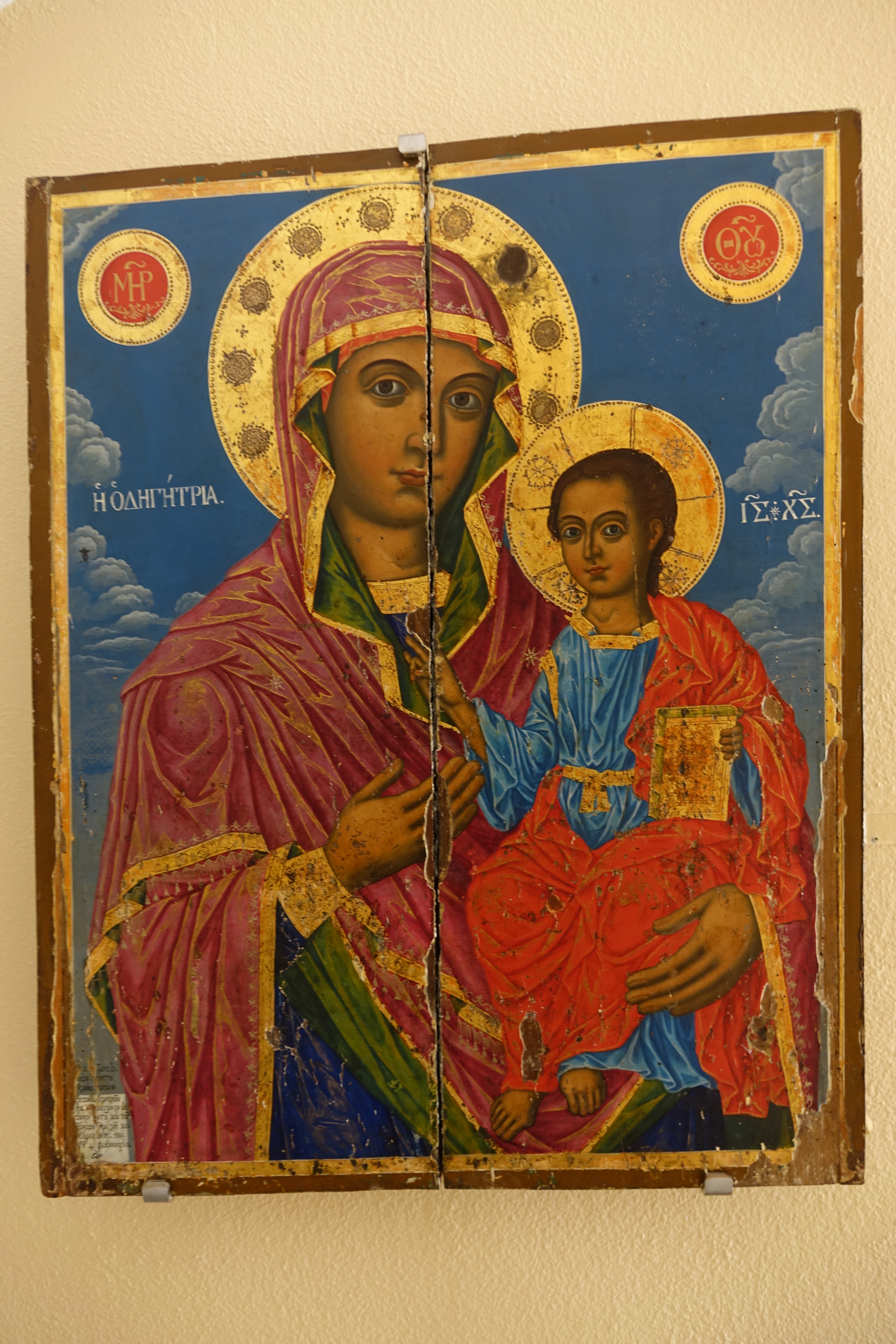
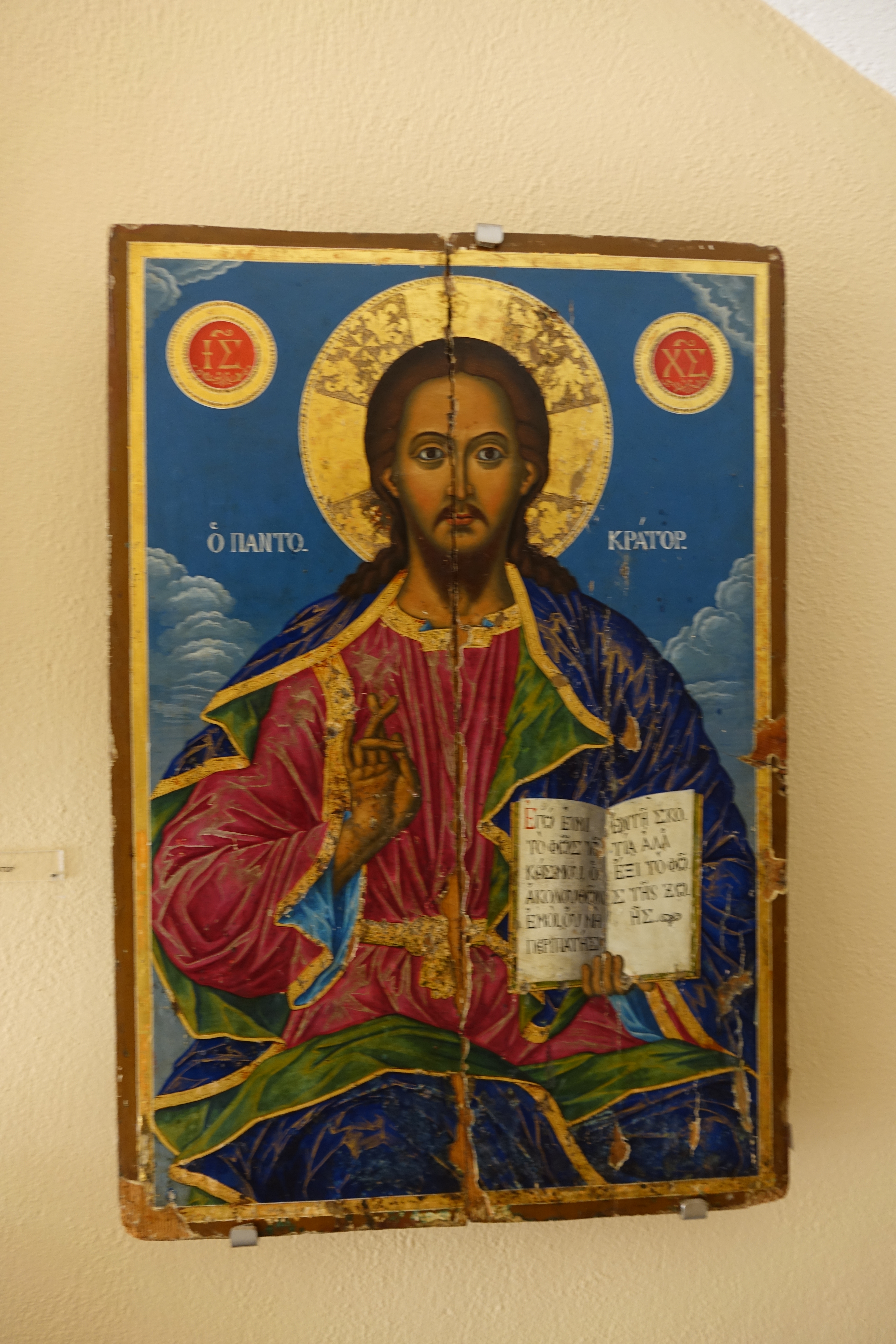
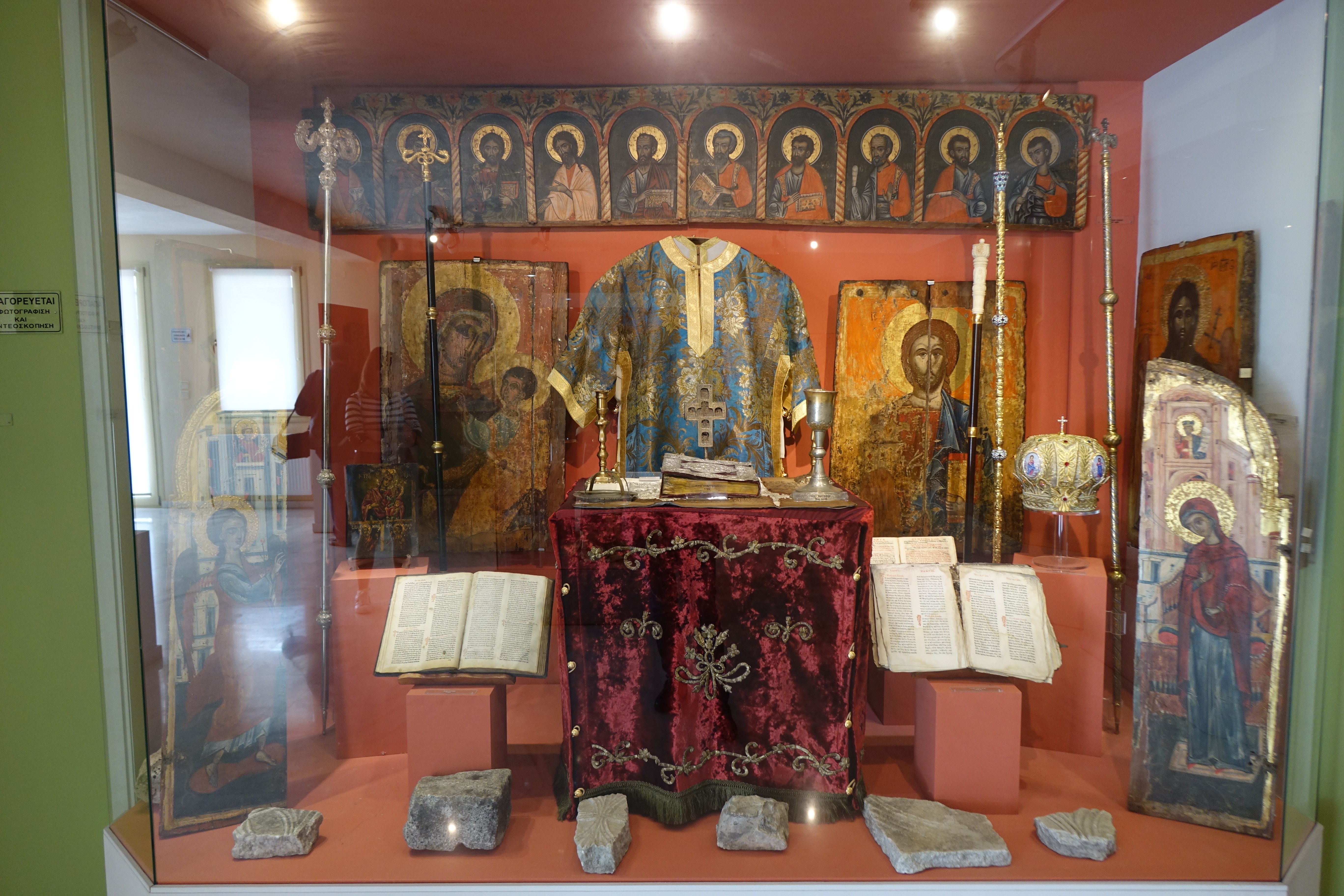
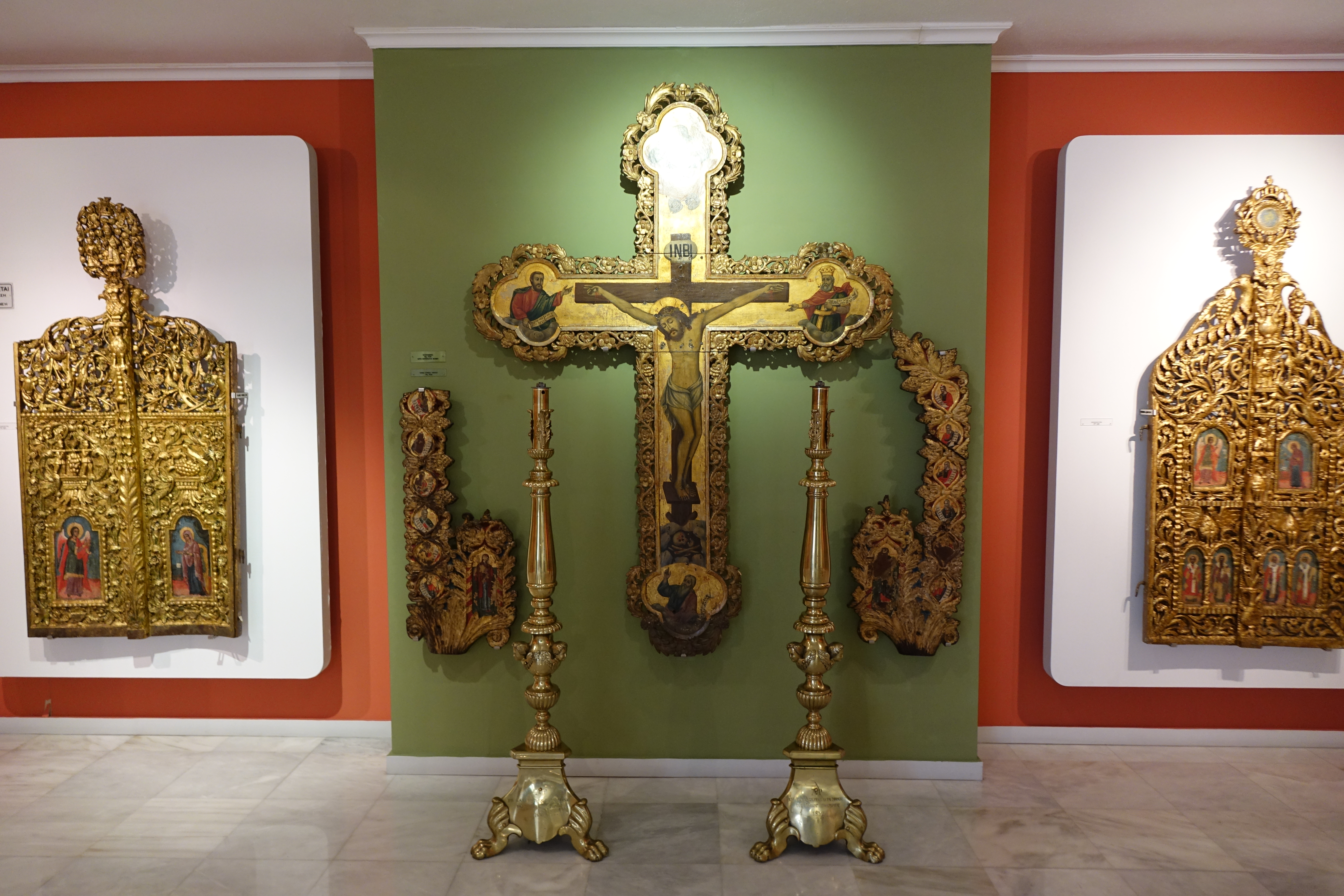
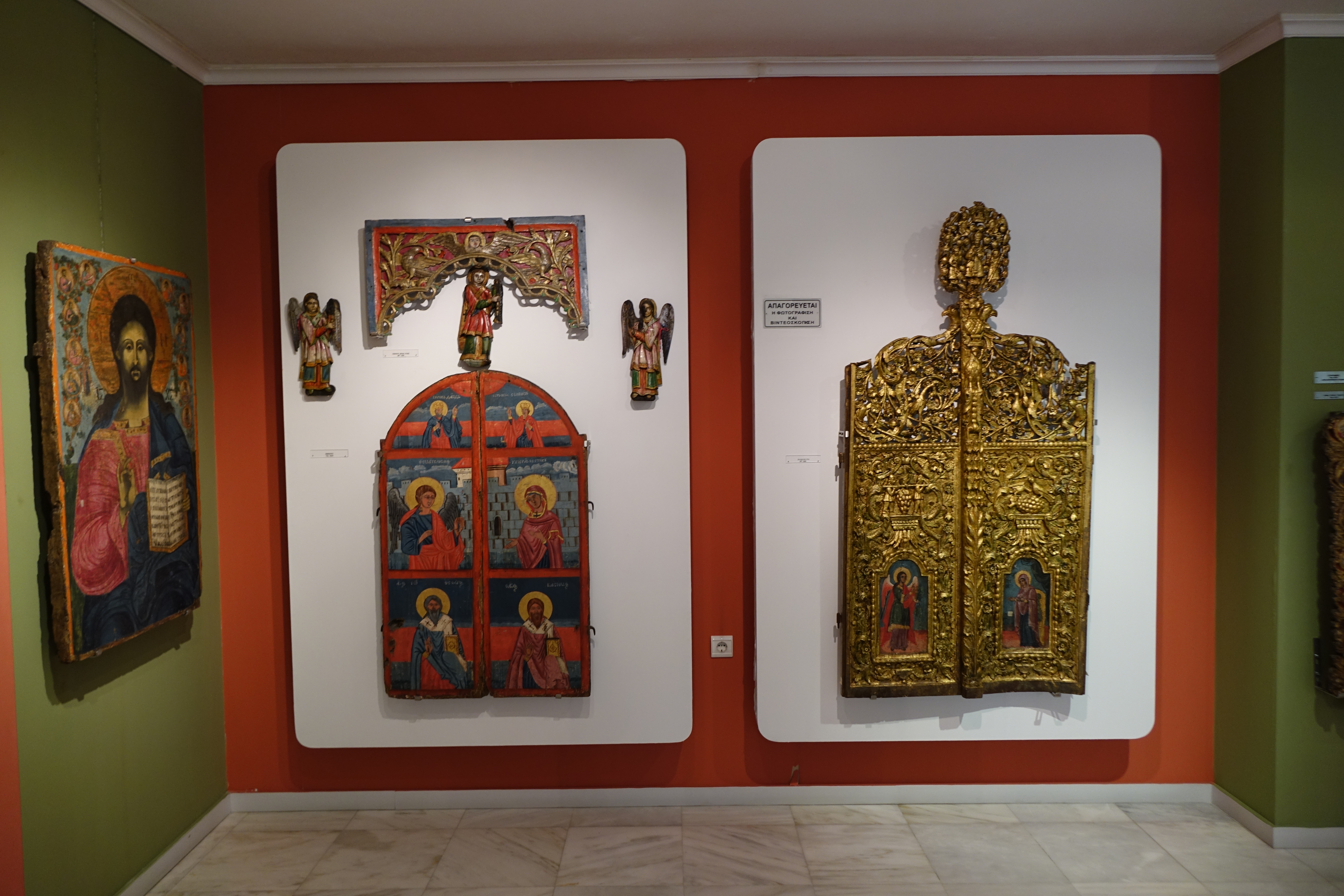
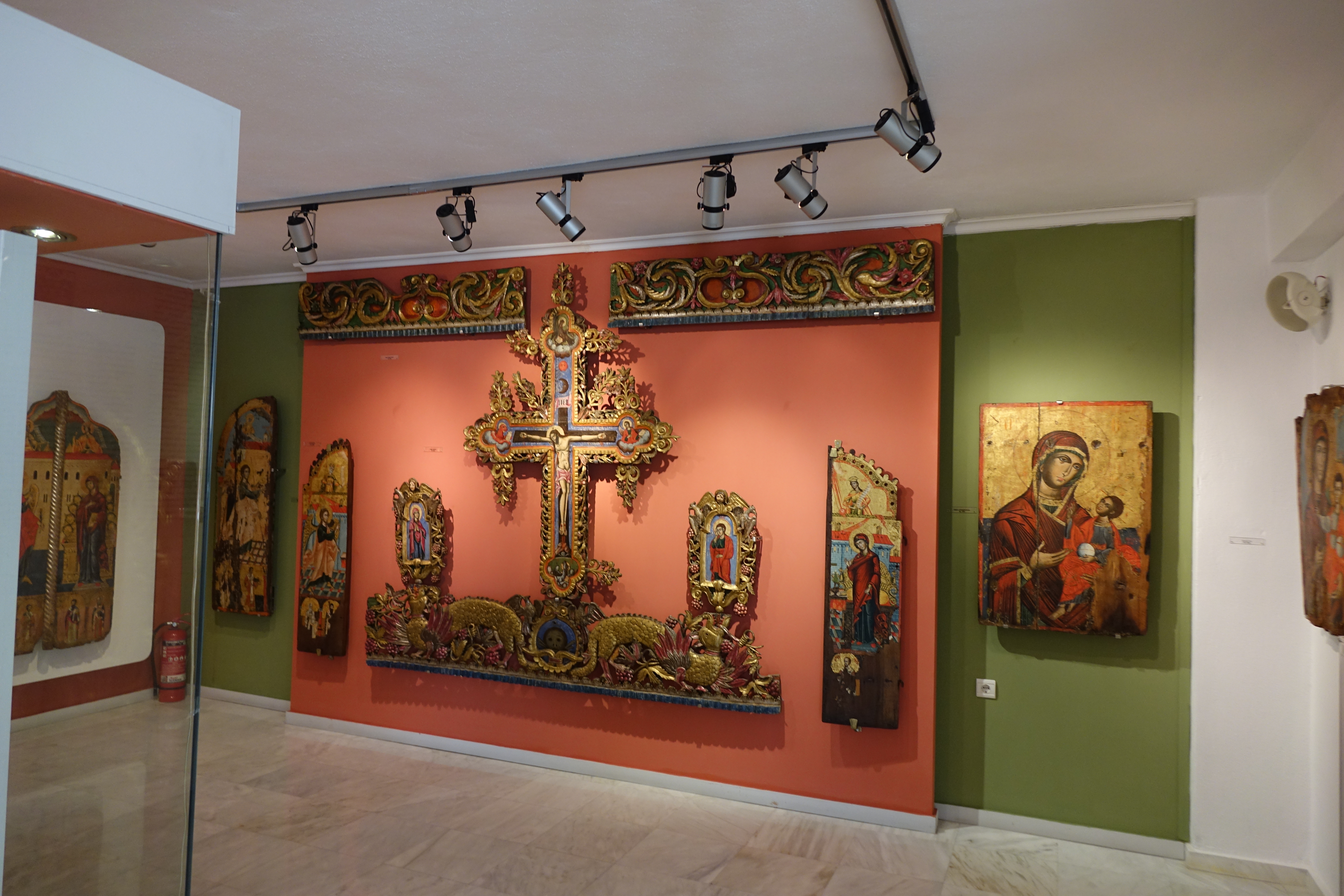
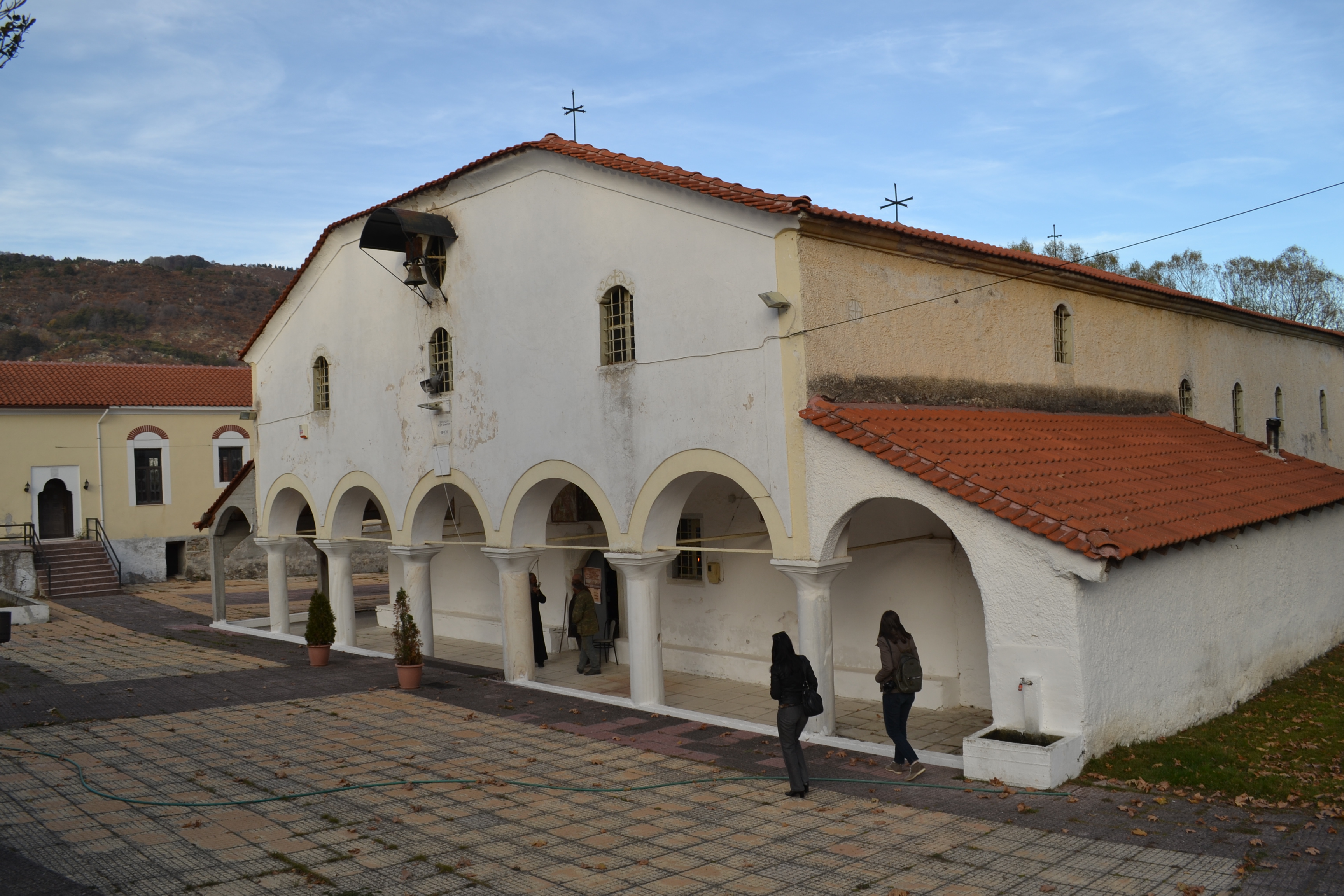
The church of St. Dimitar in Ano Vrontou
The village of Ano Vrontou is located 20 km away from Serres.
The church of St. Dimitar was built in 1835 which is visible from a preserved marble slab.
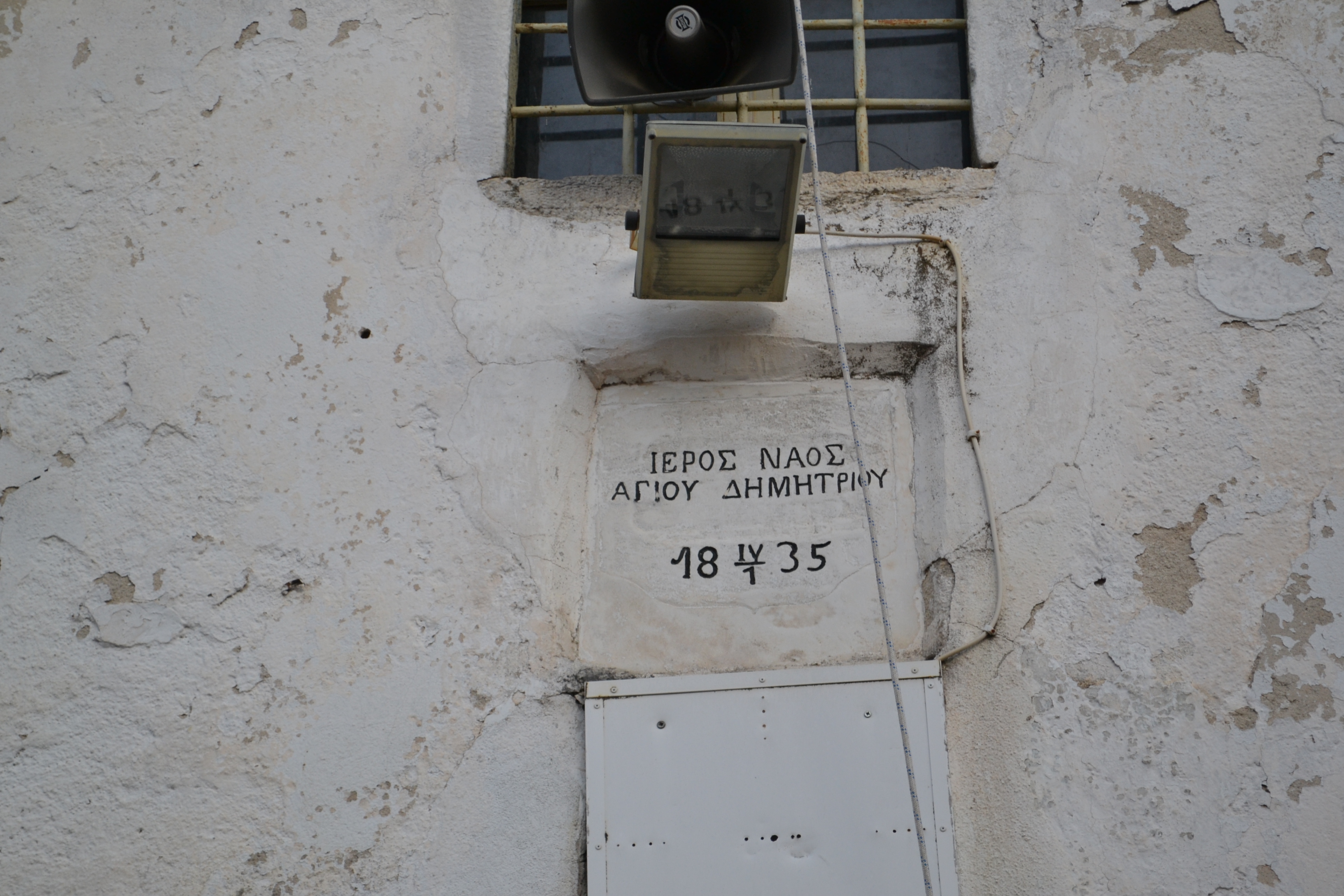
The names of the donors are listed on it. In 1860 the school where the first teachers were monks from the Serres monastery of St. John Prodromos was built. Ten years later (1870), the bell tower was built.
The church is a three-nave basilica without a dome. The interior of the temple is covered with marble slabs.
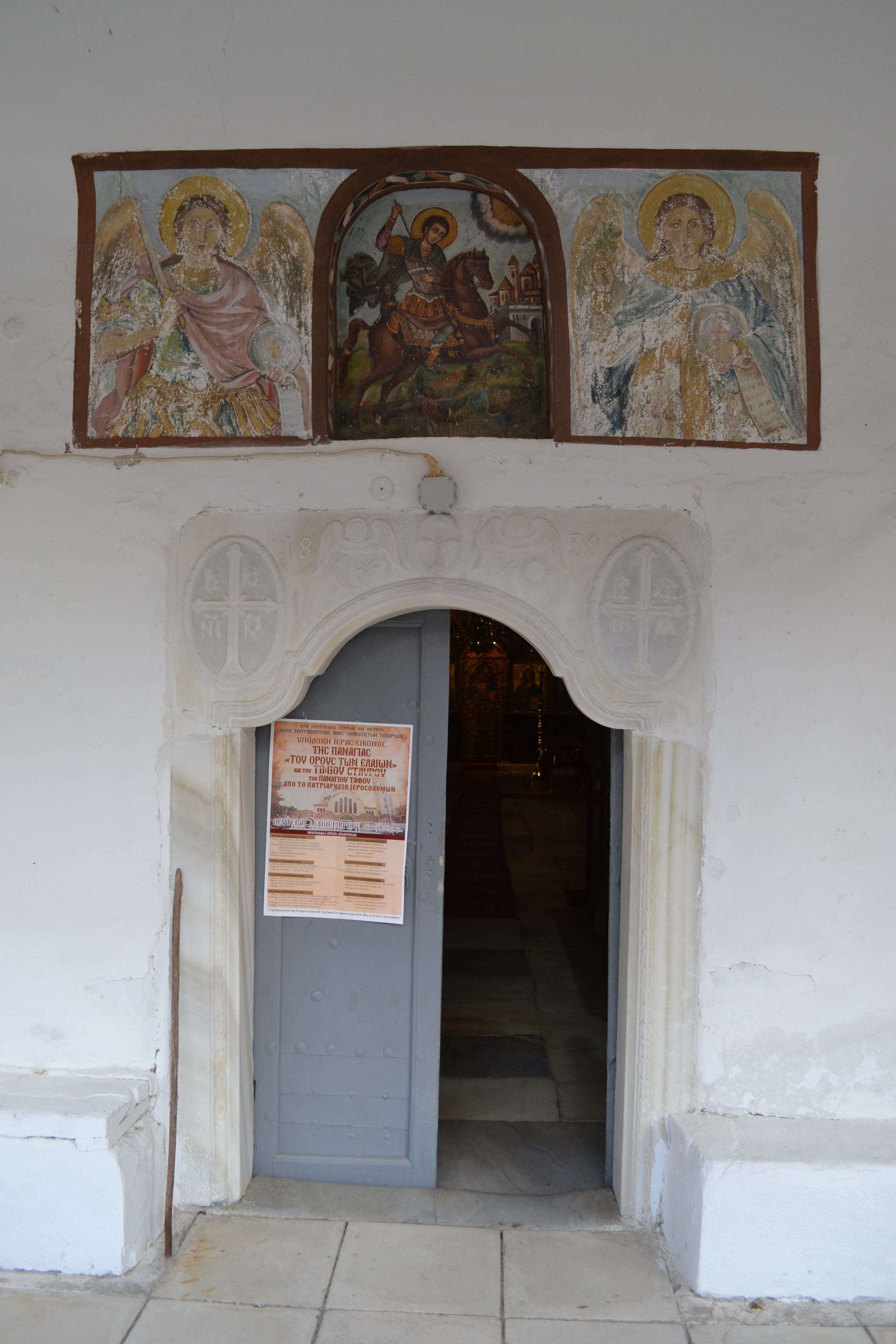
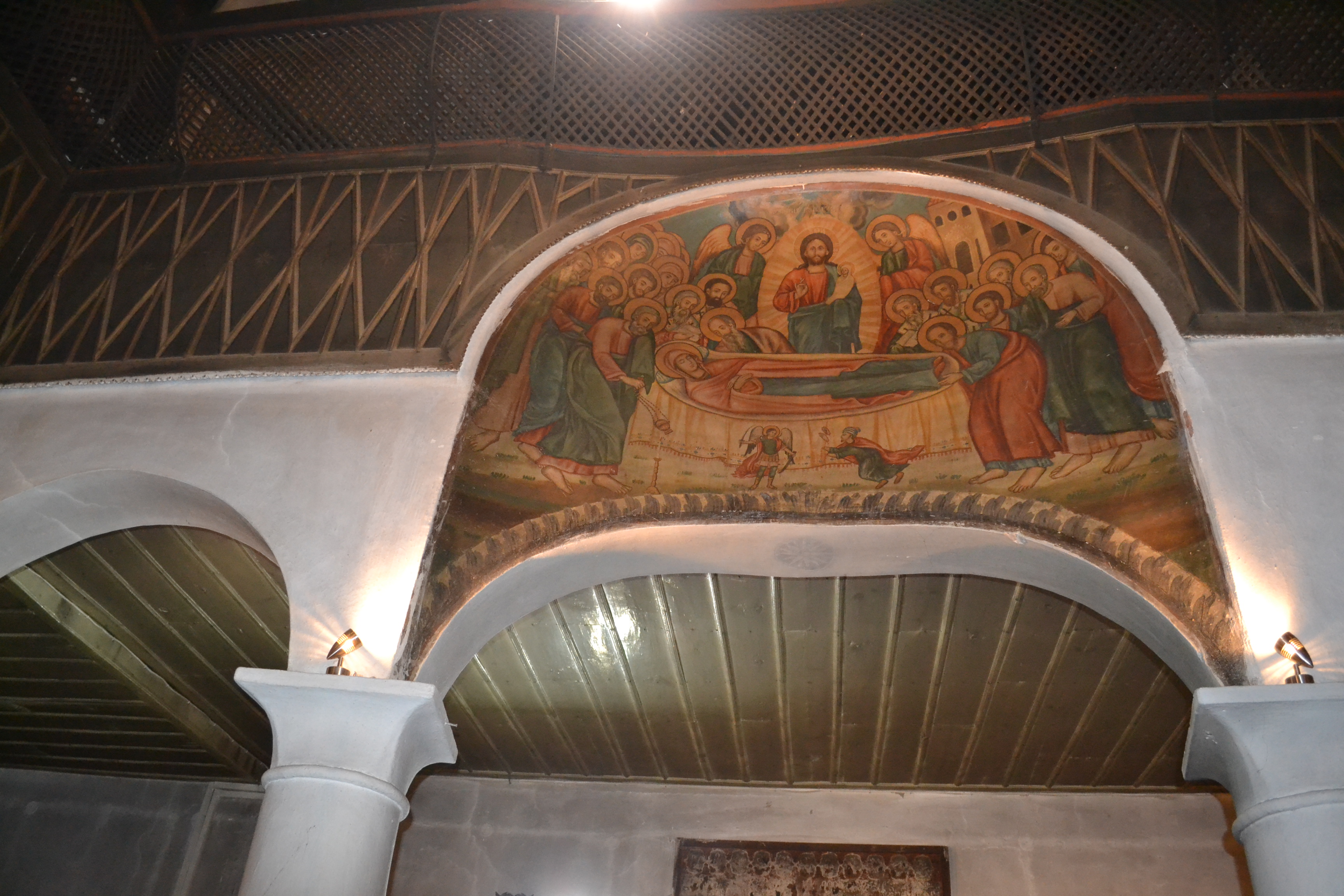
Frescoes are located only in separate parts of the temple.
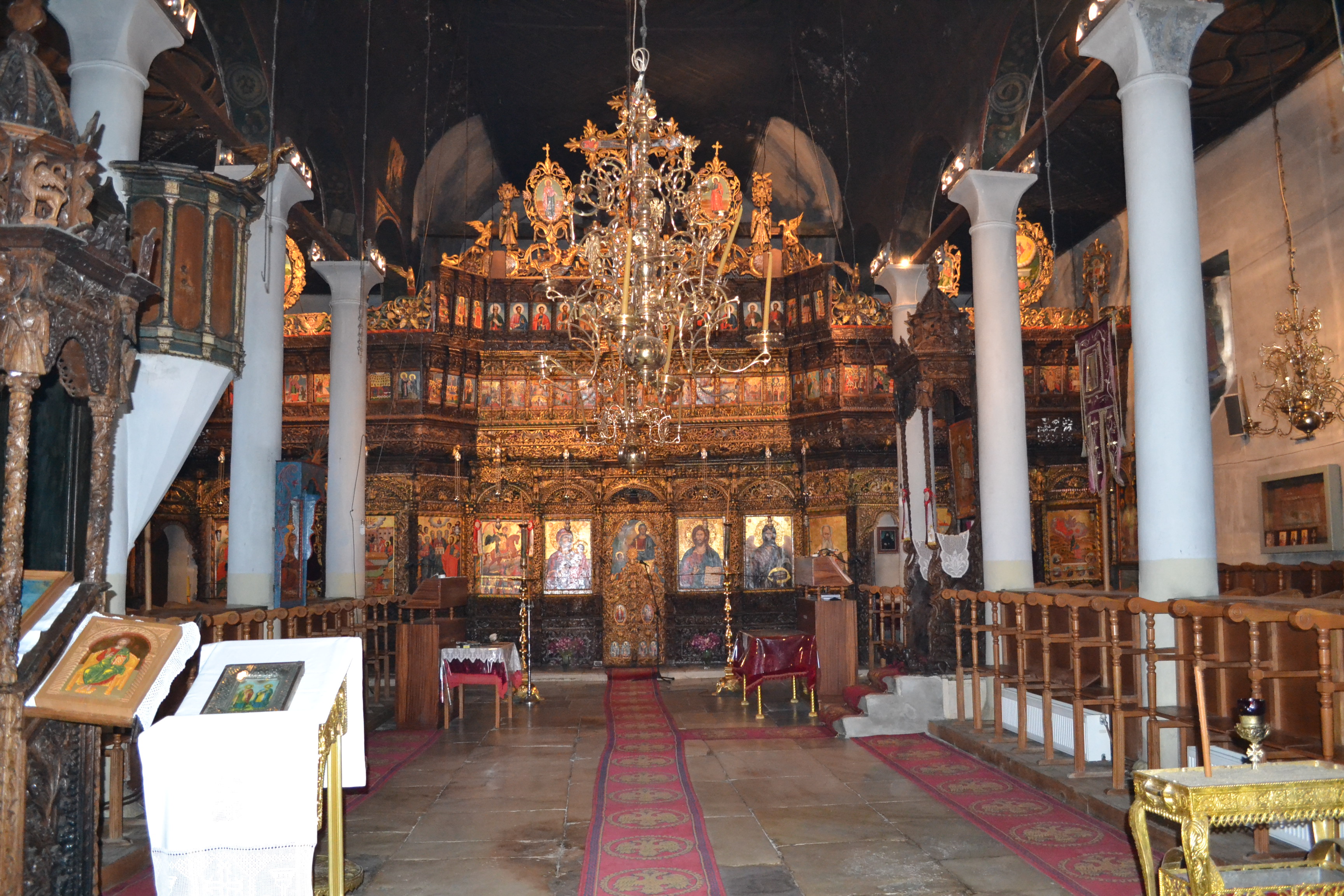
The temple has one of the most beautiful wood-carved iconostasis. The bishop’s throne and the throne in the altar are decorated with rich carving.
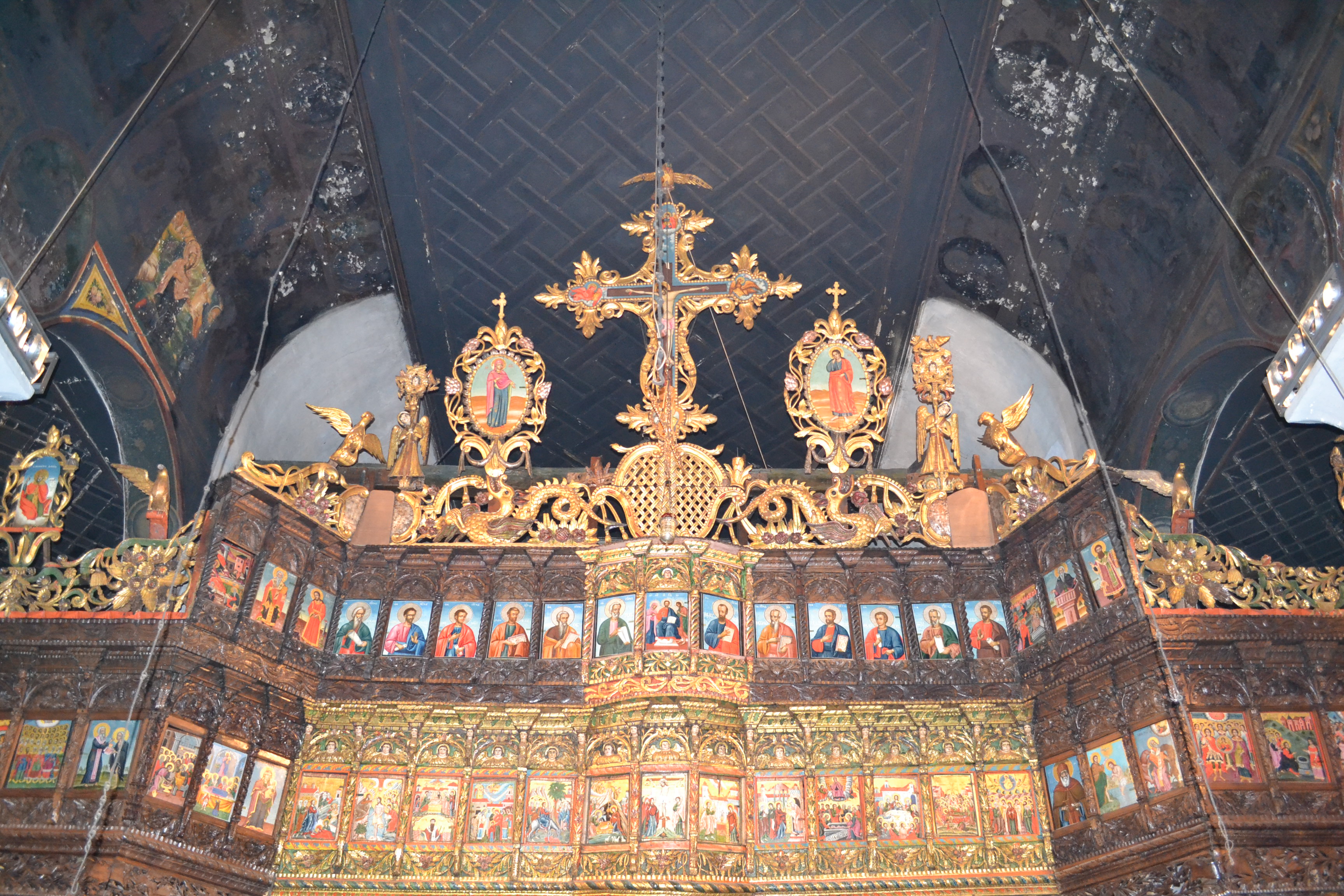
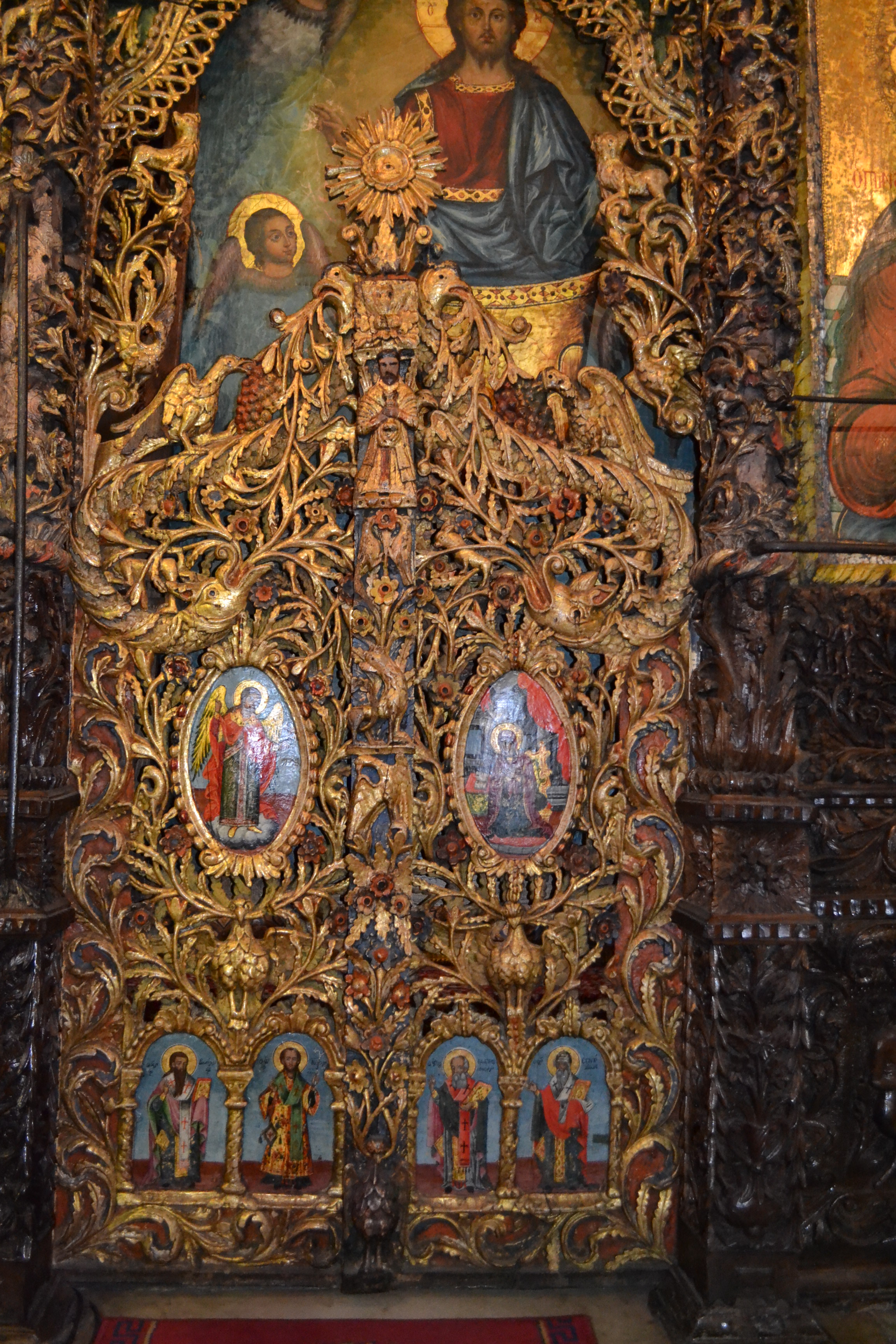
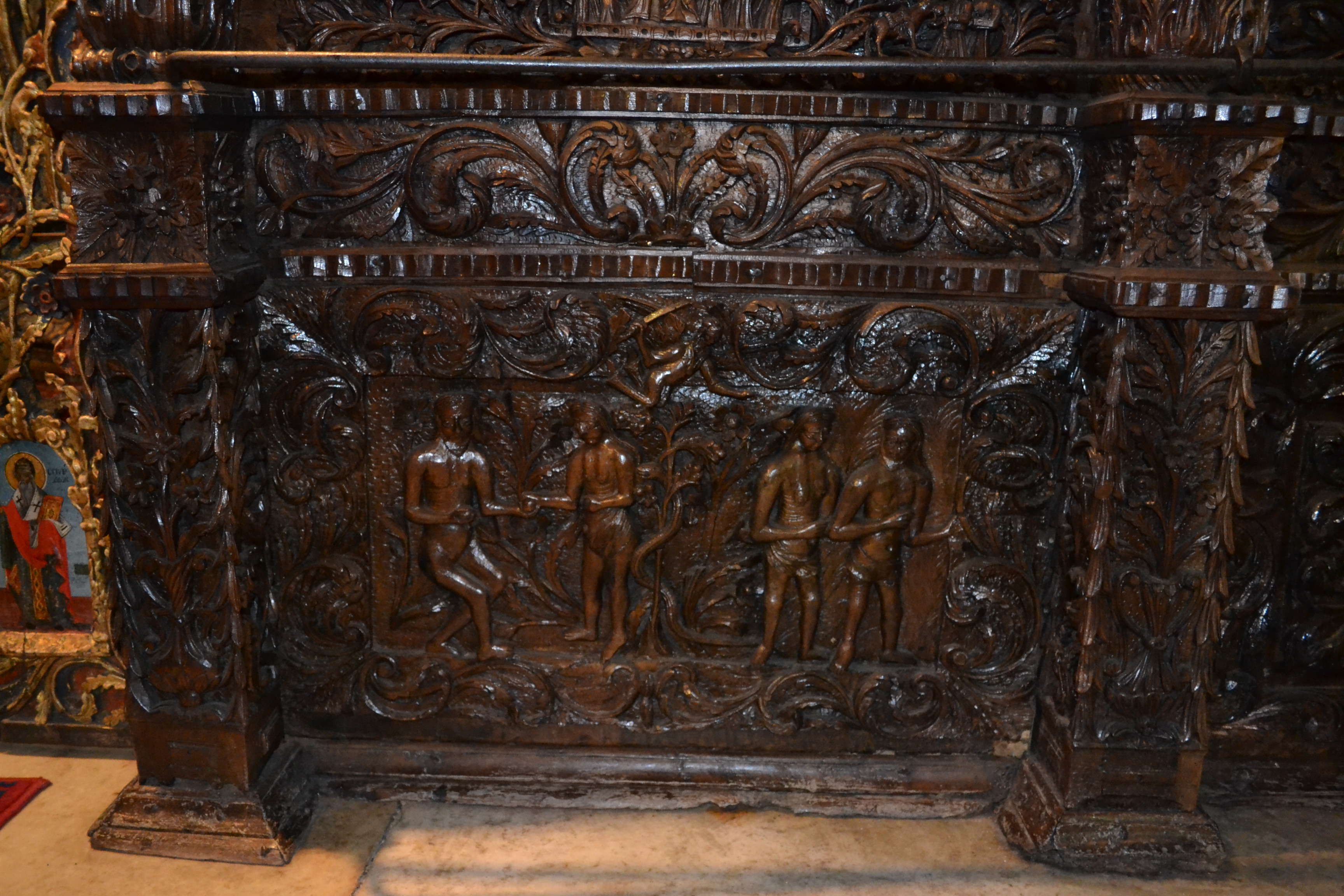
The icons in the temple are painted with high professional skills.
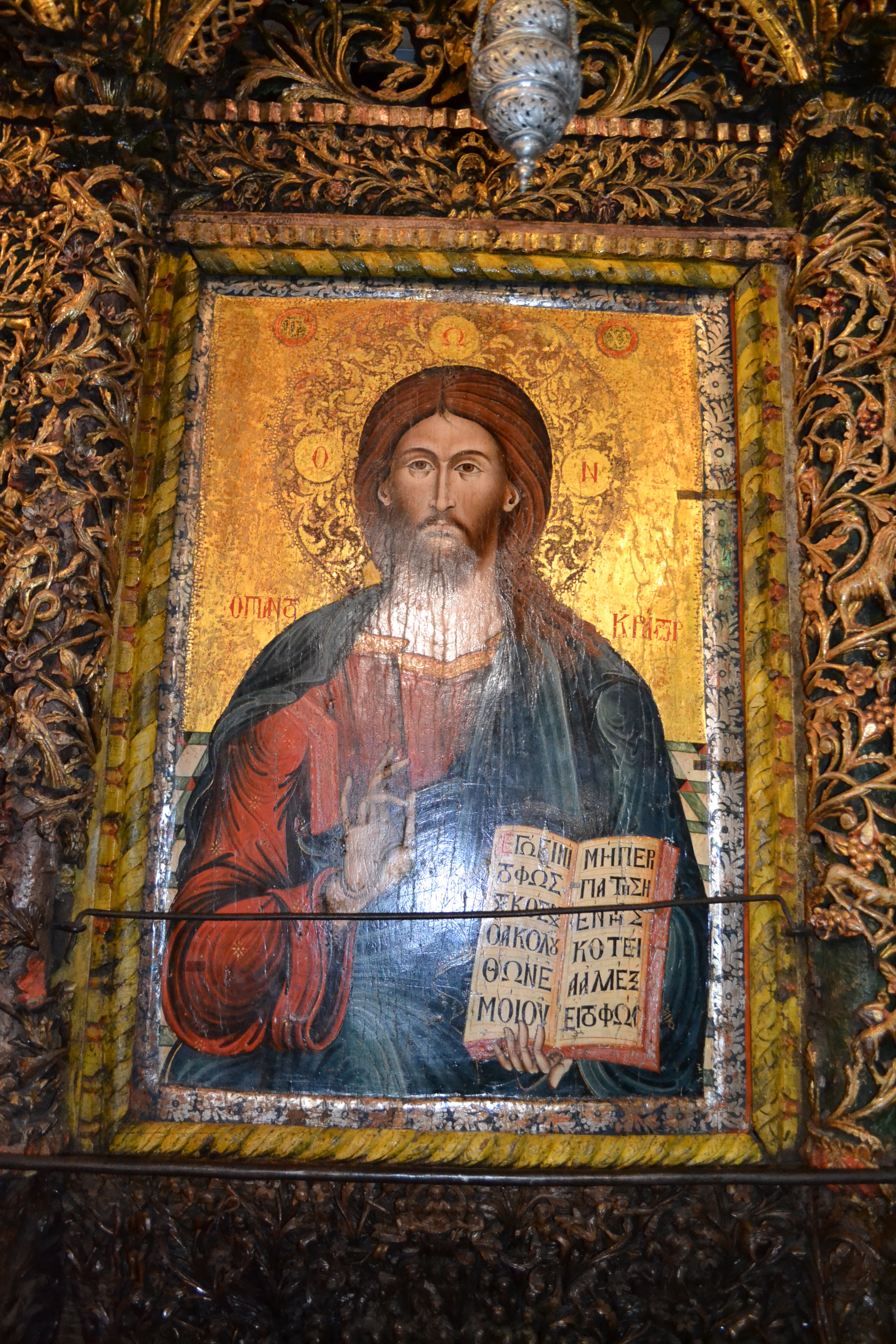
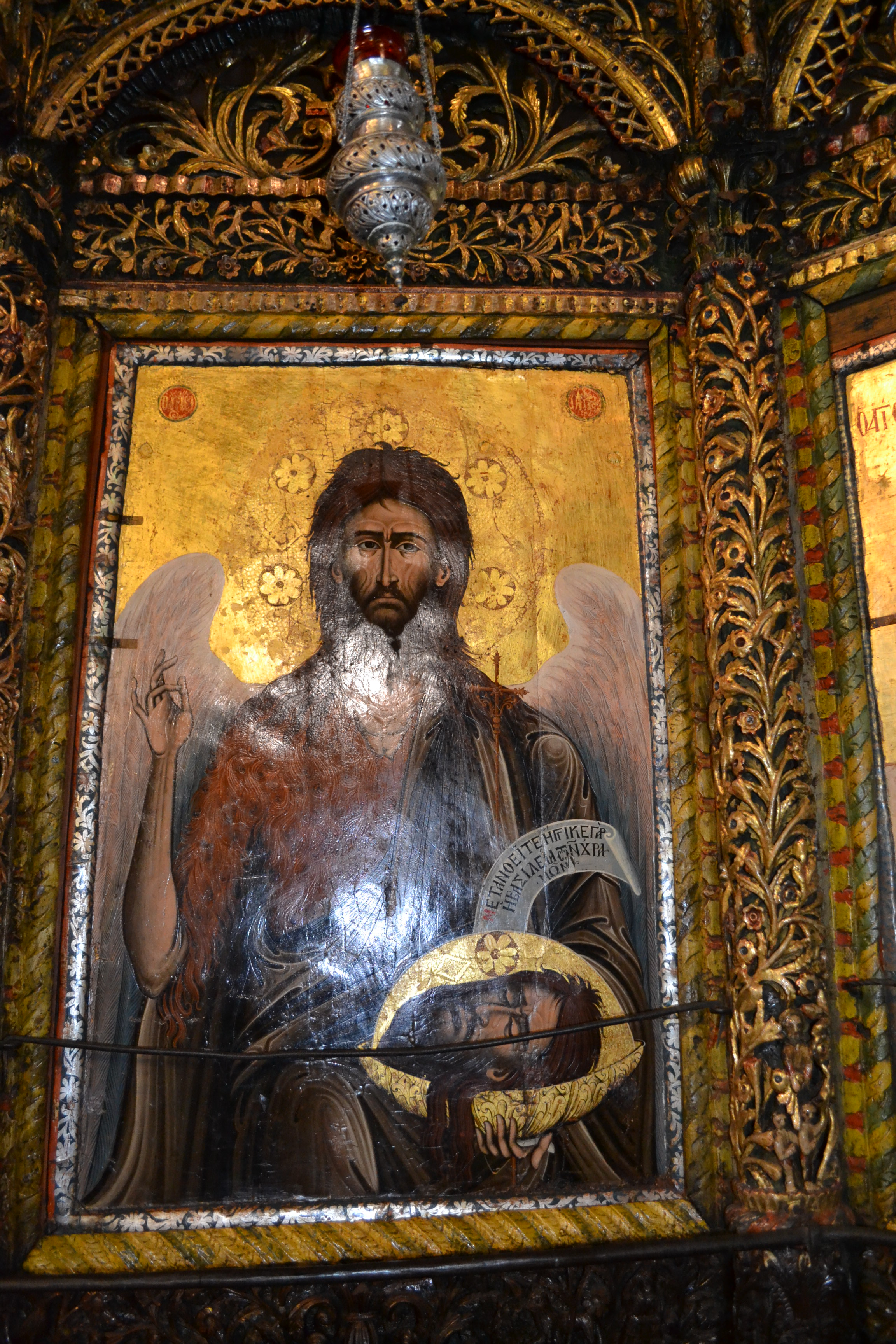
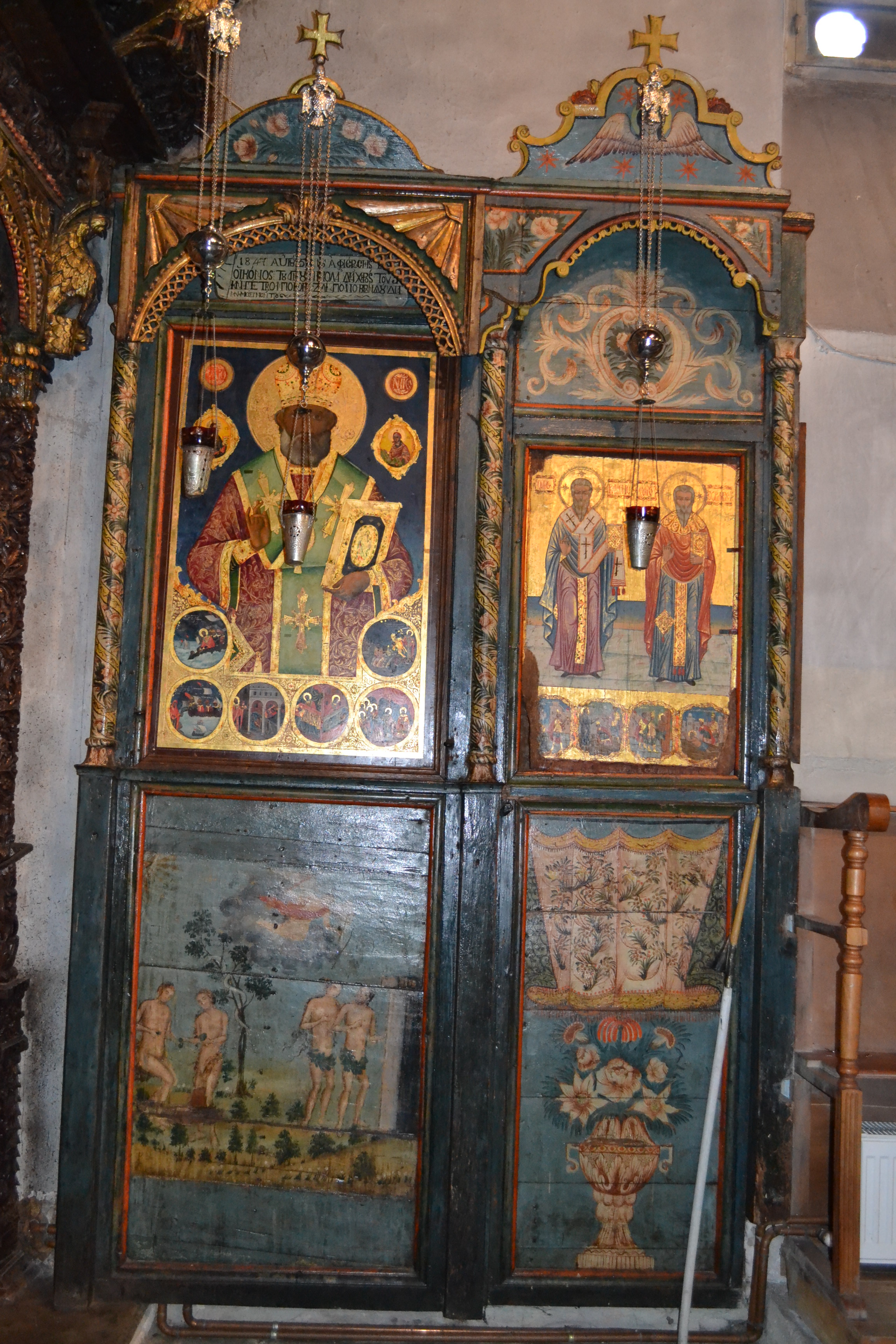
The church of St. Elijah the Prophet in Achladochori
We head north after we leave Serres and continue our trip to the village of Achladochori. It is situated between Siderokastro and the Bulgarian border, located between Mount Orbelos from the north and Vronoto from the south.
The church was built during the period from 1867 to 1870 with money and material means, as well as with voluntary work and under the direction of the Bulgarian municipality.
The temple impresses with its imposing architecture. It is the largest monumental cult building in Serres. The church is a three-nave dome basilica with a floor. To the east it ends with pentagonal conchas (five-pointed protruding arches).
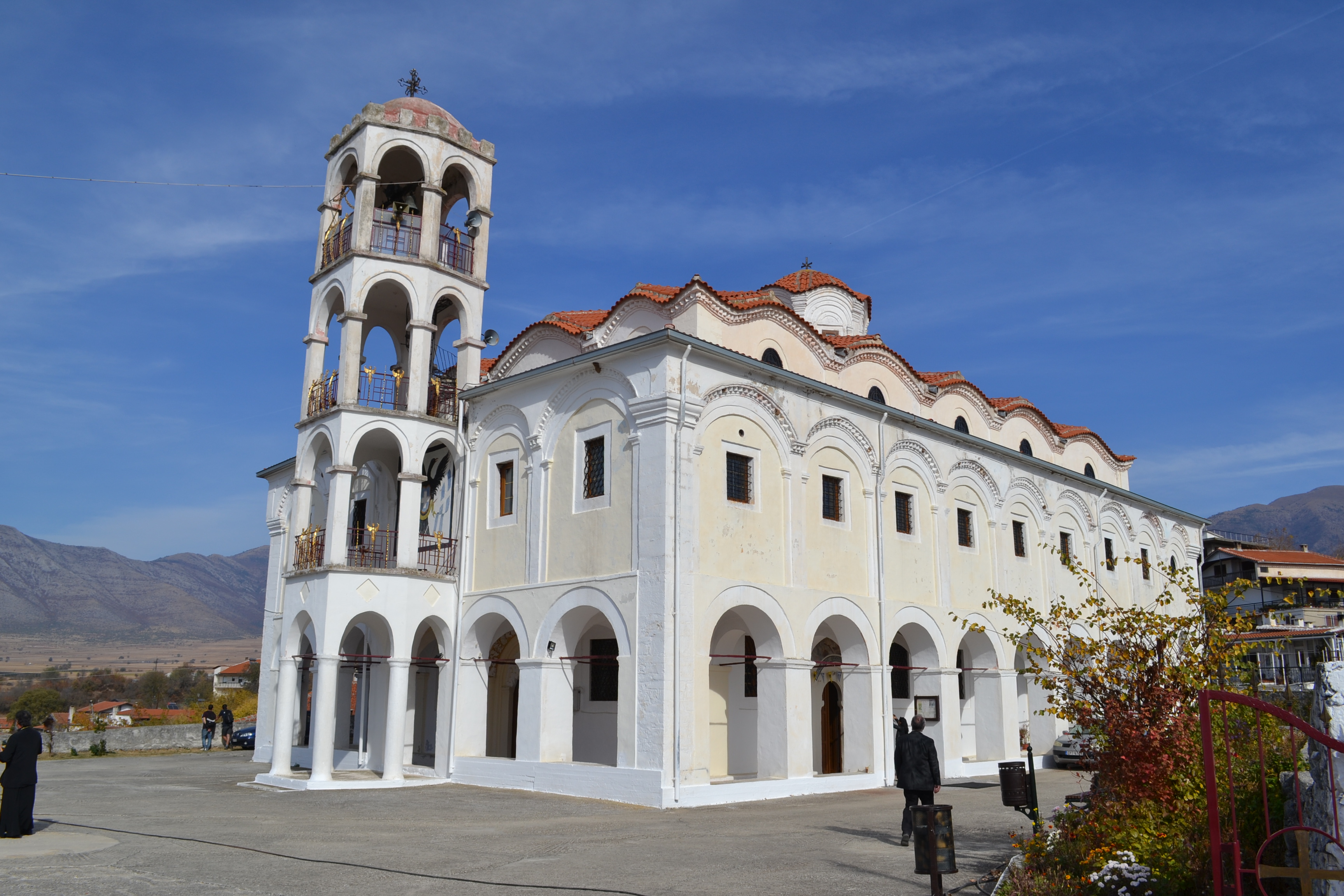
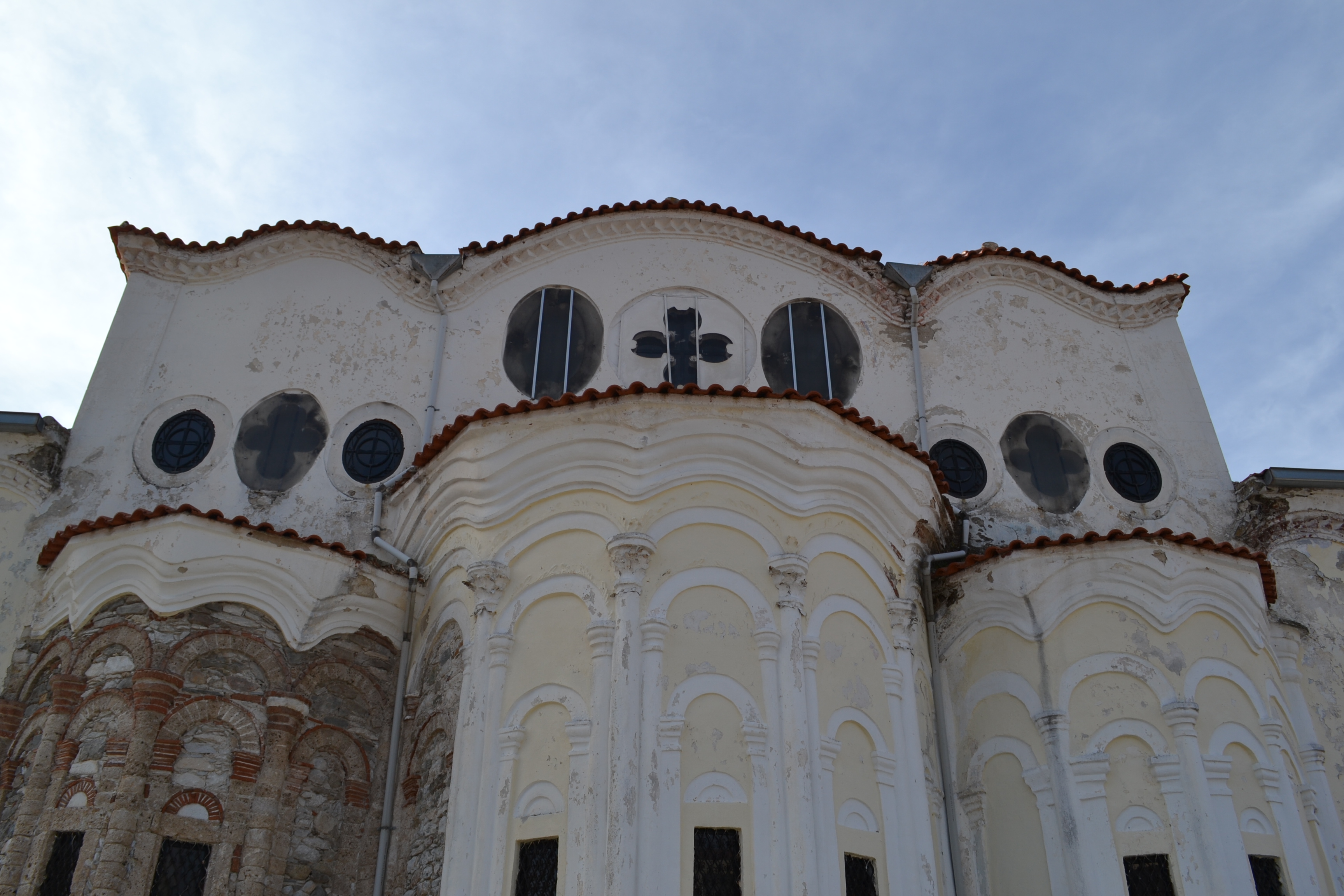
The western entrance has a rich embossed decoration.
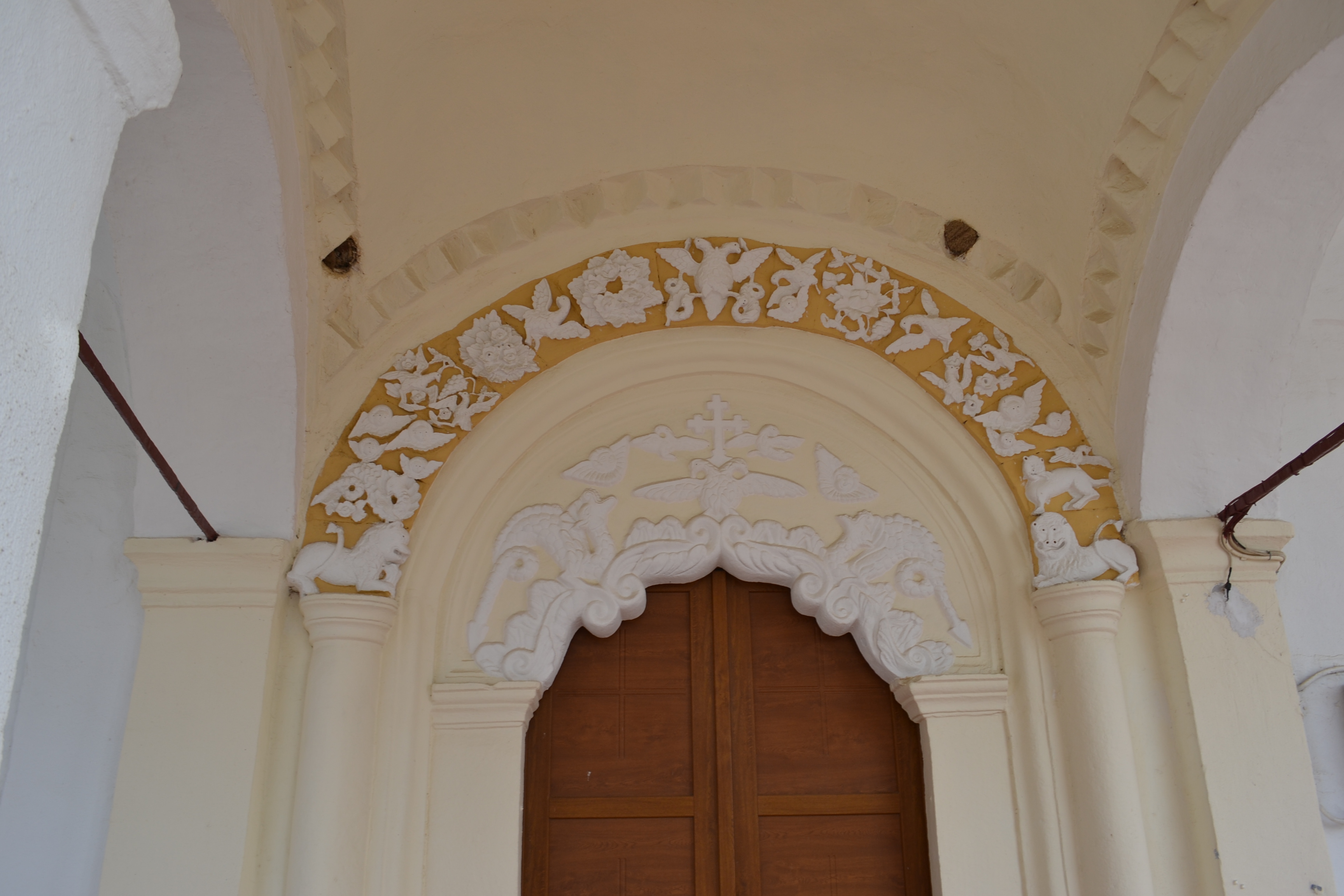
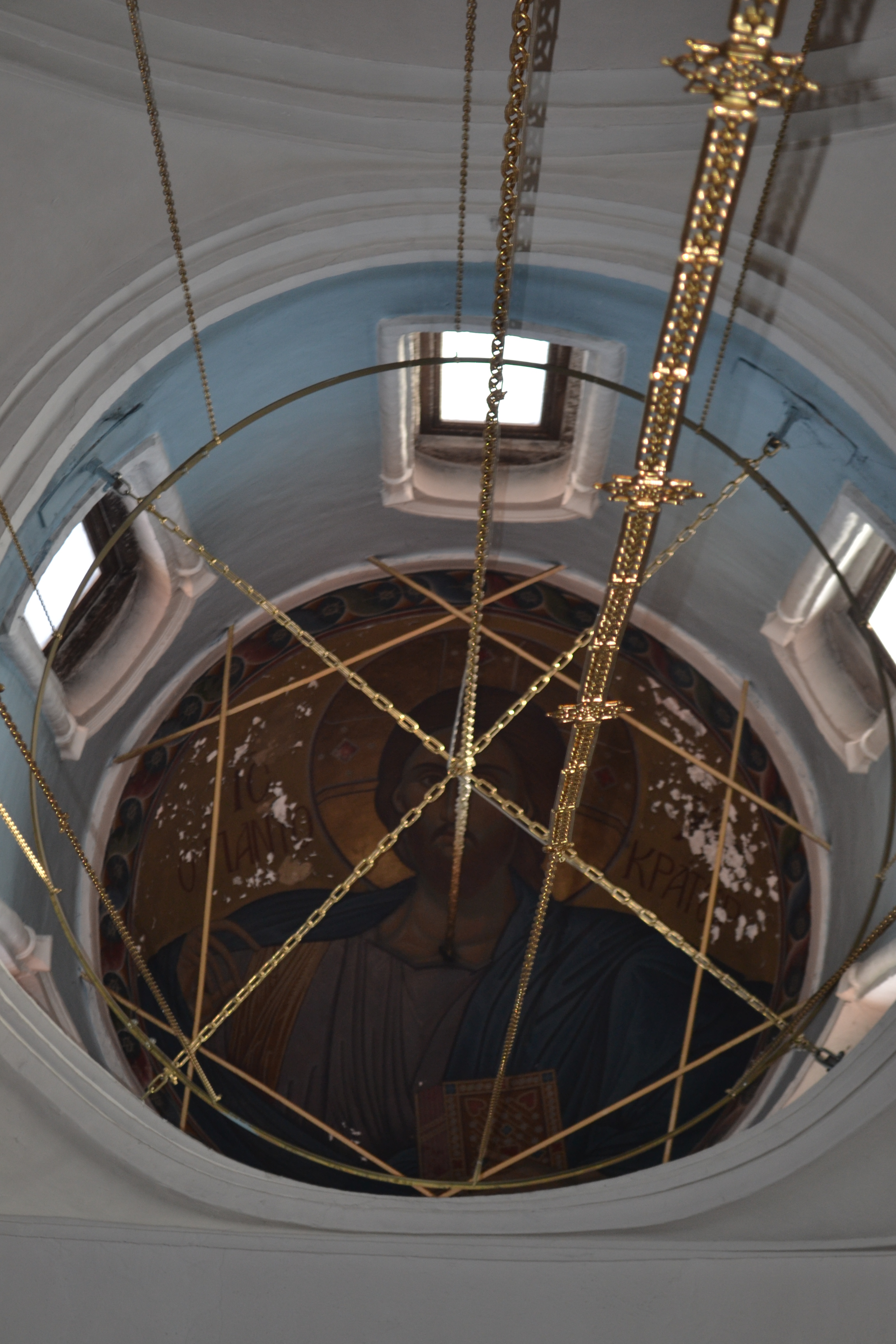
The frescos in the temple were painted in 1877 by an unknown icon-painter. There are scenes from the life and wonders of Jesus Christ. There is an image of Christ the Almighty in the dome.
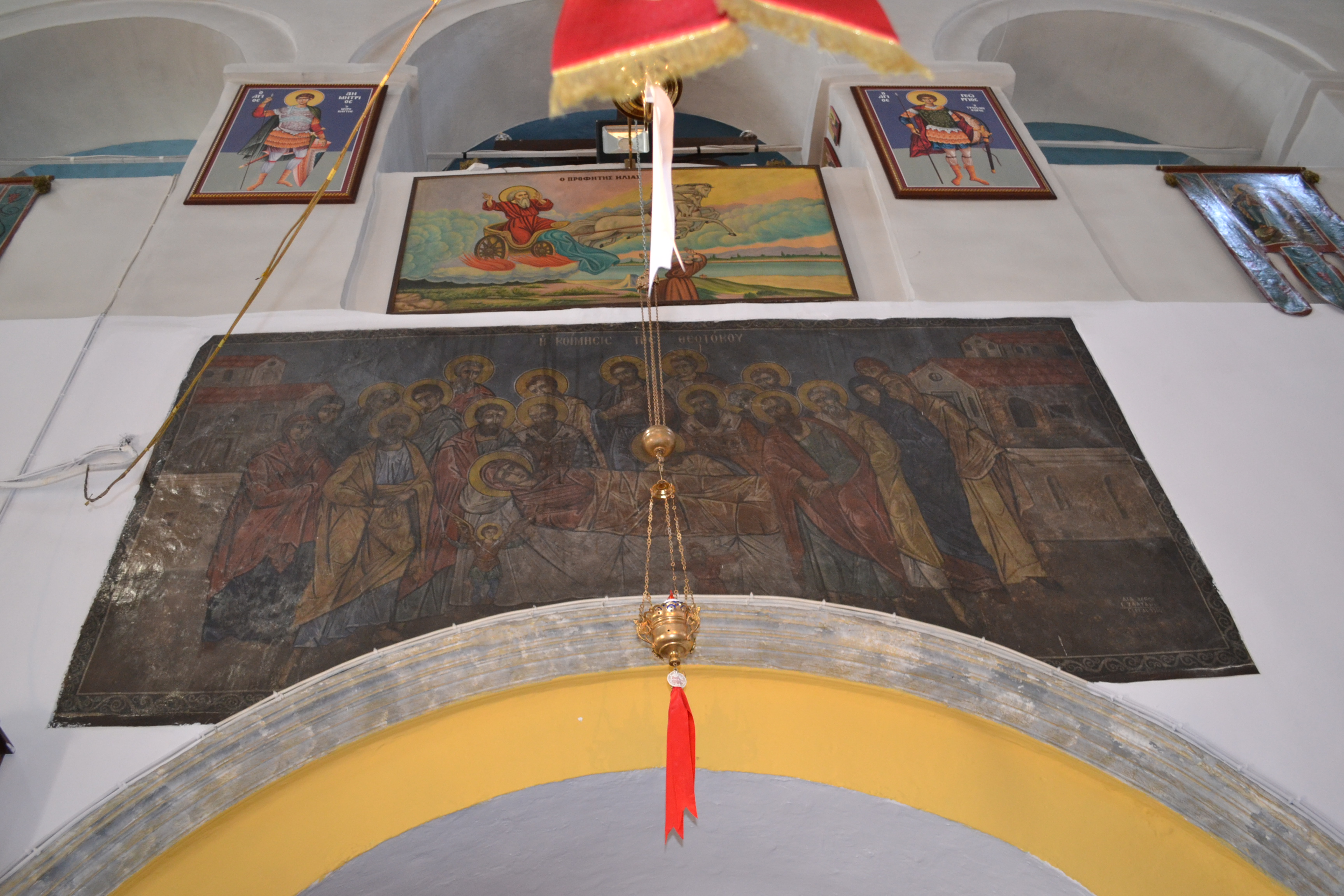
On the western wall on the railing, the traditional for this part of the temple scene Assumption of the Virgin is located.
The composition of the “The Judgment Day” is on the southern wall but unfortunately it is in a very bad condition and needs restoration.
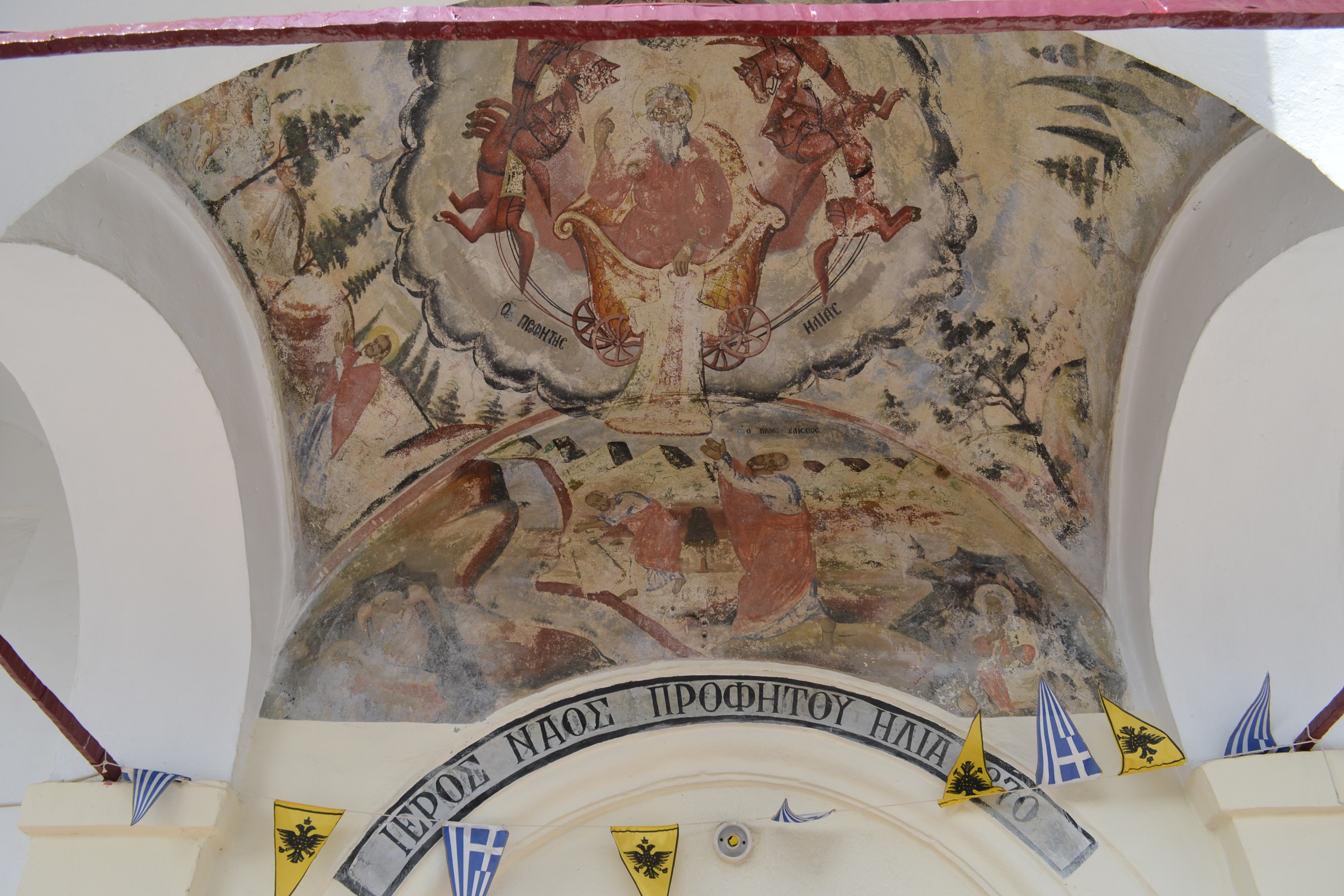
Outside, above the southern entrance is the scene”Ascension of St. Elijah”
Melnik
After enjoying the Revival architecture, frescoes and icons in the Republic of Greece, we cross the Promachonas – Kulata border check-point and head to the Revival Orthodox monuments in the Republic of Bulgaria.
We first head towards the town of Melnik, the smallest town in Bulgaria which attracts tourists with preserved medieval and Renaissance architecture. It is located in the south-western slopes of Pirin, 22 km southeast of town Sandanski.
Melnik – the church of St. Nicholas the Wonderworker
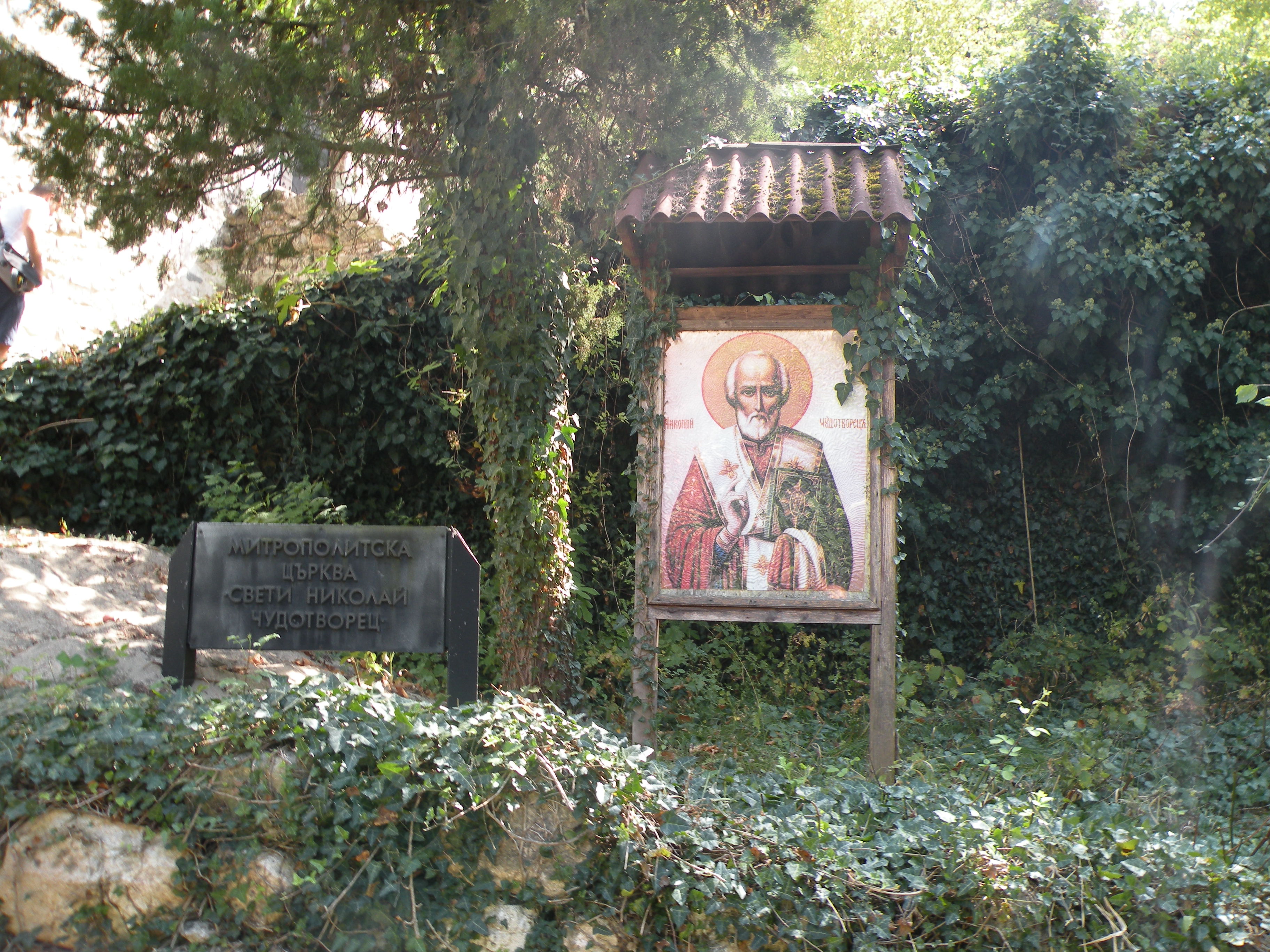
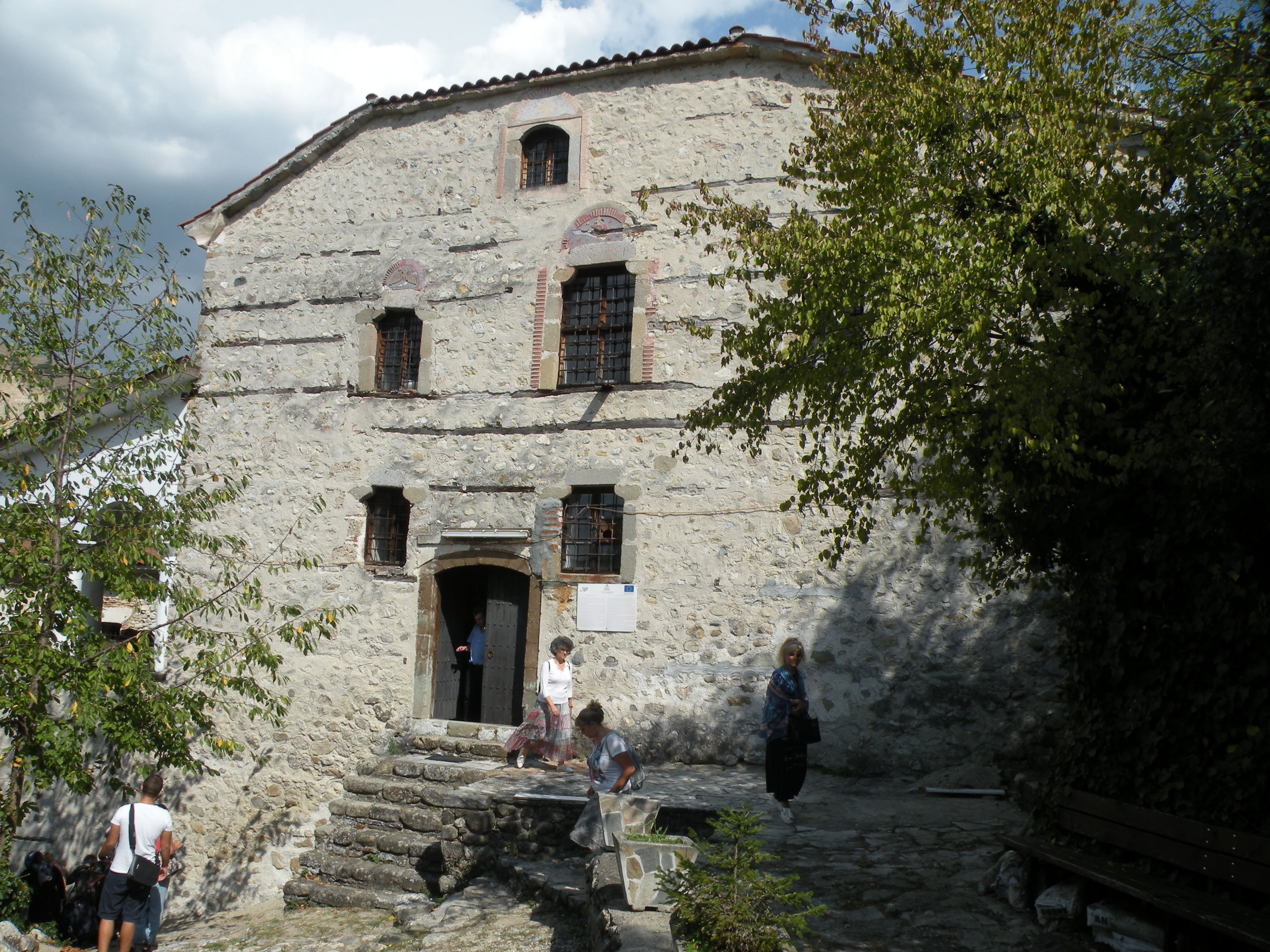
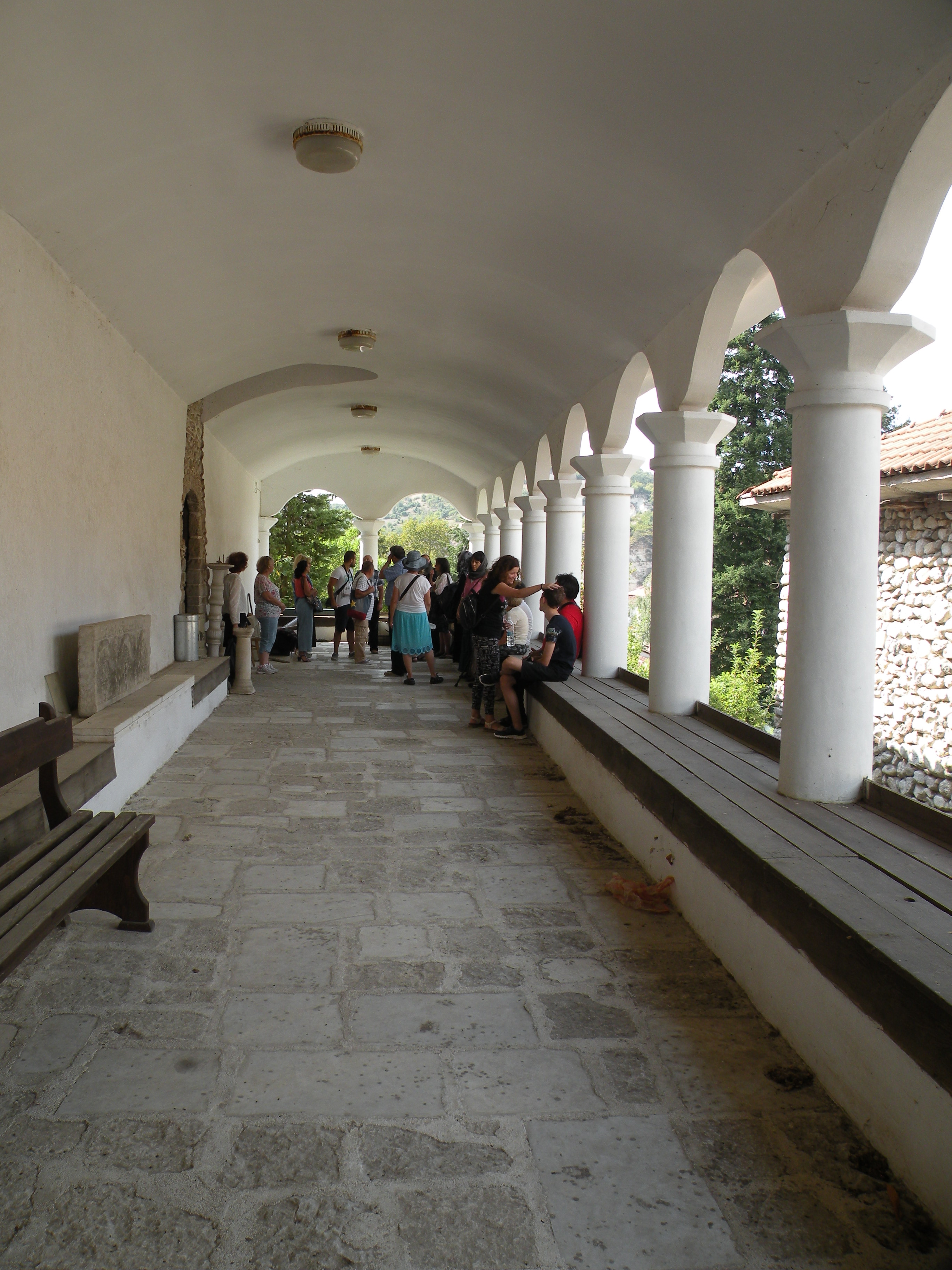
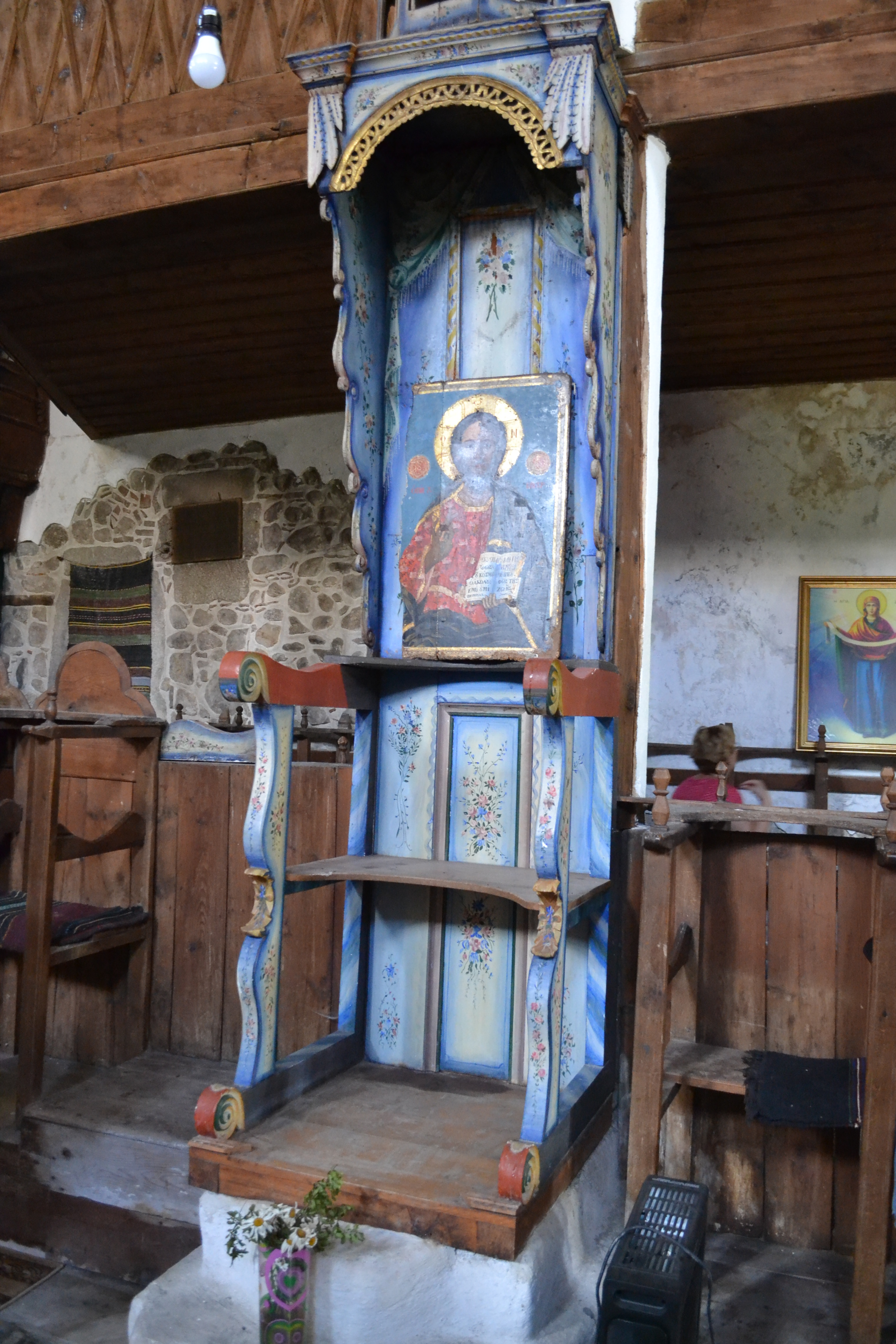
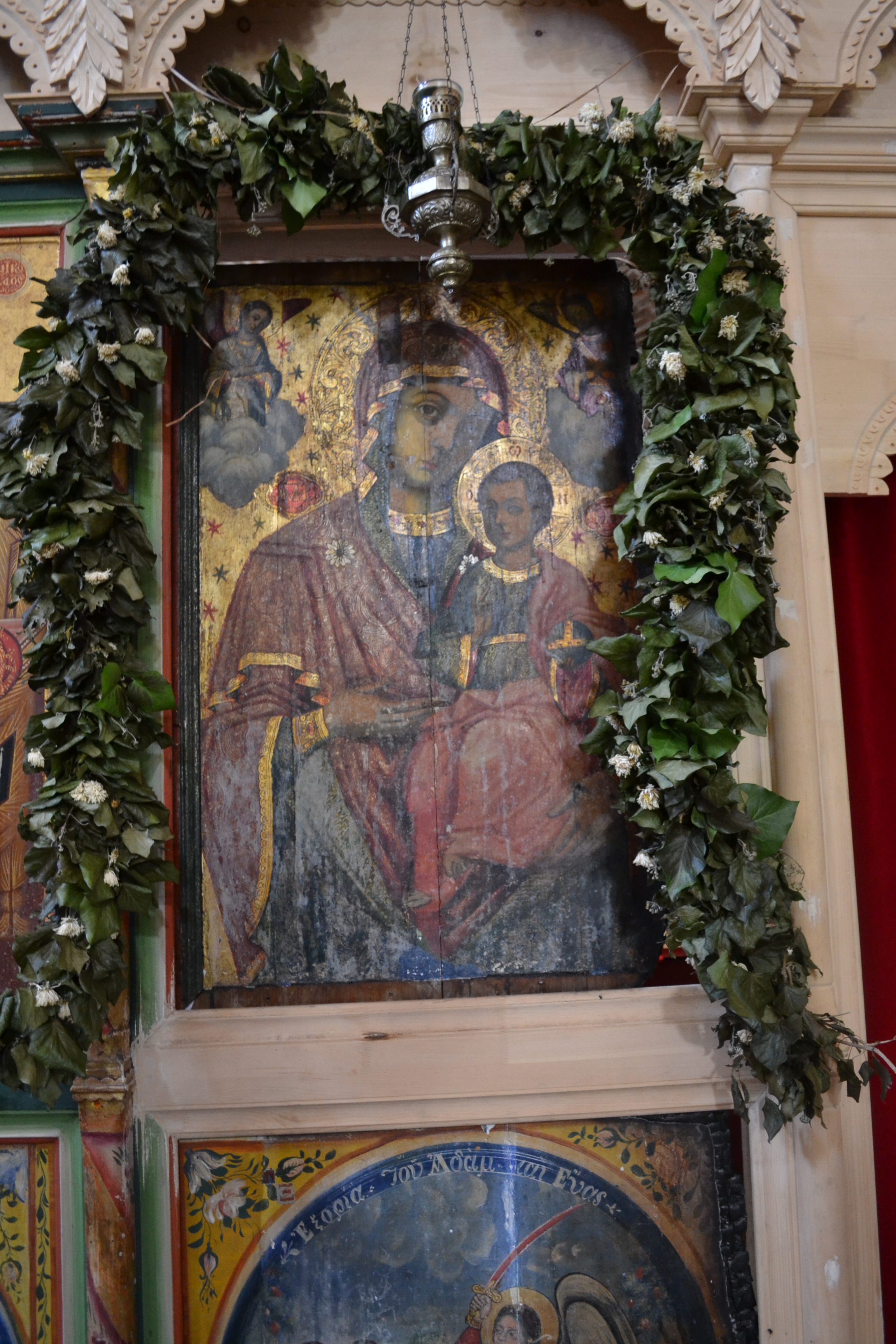
The church of St. Nicholas the Wonderworker is located in the cultural and historical reserve of the city. As we enter the temple you can see a part of the medieval masonry. The church was reconstructed into a pseudo basilica in 1756. In the nineteenth century it was renovated with an outside gallery from the north and a female ward (emporia).
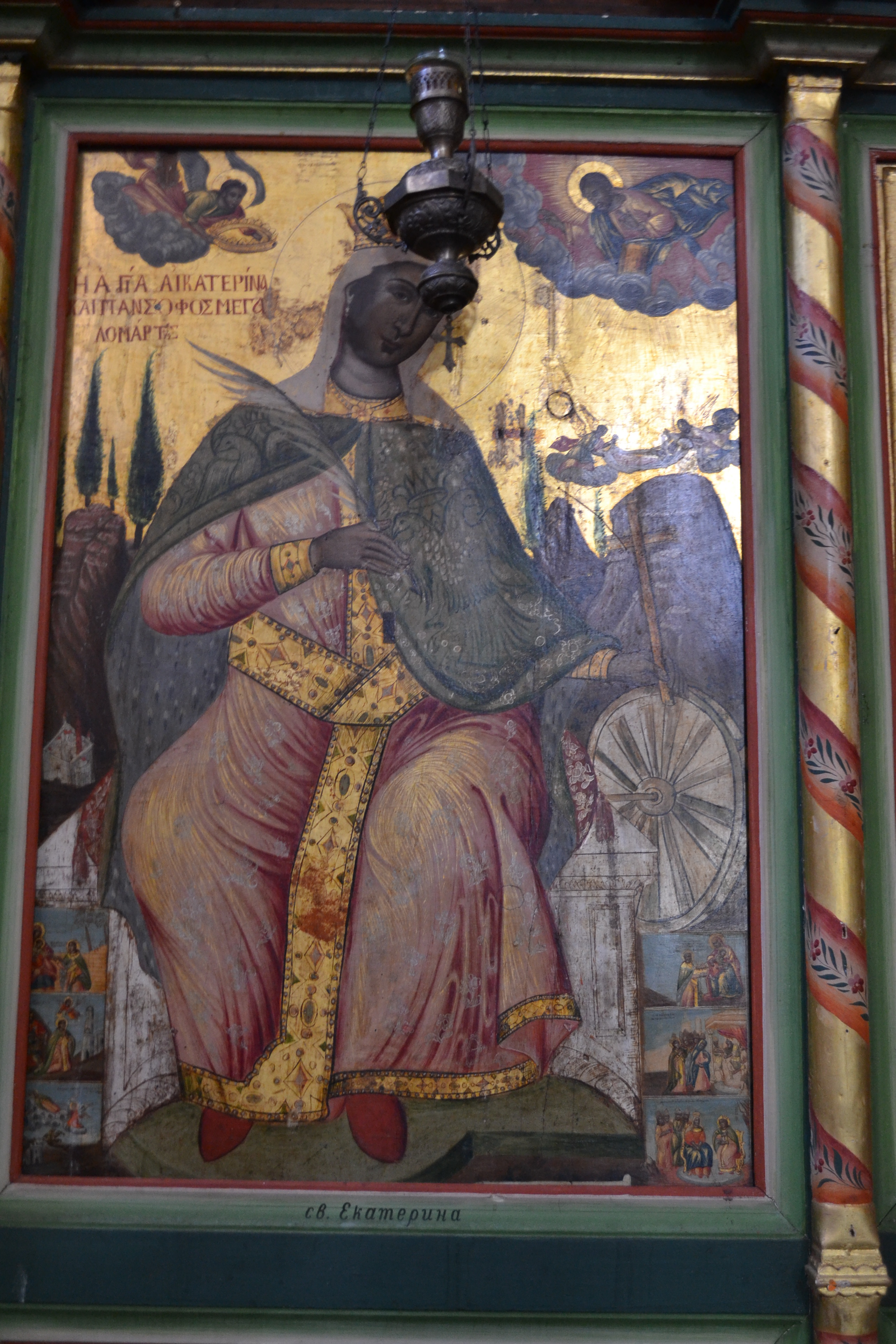
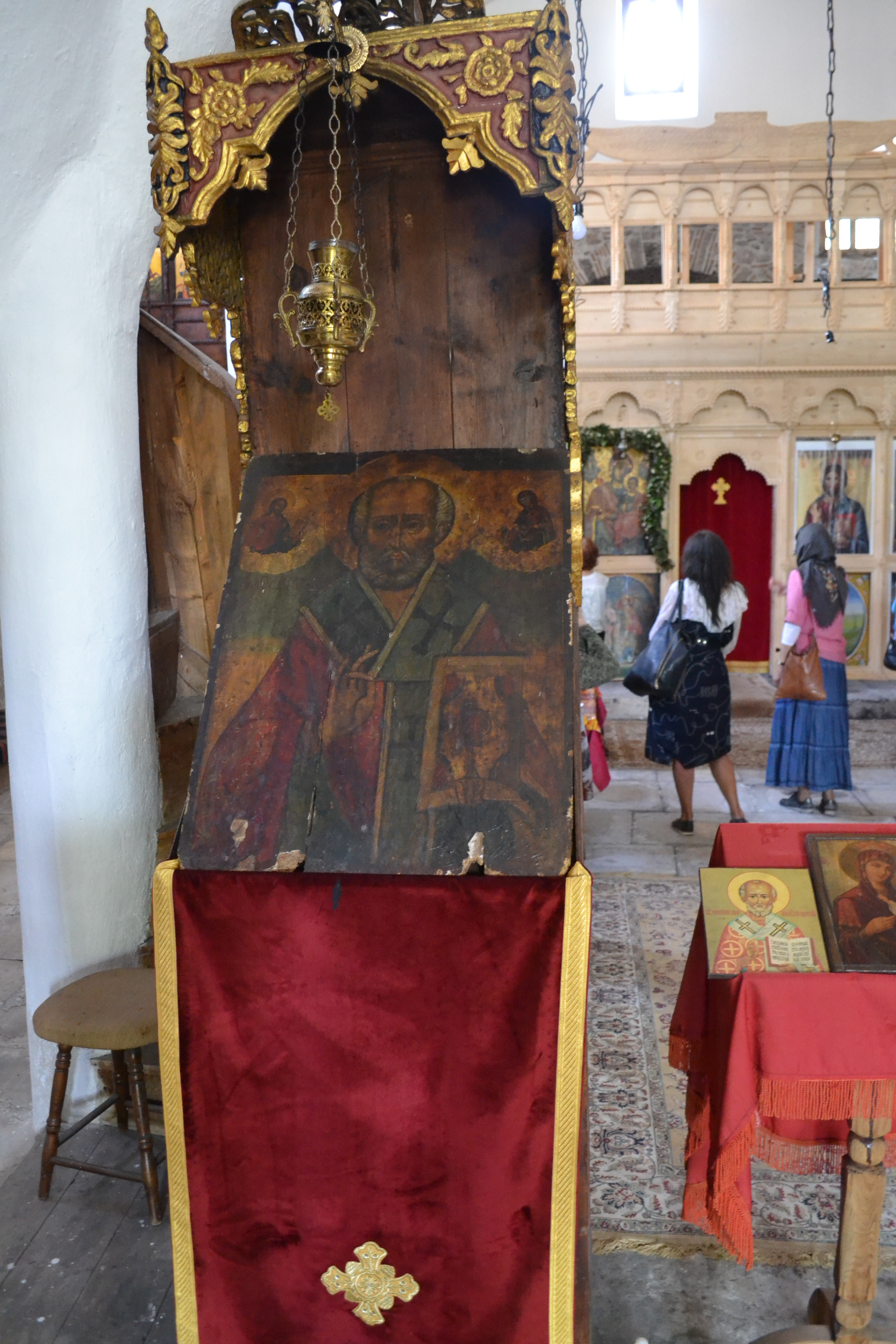
The church of St. Antonius in the town of Melnik
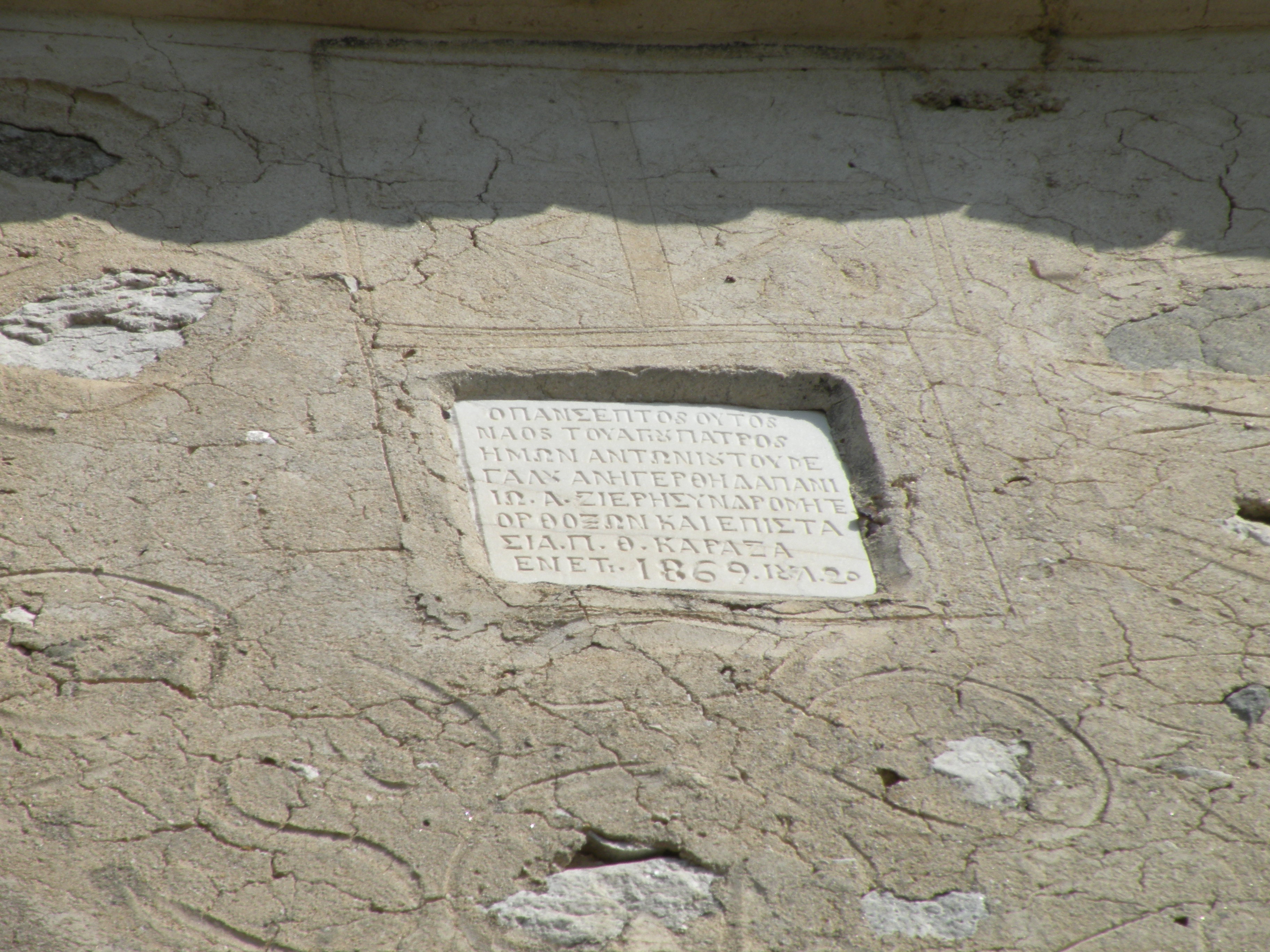
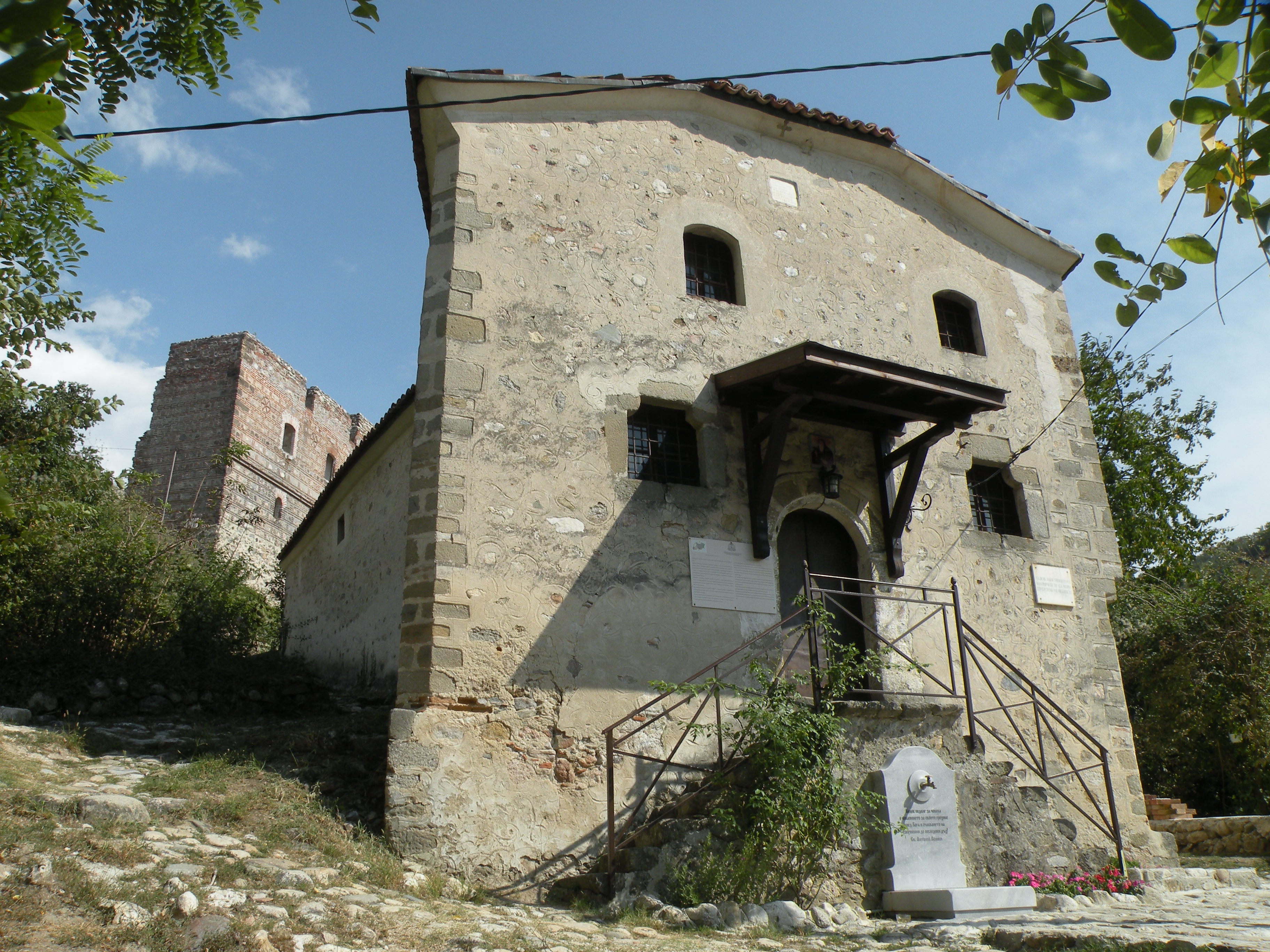
The church of St. Antonius is situated close to the church of St. Nicholas the Wonderworker. It was built in 1869 which is visible from an inscription above its western door.
It is a one-nave and one-apse building with an “emporia” (a balcony) in the western part and a slightly protruding apse in the eastern part.
A detailed donation inscription about the decoration from 1881 is preserved inside. It was painted by Lazar Argirov – an icon-painter from Melnik. The interior decoration is typical of the Late-Renaissance layout with painted ceilings, furniture, iconostasis, icons, chandeliers and candlesticks.
The iconostasis is a typical example of painted wooden iconostases with carved altar doors. Bouquets of flowers and fruits are painted on the panels under the icons.
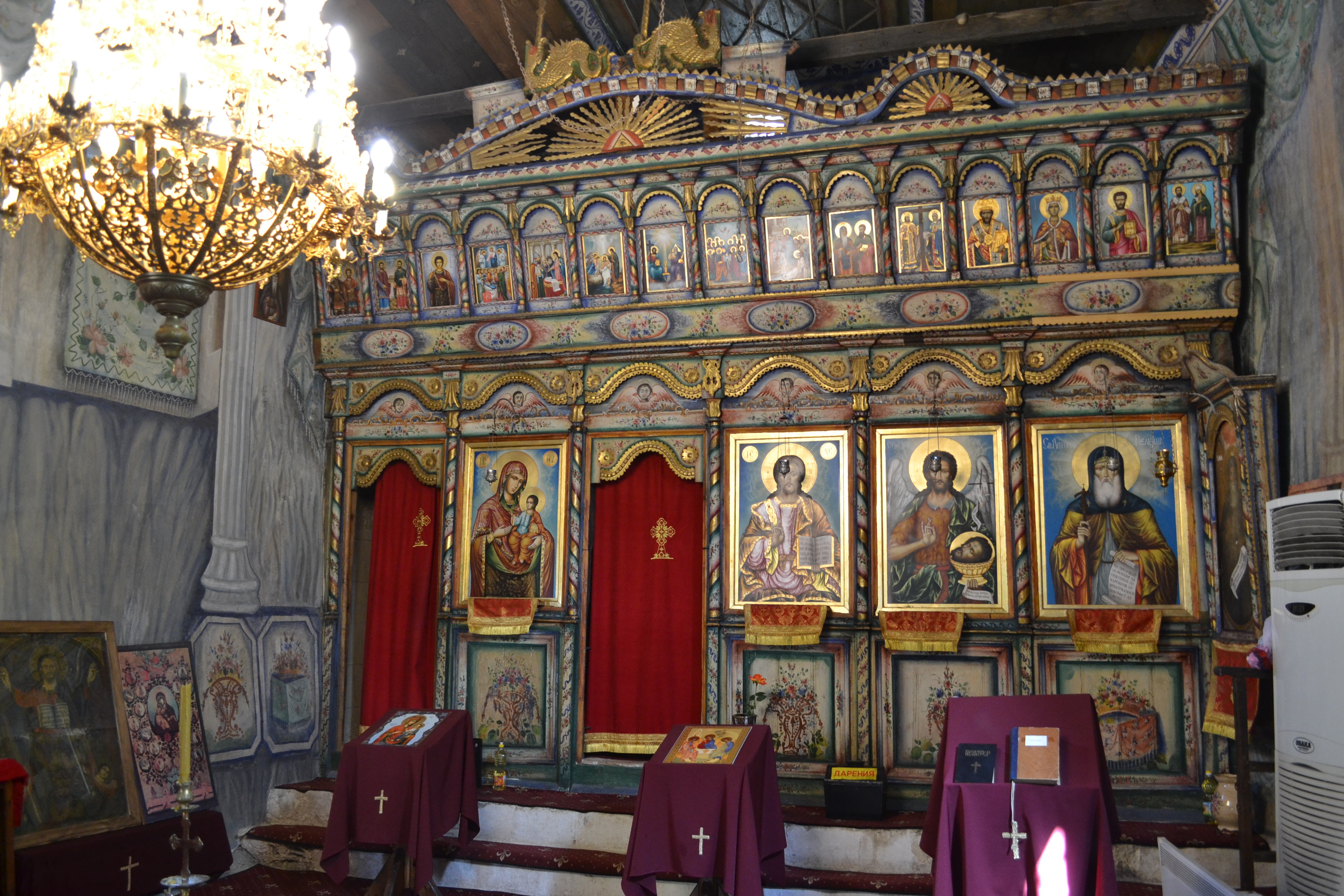
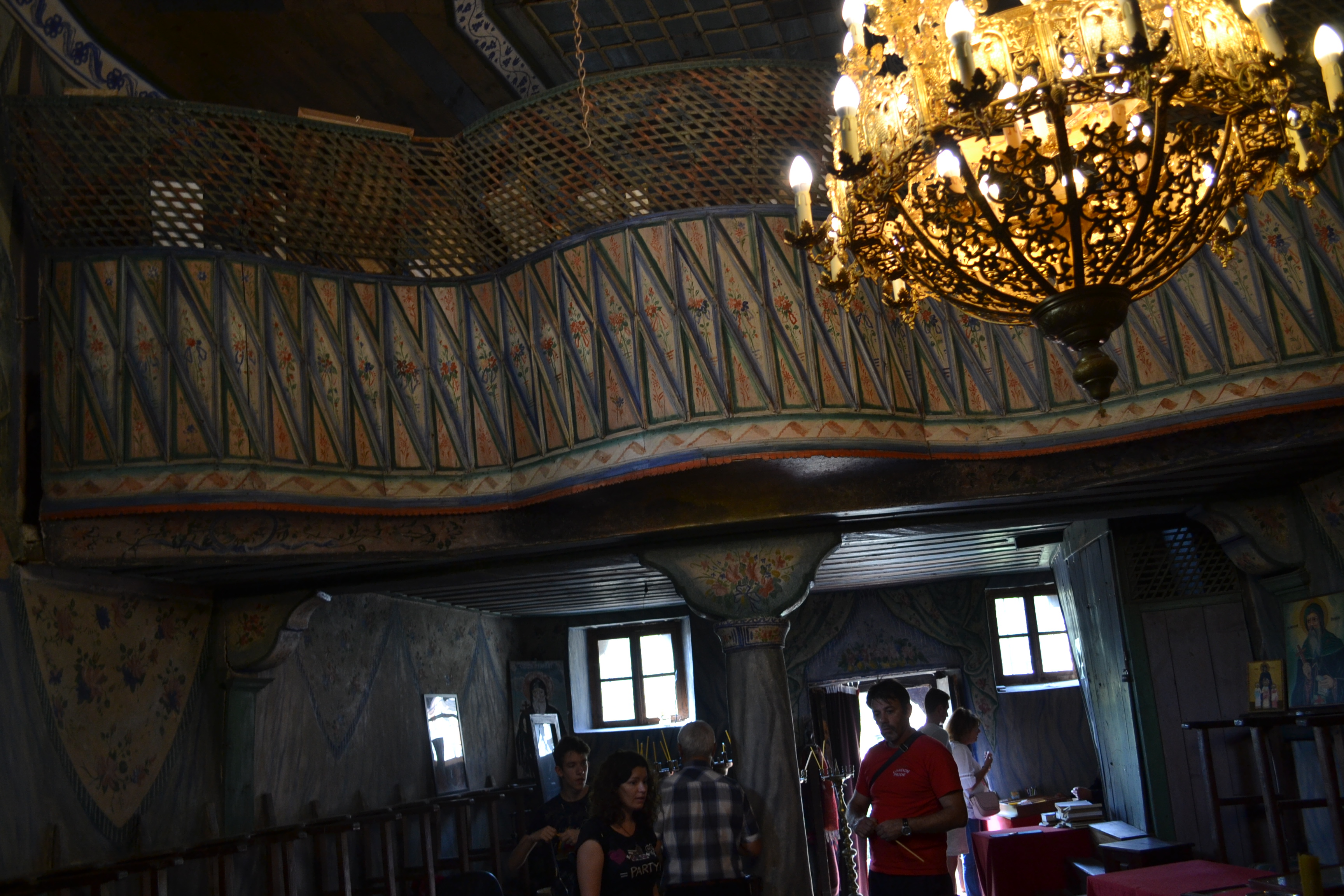
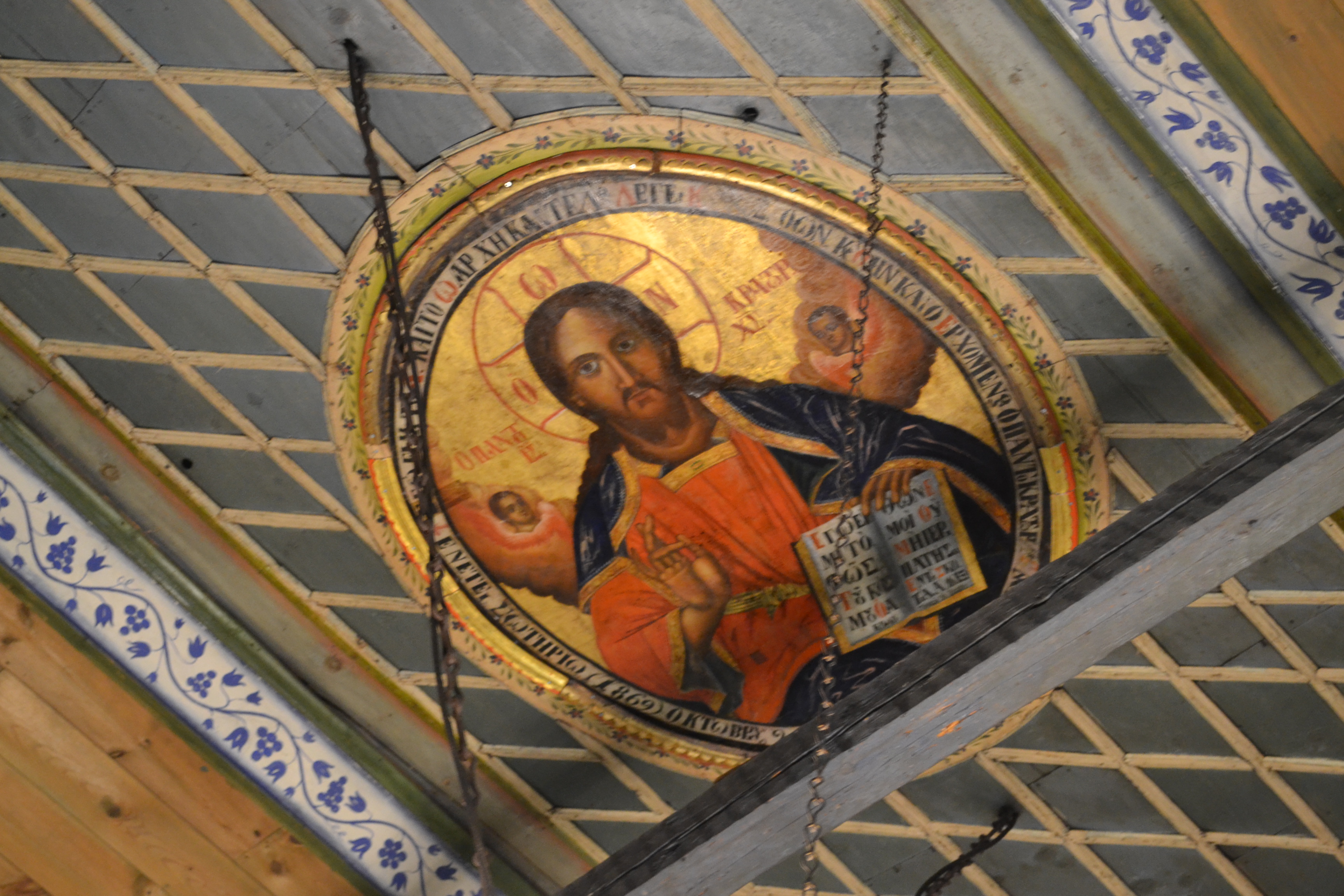
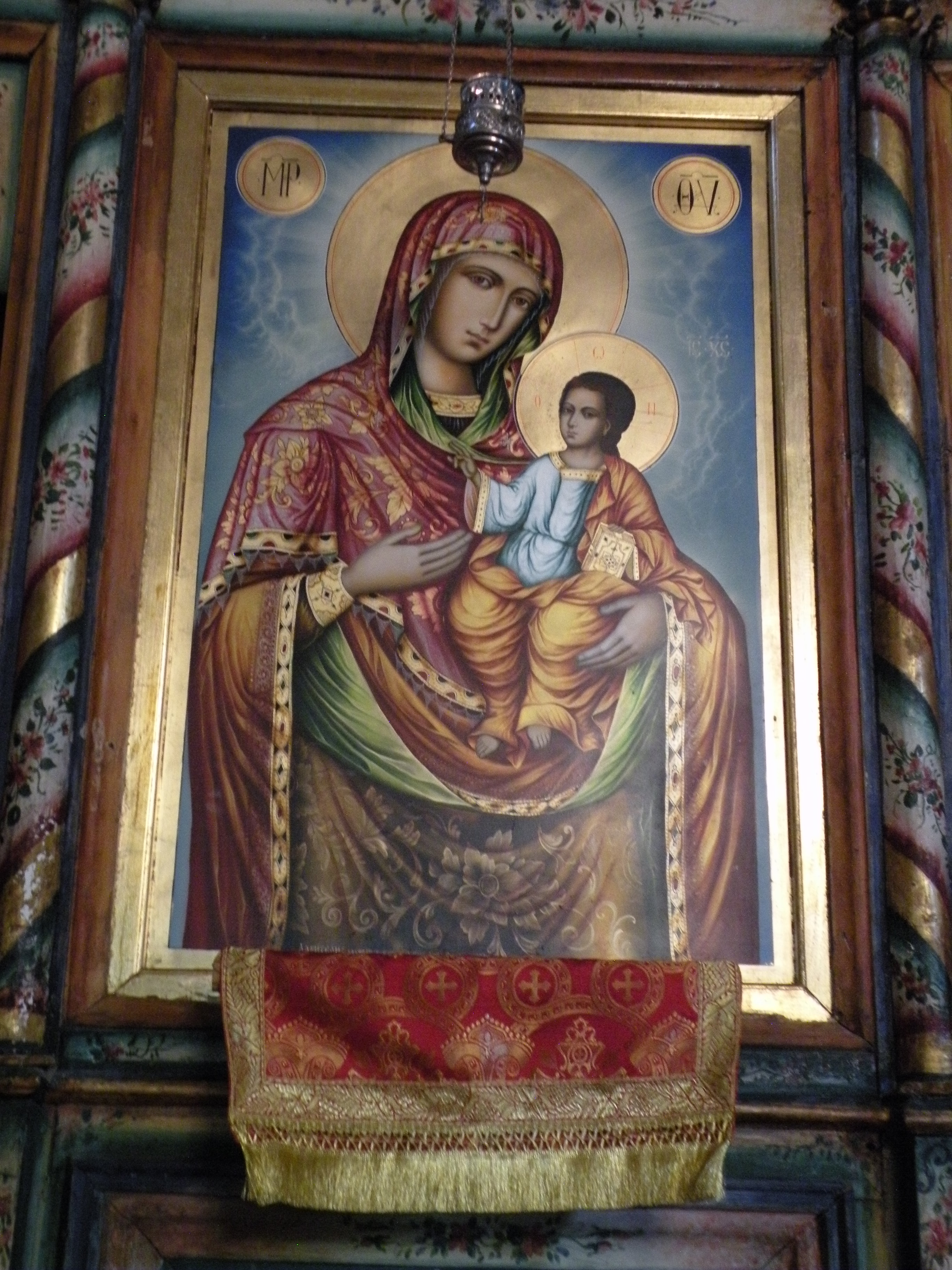
The temple icon of St. Antonius, and some of the royal and festive icons are work of Lazar Argirov and his helpers. There is a cassette ceiling and an image of Christ Almighty in the central mandorla.
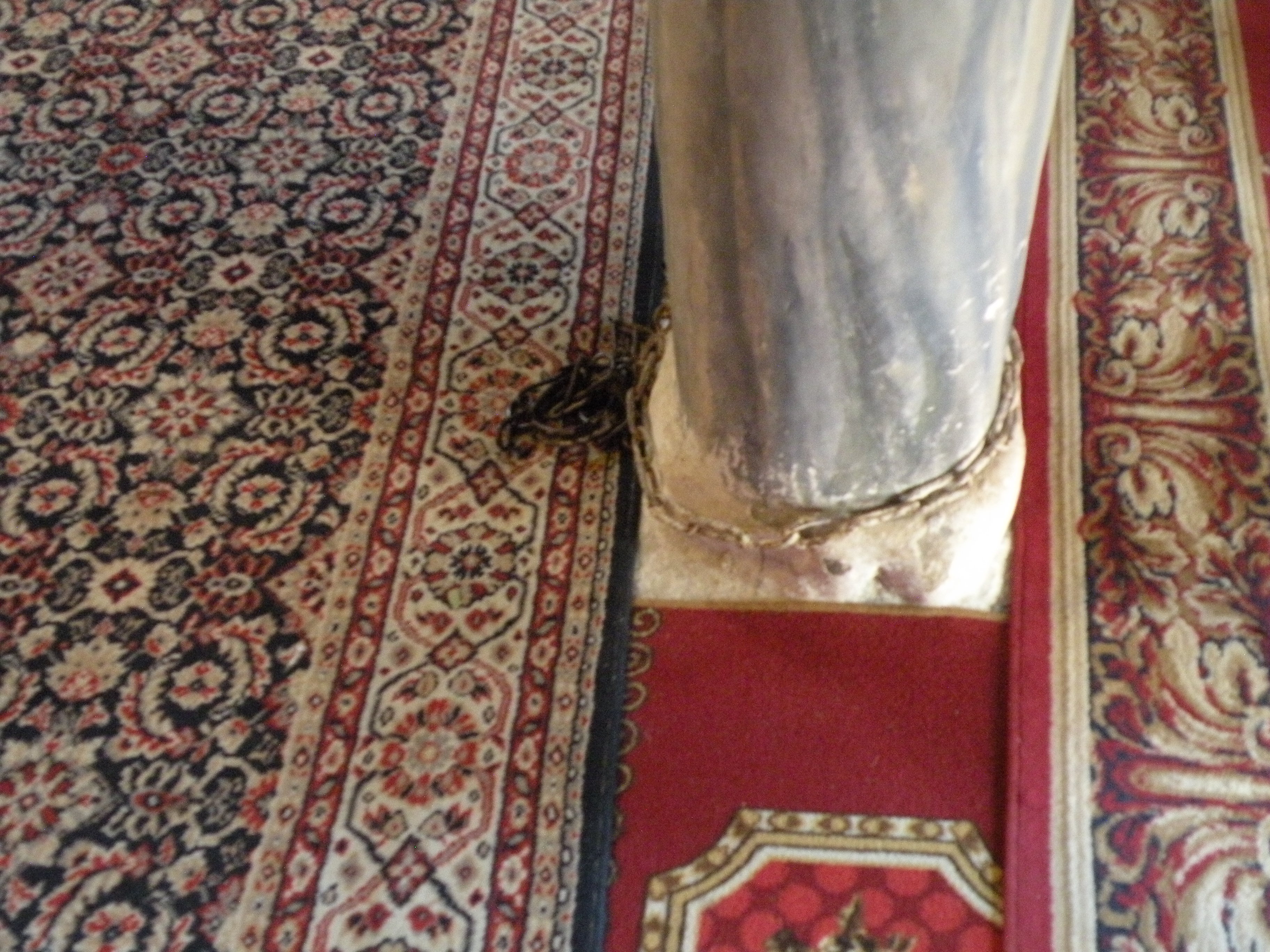
It is interesting that they used the temple as a healing place for people with mental issues. The sick people were brought and chained to a column to restore their health. They stayed overnight at certain holidays when the God’s mercy was the most significant. This way St. Antonius evicted the demons from the mentally ill. The chain around the column to which they tied them has been preserved until today.
The Church of St. George in the village Zlatolist
After seeing two churches in Melnik we continue to the village of Zlatolist. It is located 16 km southeast of the town of Melnik.
An inscription above the temple’s apse reveals that the church of St. George was built in 1857. The church is located a kilometer northwest of the village.
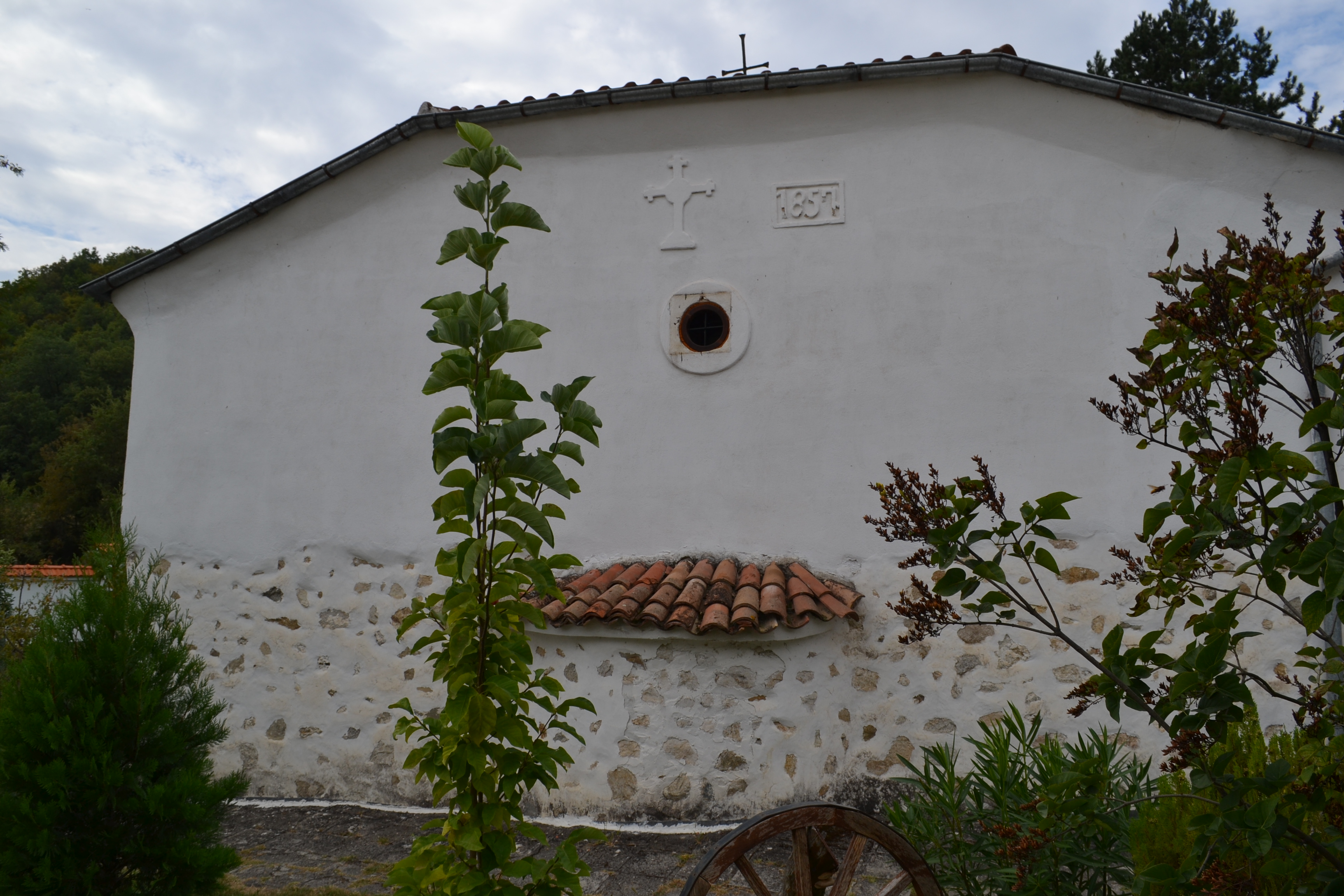
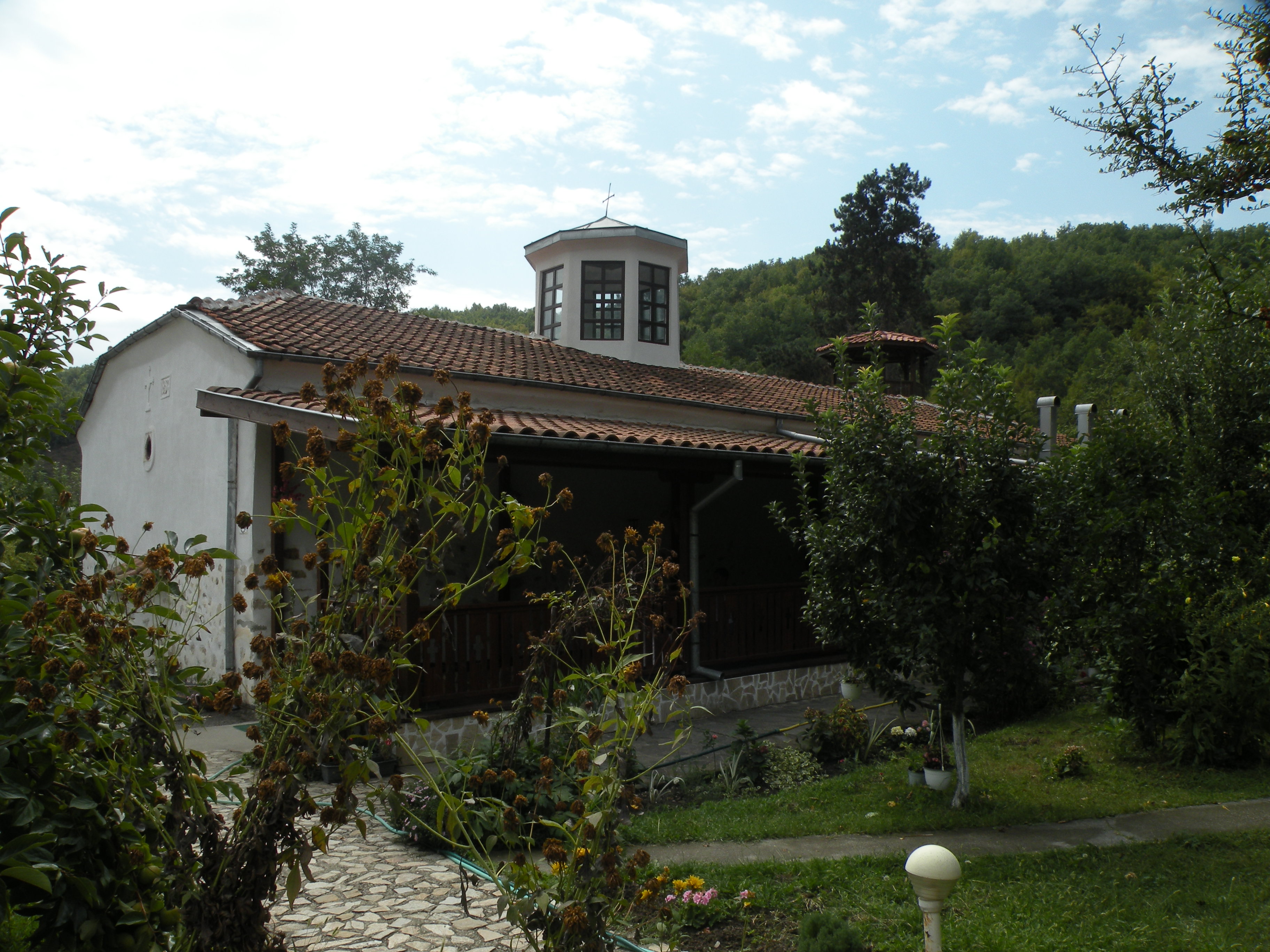
The temple is a three-nave and one-apse pseudo-basilica which is deeply buried in the ground. The church has a narthex and emporia (women’s ward). There is a wooden bell tower in the southwest corner.
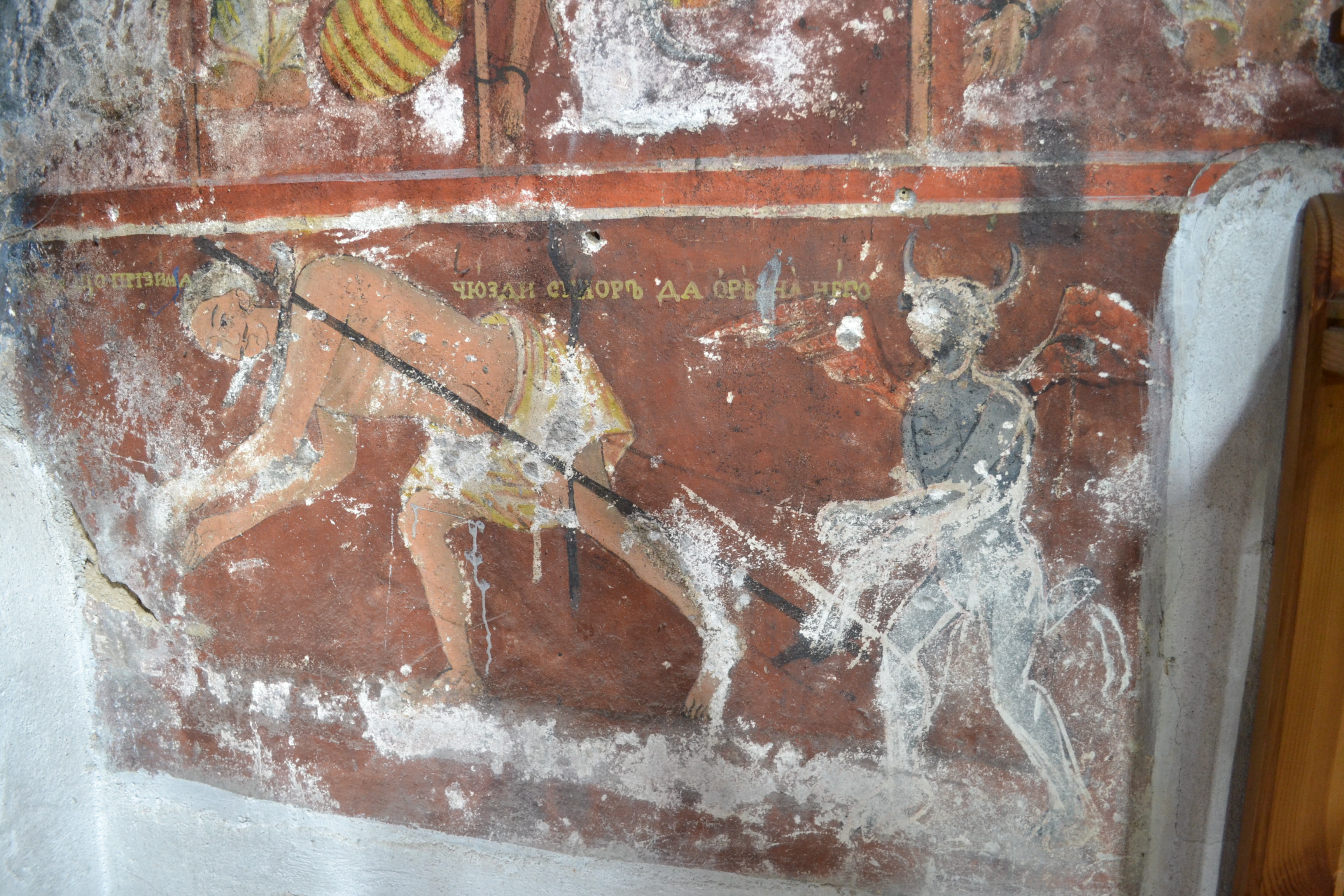
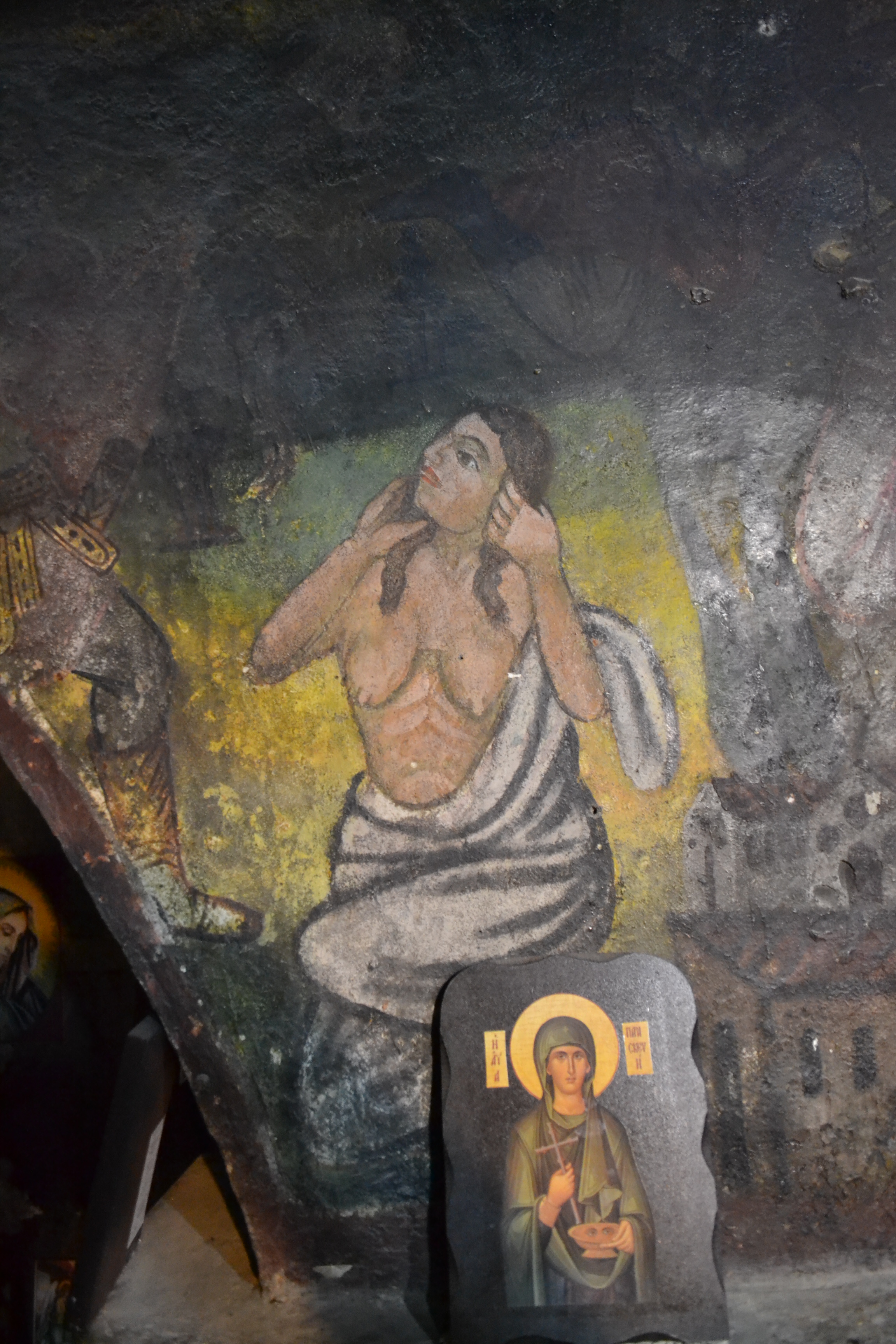
The frescoes were from 1876 and were painted by Teofil Minov. The scenes with a naked woman, St. Christopher with a head of a boar and others are very interesting. Among the sinners is a ploughing man in harness who is punished for ploughing somebody else’s land.
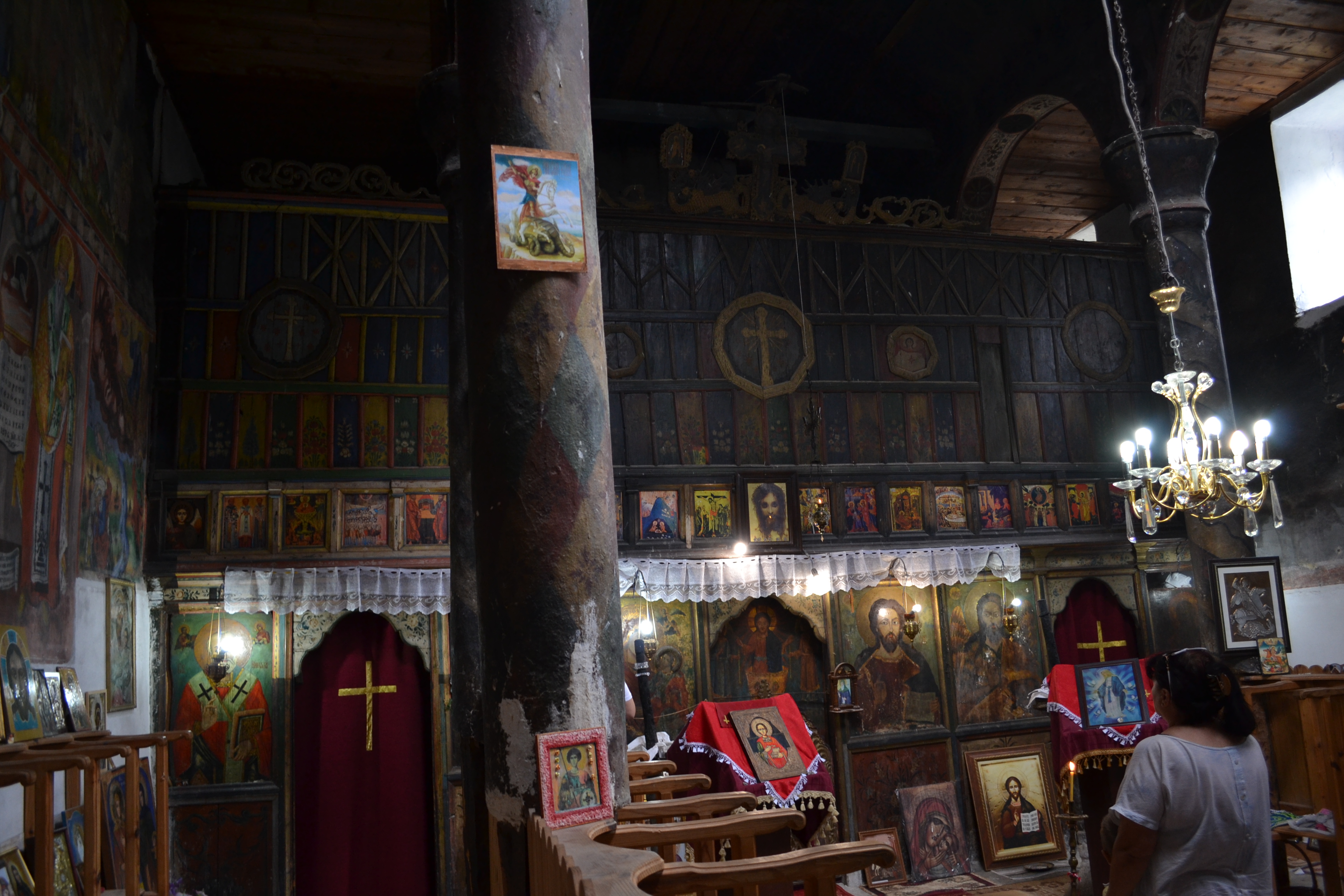
The structure of the temple’s iconostasis is very interesting.
Rozhen monastery “Nativity of the Virgin”
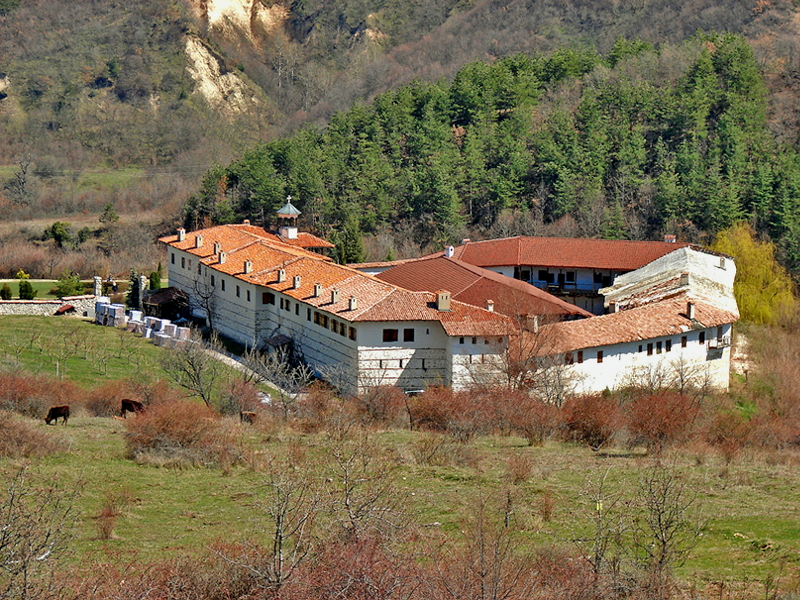
After seeing the church in Zlatolist, we head to the biggest sanctuary in the Blagoevgrad region – Rozhen Monastery “Nativity of the Virgin”. It is located 8 km east of the town of Melnik. There is no written information about the founding of the monastery. The first objects that show life in the cloister are from the 13th century. The construction of a part of the temple and surrounding buildings dates back to the 15th century.
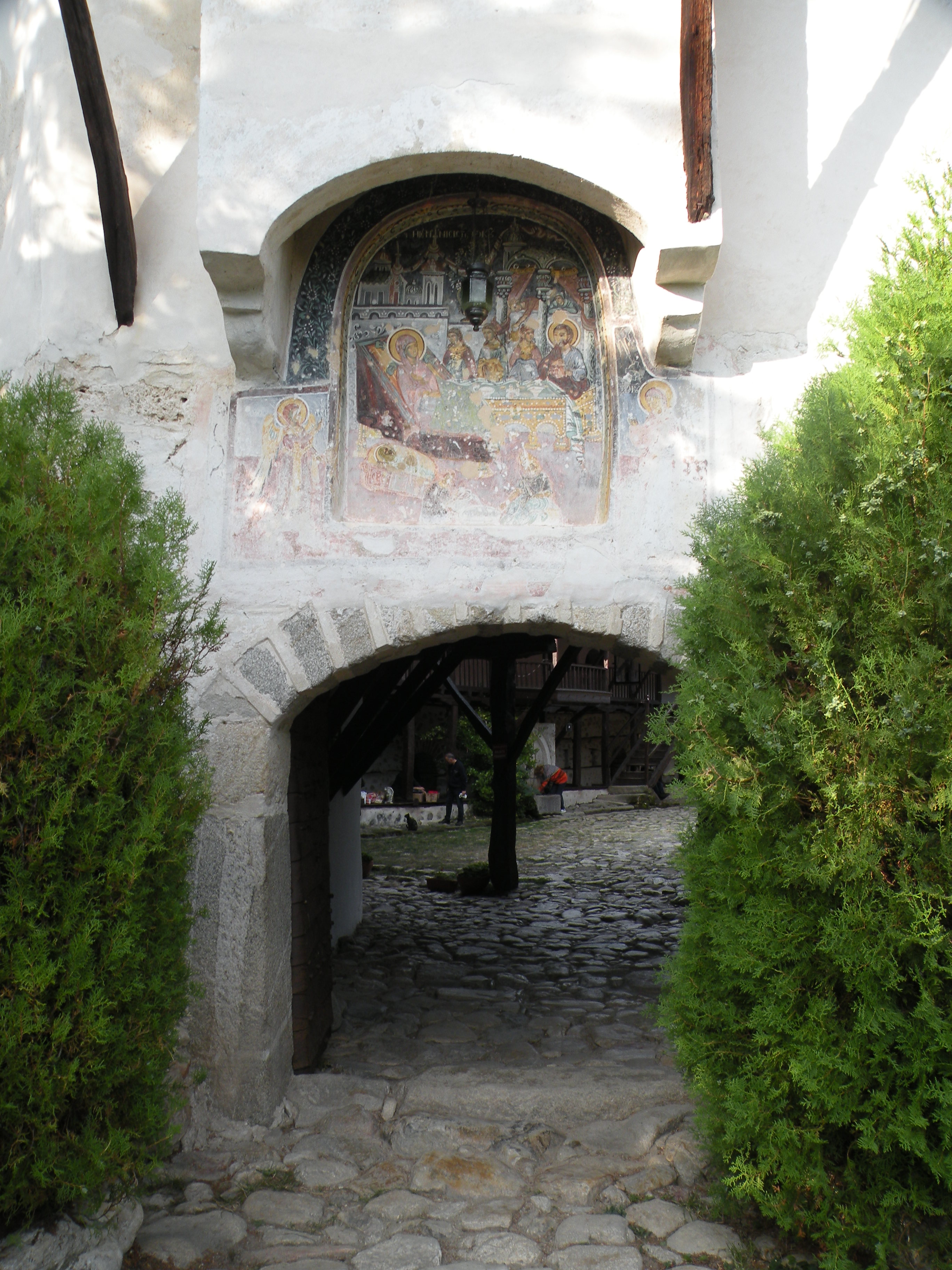
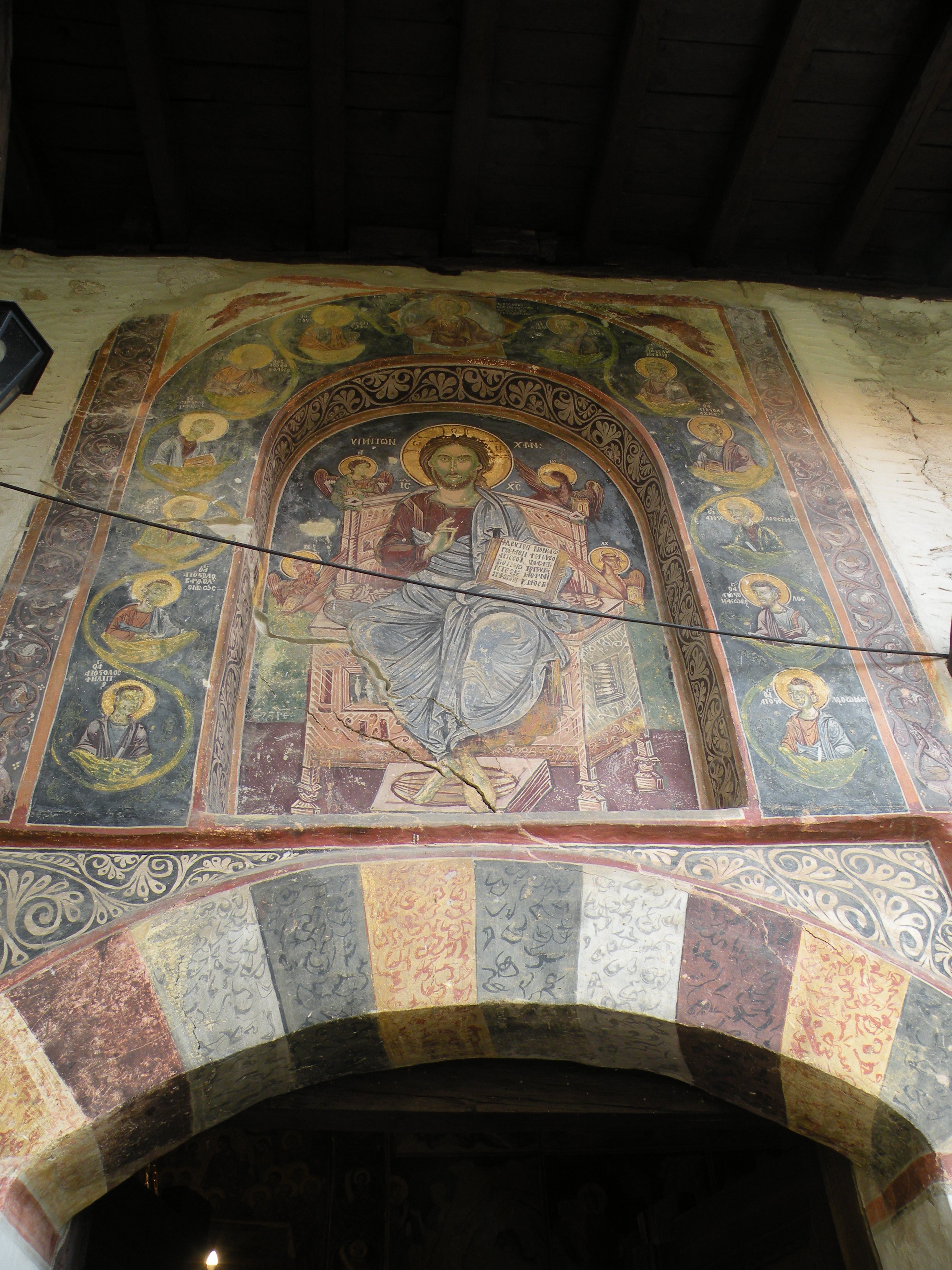
Fragments of the decoration of the main monastery church naos and the narthex date from the third quarter of the 16th century. It is in the spirit of Athos art. The frescoes in the lunettes (the niches) date from 1597. They are above the two entrance gates of the temple and depict Christ sitting on a throne, surrounded by the apostles (above the western door) and Holly Virgin with the Child, surrounded by prophets, foretelling her life (above the south door).
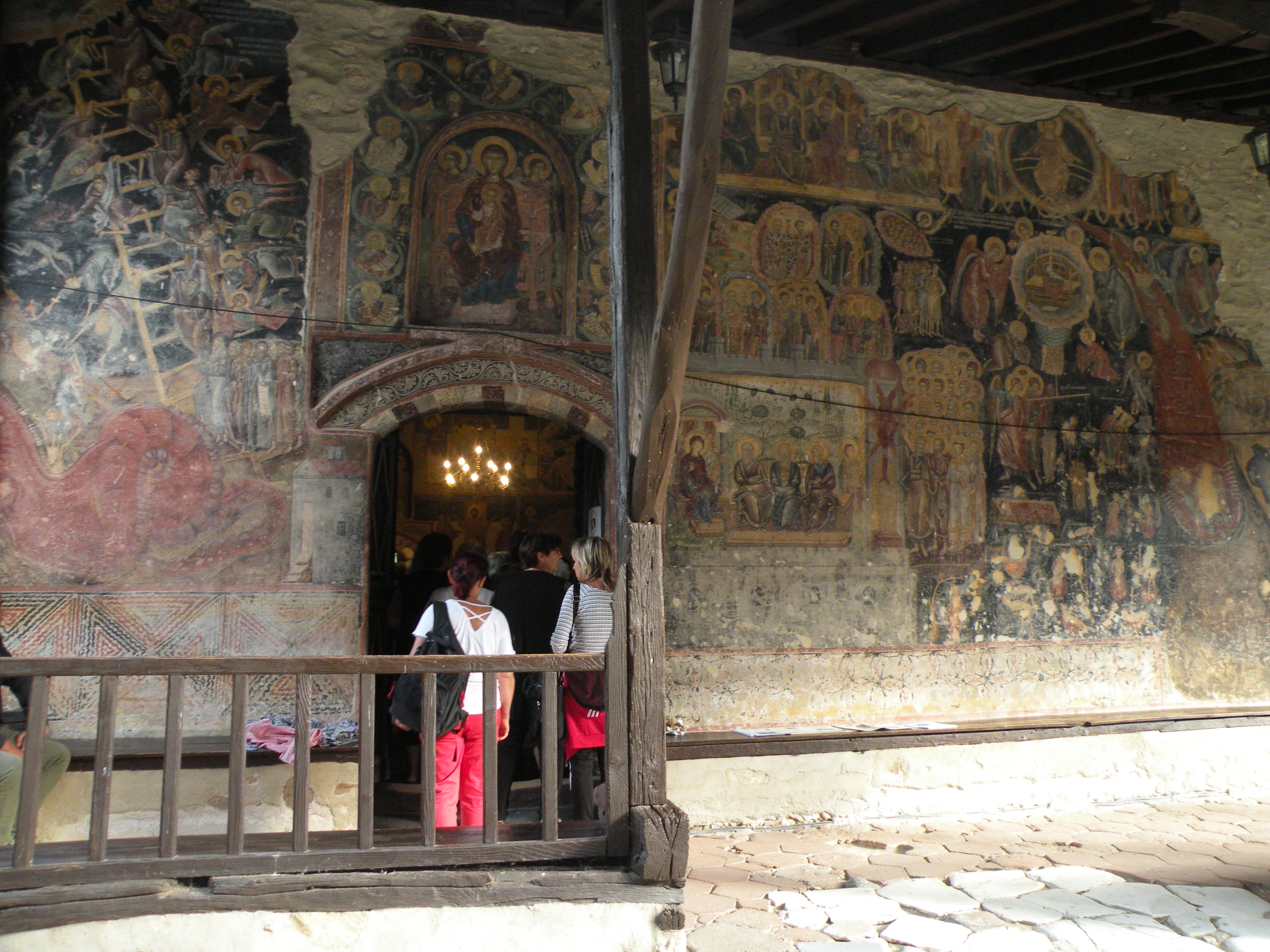
Two remarkable for the facade decoration compositions – “The Judgment Day” and “The ladder of St. John Climacus with the Christian virtues” are painted on the external southern wall of the covered church gallery in 1611.
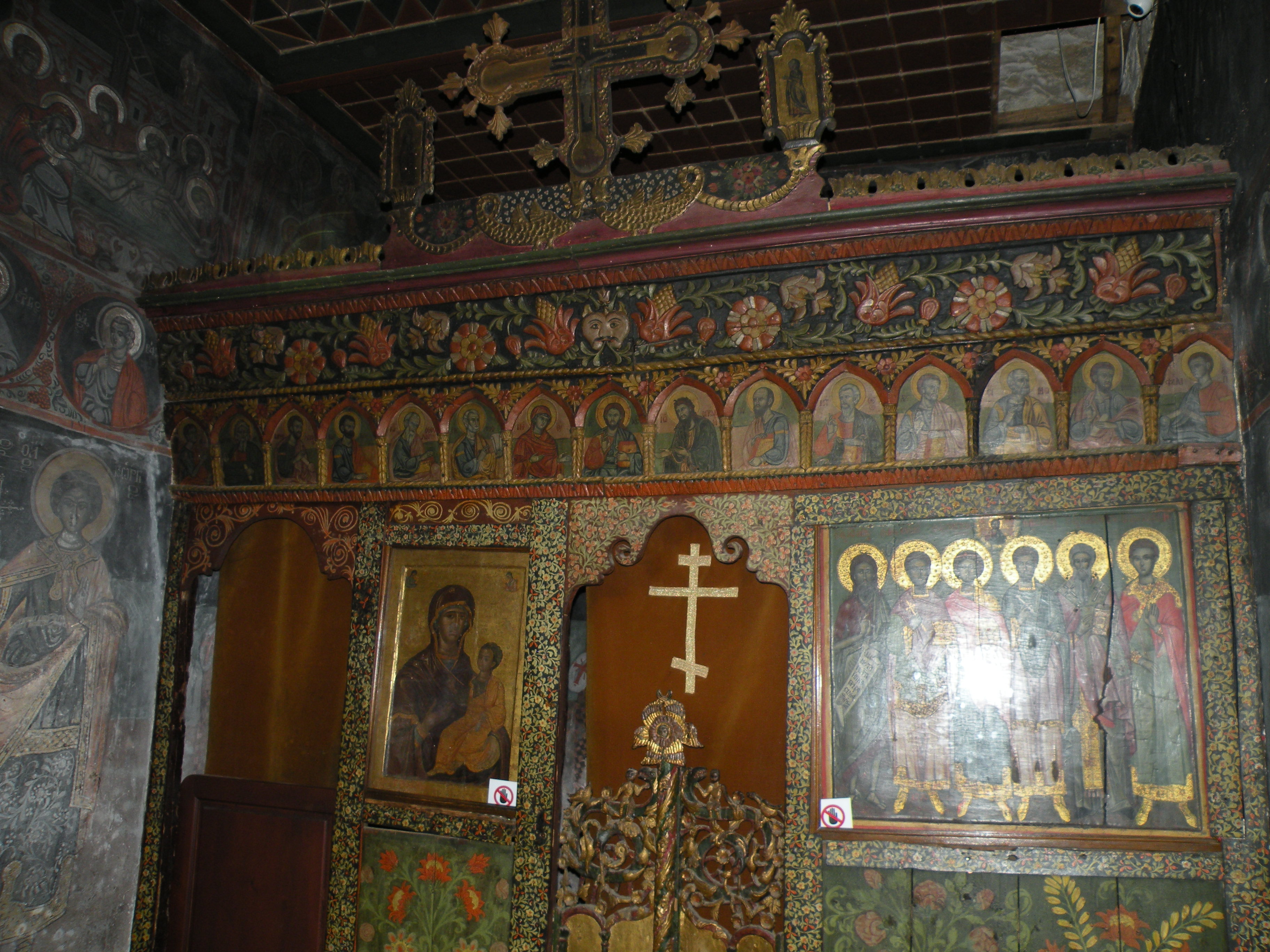
Between 1662 and 1674 after a big fire in the Katholicon (the main temple) half- century repairs, extensions and new decorations of the temple began. They ended with its complete repainting in the period 1727-1732 by the icon-painters Teohari and Nicola who left their signature on the picture of the Assumption in 1727. After that the brothers Anastasius and Alexei the priest from Ioannina decorated the entire Katholicon with murals. Especially valuable are the only preserved stained glass windows in the Bulgarian lands from 1715 which represent the Garden of Eden.
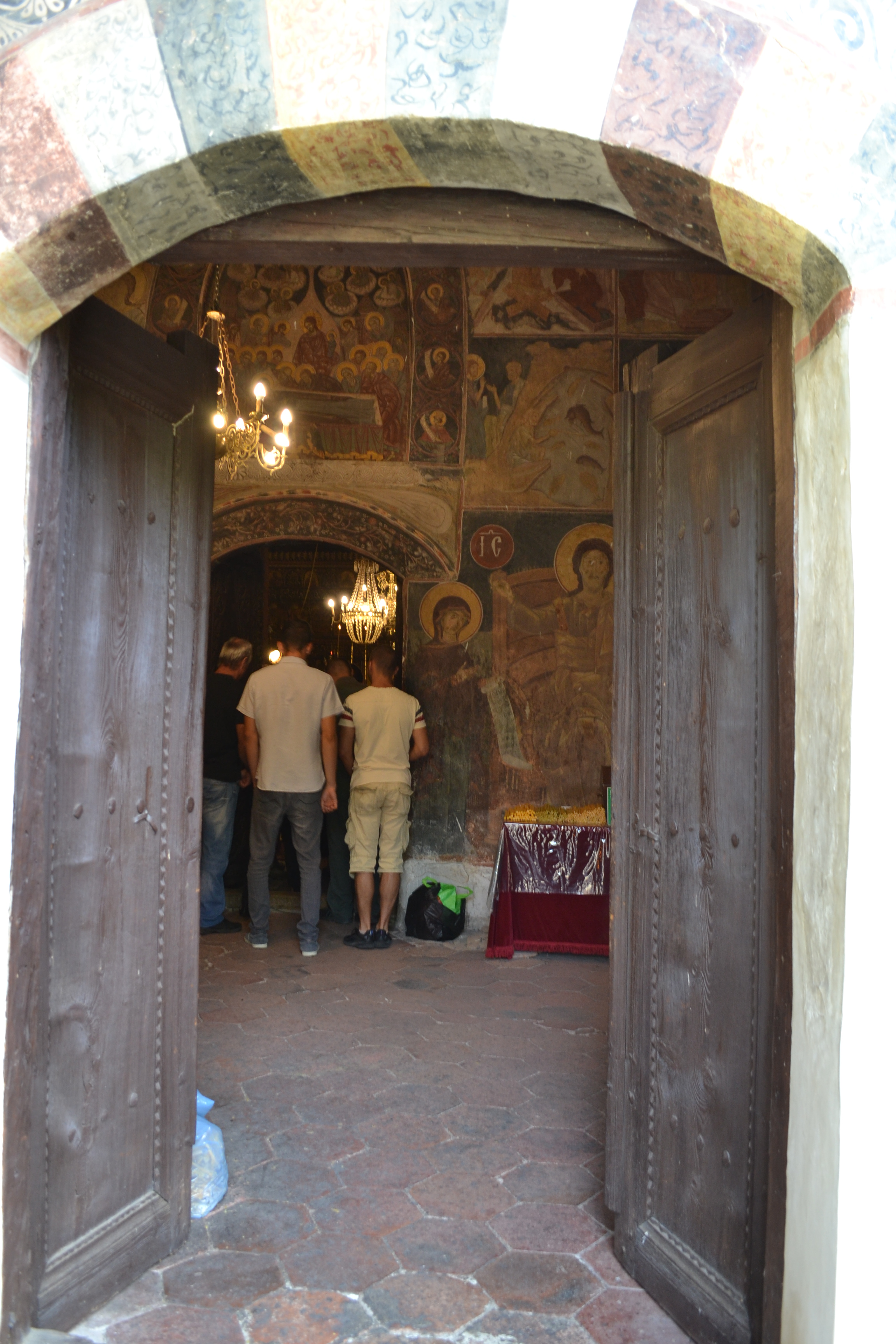
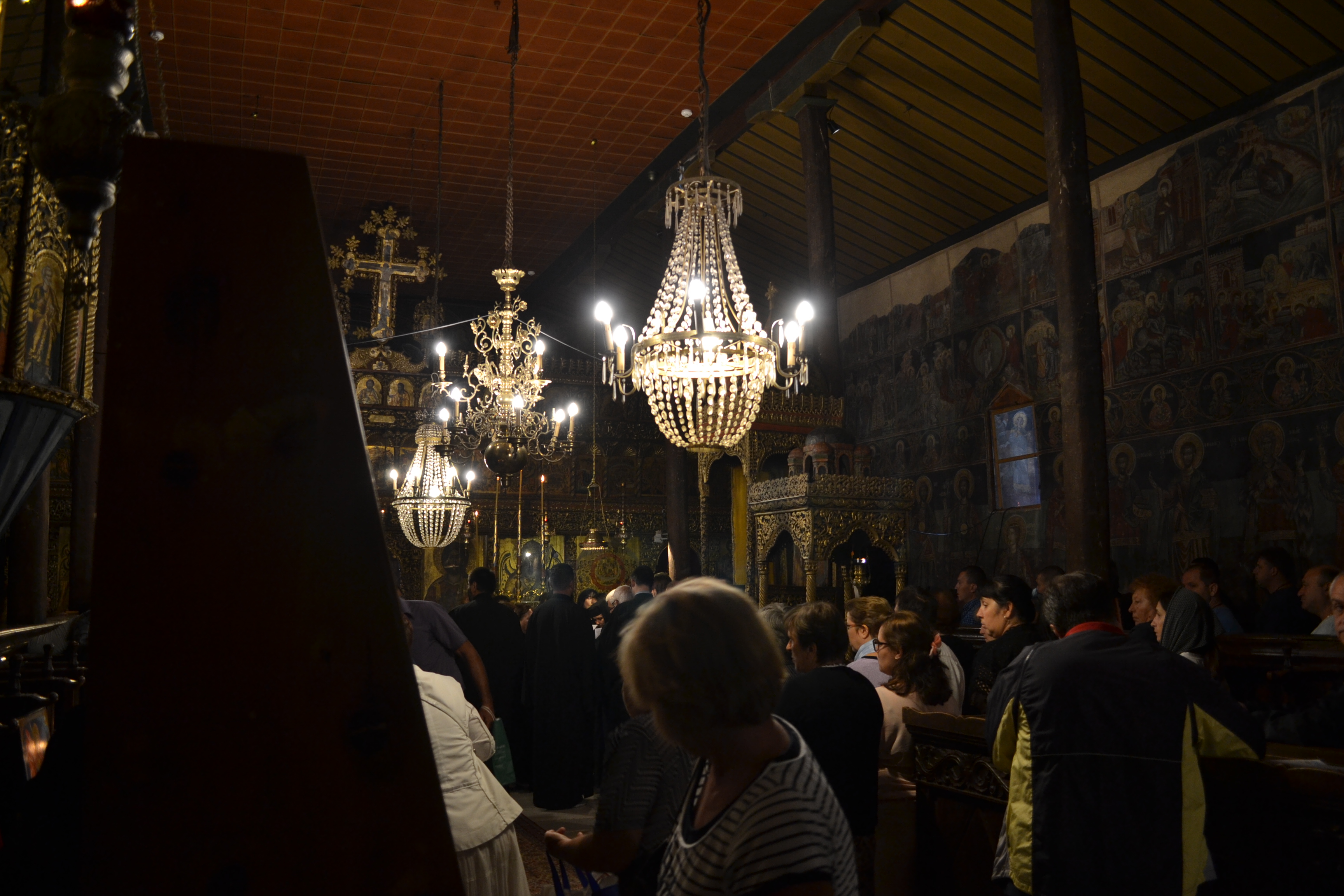
At the end of the 18th century a chapel dedicated to the holy unmercenaries Cosmas and Damian was formed in the south part. It is decorated with a wood-carved iconostasis with many biblical scenes.
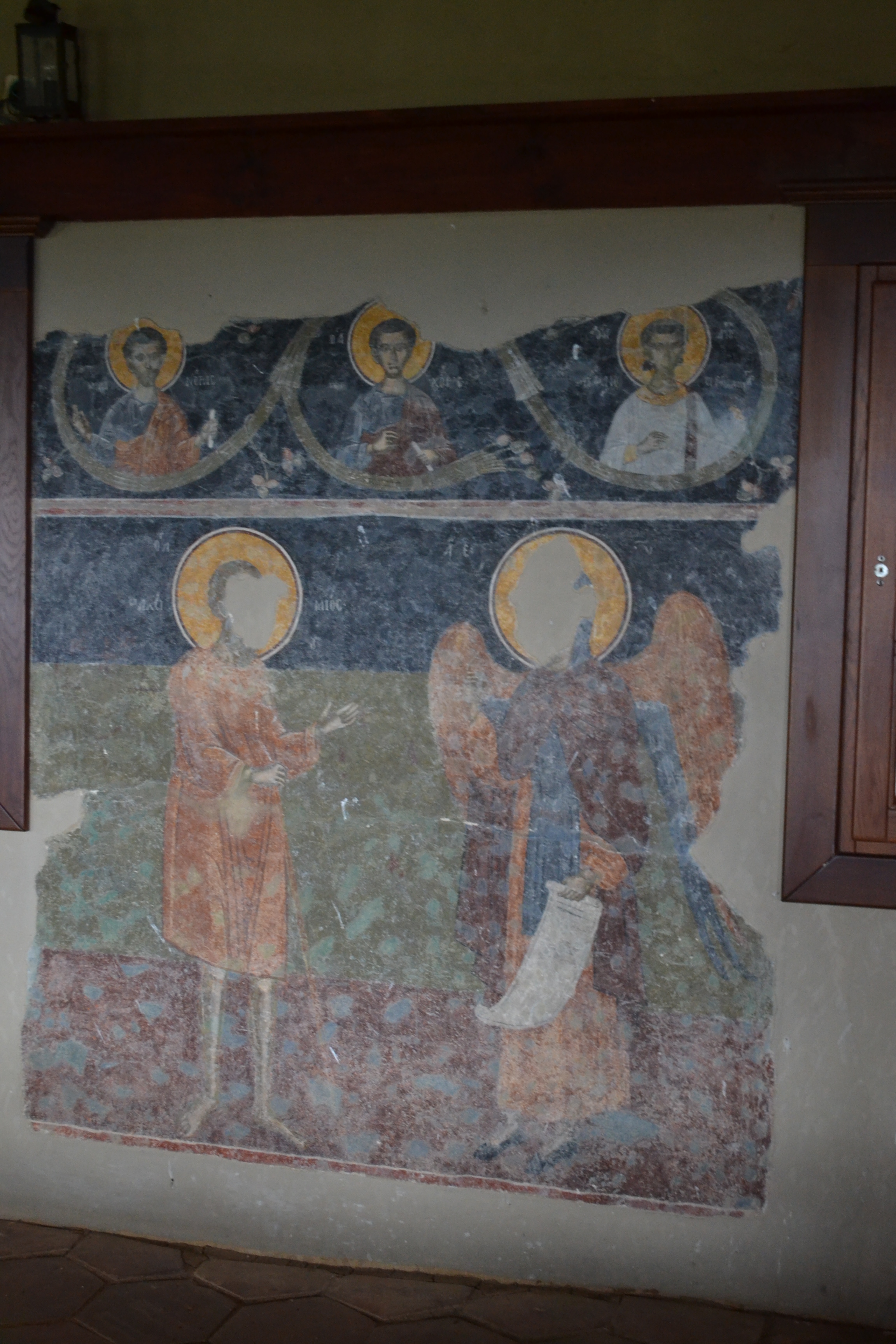
In the southern wing of the holy cloister is the old monastery dining room with partially preserved mural decoration from the 16th century. Among them is the scene in which the angel of God gives St. Pachomius rules for monastic life in the monastery.
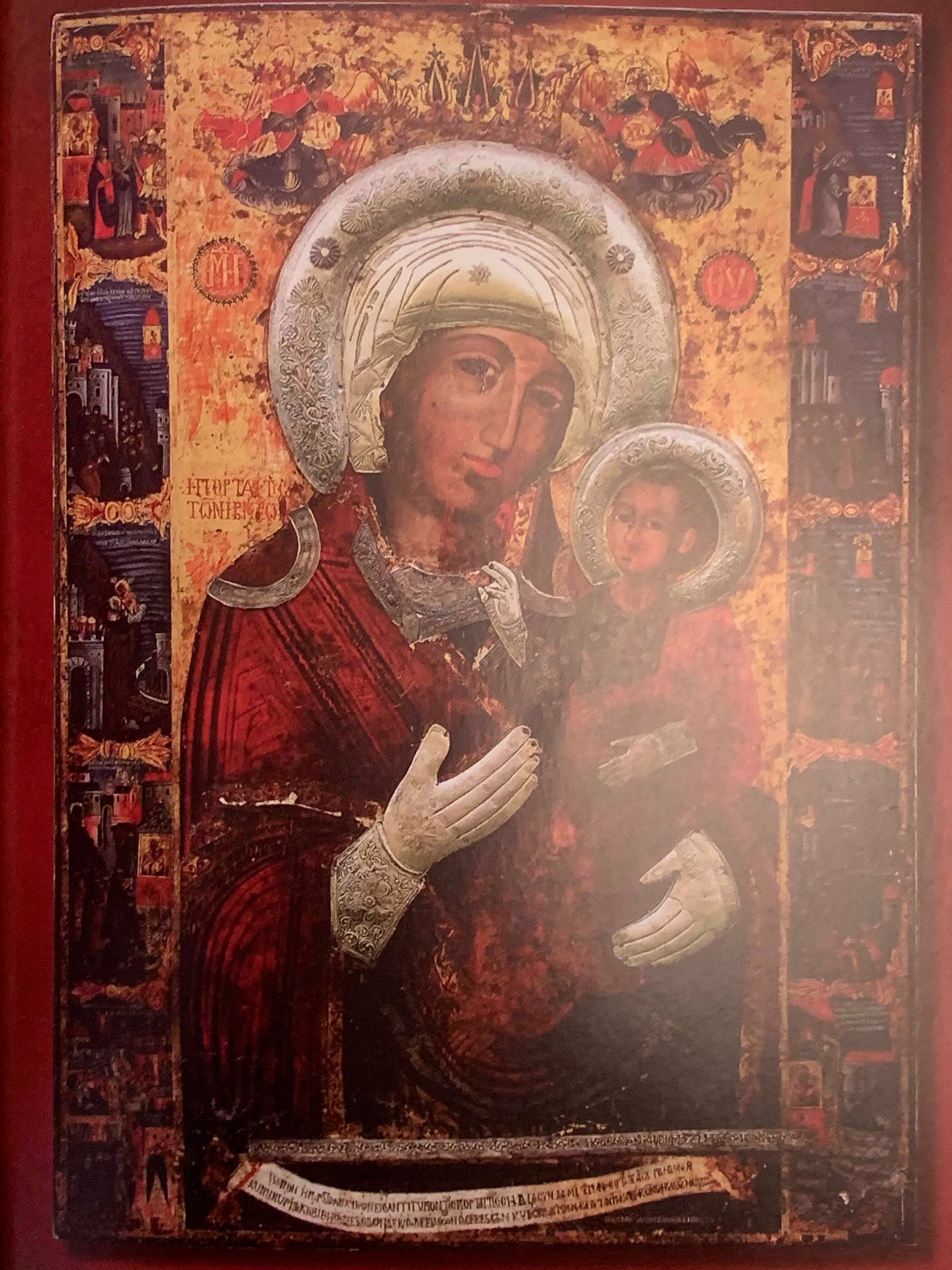
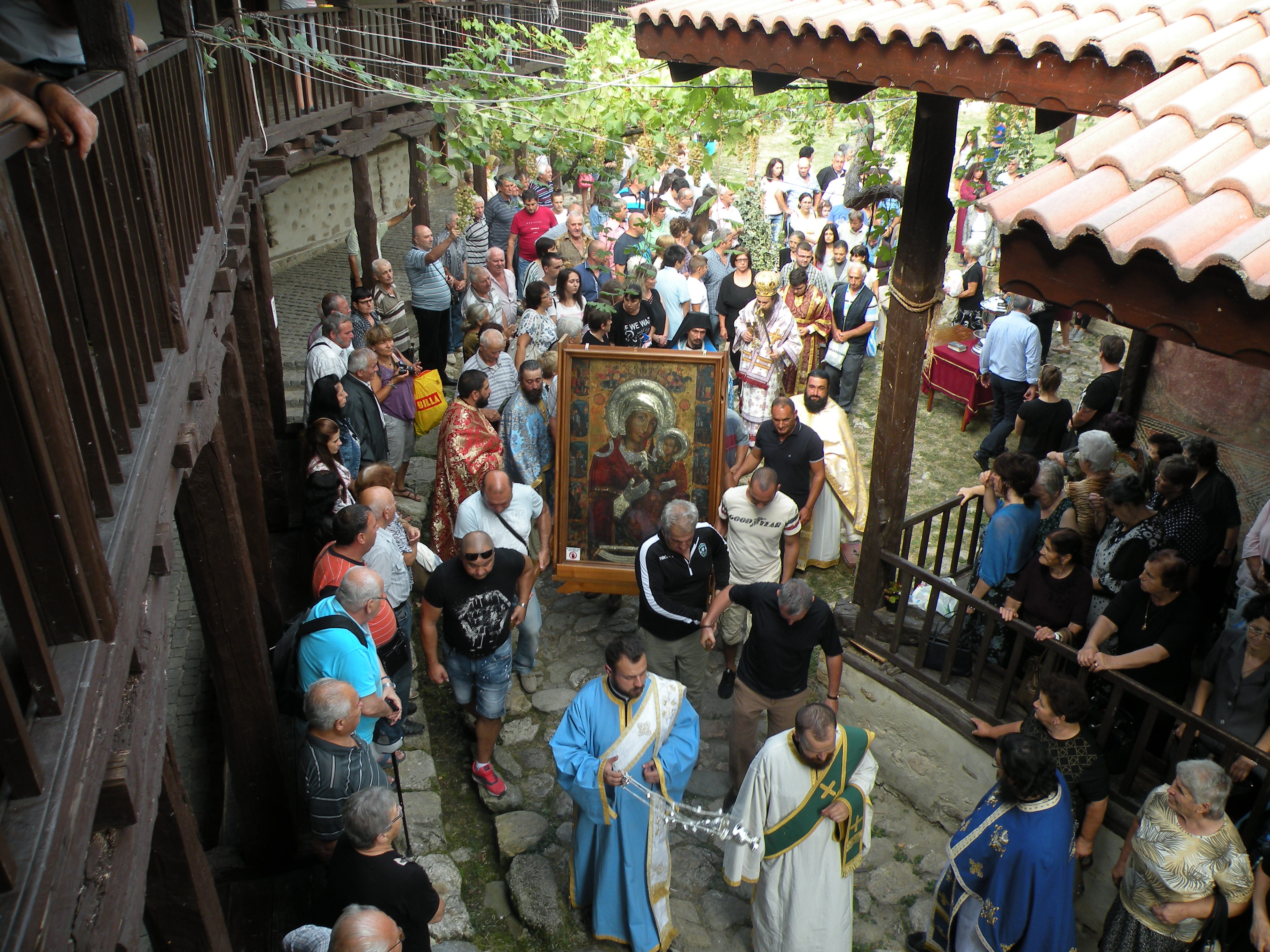
The miraculous icon of St. Virgin Mary is the monastery’s main attraction for thousands of believers and tourists. In 1762 the monastery was converted into a convent of the monastery of Iviron on Mount Athos. Traditionally the Athon holy monastery gives a copy of its miraculous icon. Unlike the original icon, ten scenes with its miracles were added to the copy painted for the Rozhen Monastery.
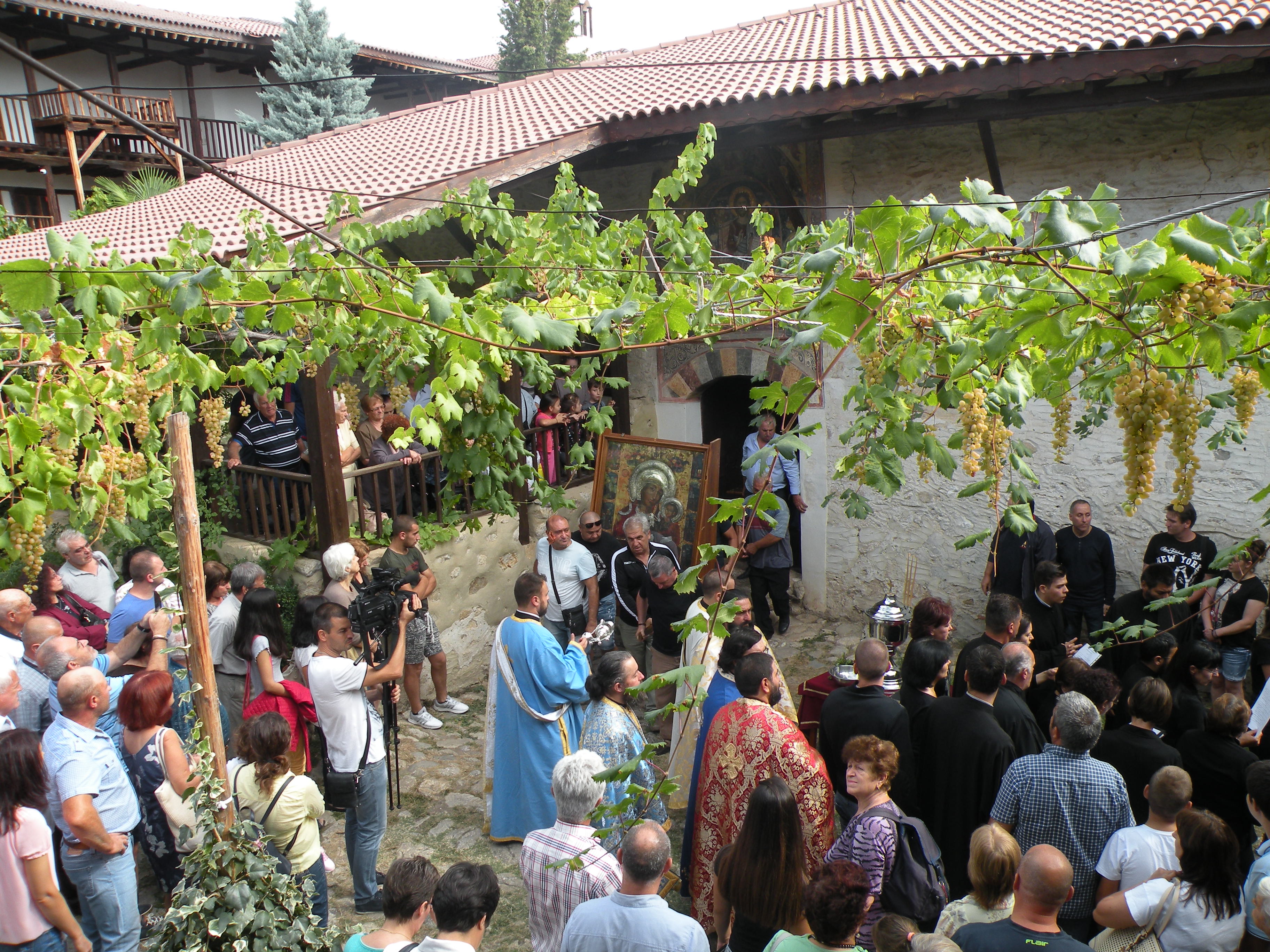
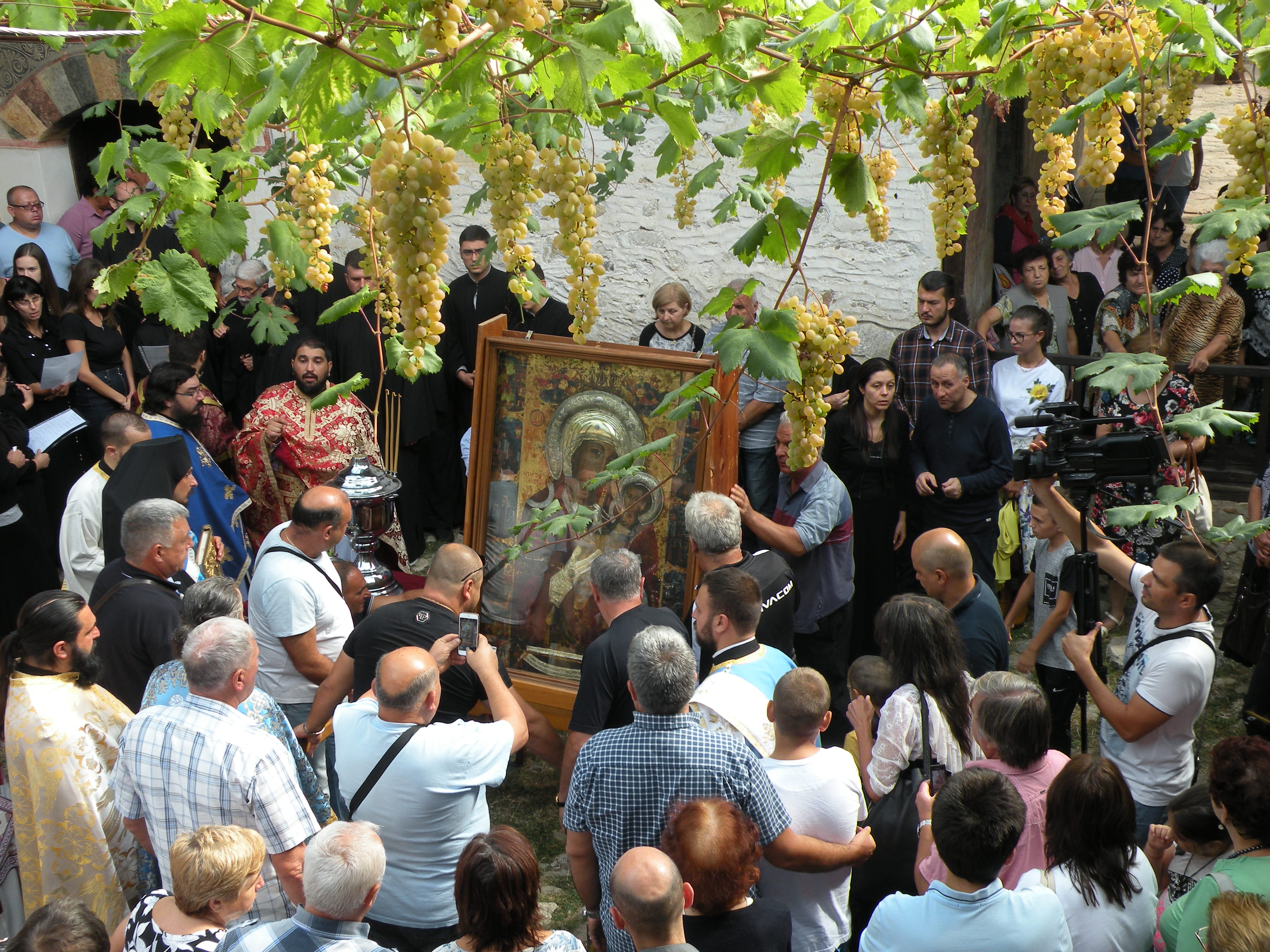
The temple feast of the Rozhen Monastery is the Nativity of St. Virgin Mary (Virgin Mary’s Day) on September 8th. It is visited by the local population and hundreds of pilgrims. After the liturgy a litany procession with the icon goes around the monastery temple and blessing of holy water takes place under the old monastery vine.
Permanent Icon Collection of Bansko Art School
Many of the icons and other church plates of Bansko
Art School are kept in the town of Bansko. We take the road to Bansko on the
way from the town of Sandanski to the town of Blagoevgrad near Simitli. The
icon collection is located near the St. Trinity church. The earliest Toma
Vishanov‘s icons are here. They are from St. George church in Razlog, The
Assembly of Archangels church in the village of Dobrinishte, St. Trinity church
in Bansko, and the churches in the villages of Osenovo and Gostun in the 90s of
the 18th century. There are icons from St. Archangel Michael church in
Leshko painted by his son – Dimitar Molerov, as well as works from his later
creative periods, painted for the churches in the villages of Gostun, Godlevo,
Ognyanovo, Osenovo, Teshovo. Icons of Toma Vishanov’s grandson – Simeon Molerov
and other representatives of the Bansko Art School are kept here.
For a virtual walk, please
visit the gallery website:
https://opoznai.bg/view/postoianna-ikonna-izlojba-banska-hudojestvena-shkola
Presentation of the Virgin Mary Church in the town of Blagoevgrad
After visiting Bansko, we return on E-79 road and head for the regional town of Blagoevgrad. In religious term, the Metropolitan Church Presentation of the Virgin Mary is the most precious monument in it. The church is located in the central quarter of Varosha.
The temple was built on the site of an older cult building by the masters Donne and Hristo from the village of Stoymirovo, Malashevsko. You can judge by the commemorative sign above the front door that the construction of the church took place from 1840 to 1844.
Architecturally the church is a three-nave basilica with naos and narthex. In 1882 an open narthex was built on the north side of the temple. The interior of the temple is divided by two rows of six wooden columns.
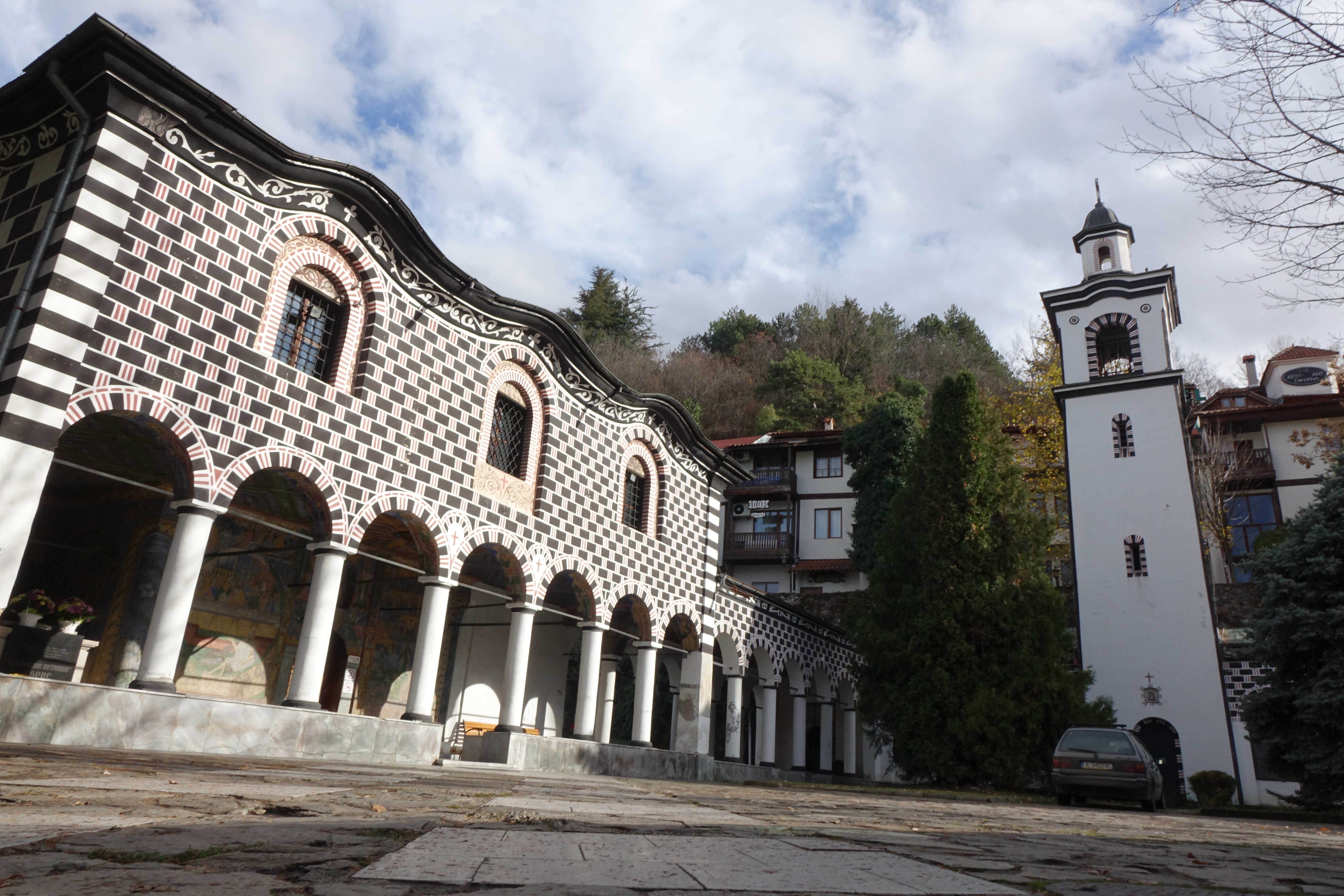
As we enter the courtyard of the church and look at the building, we can see some very impressive frescoes. The scene Presentation of the Virgin Mary is in the patronal niche.
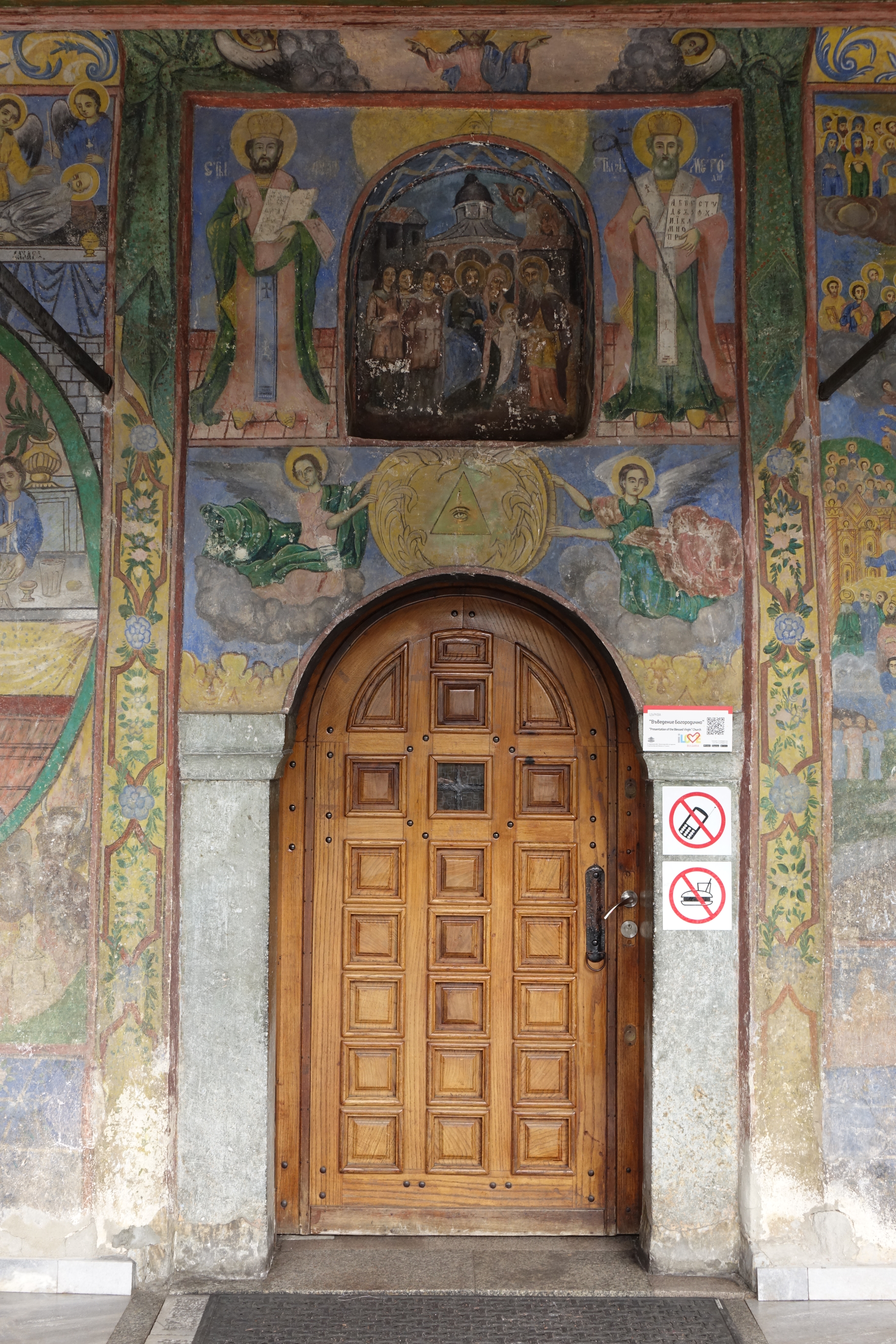
In the open arcade some moral-didactic scenes are located. Among them are the “The Judgment Day”, “The Wheel of Life”, the images of the Slavic enlighteners the holy brothers Cyril and Methodius. They were frescoed in 1882 and 1888 by some of the last representatives of the Bansko Art School Mihalko Golev, Dimitar Sirleshtov and Kostadin Marunchev.
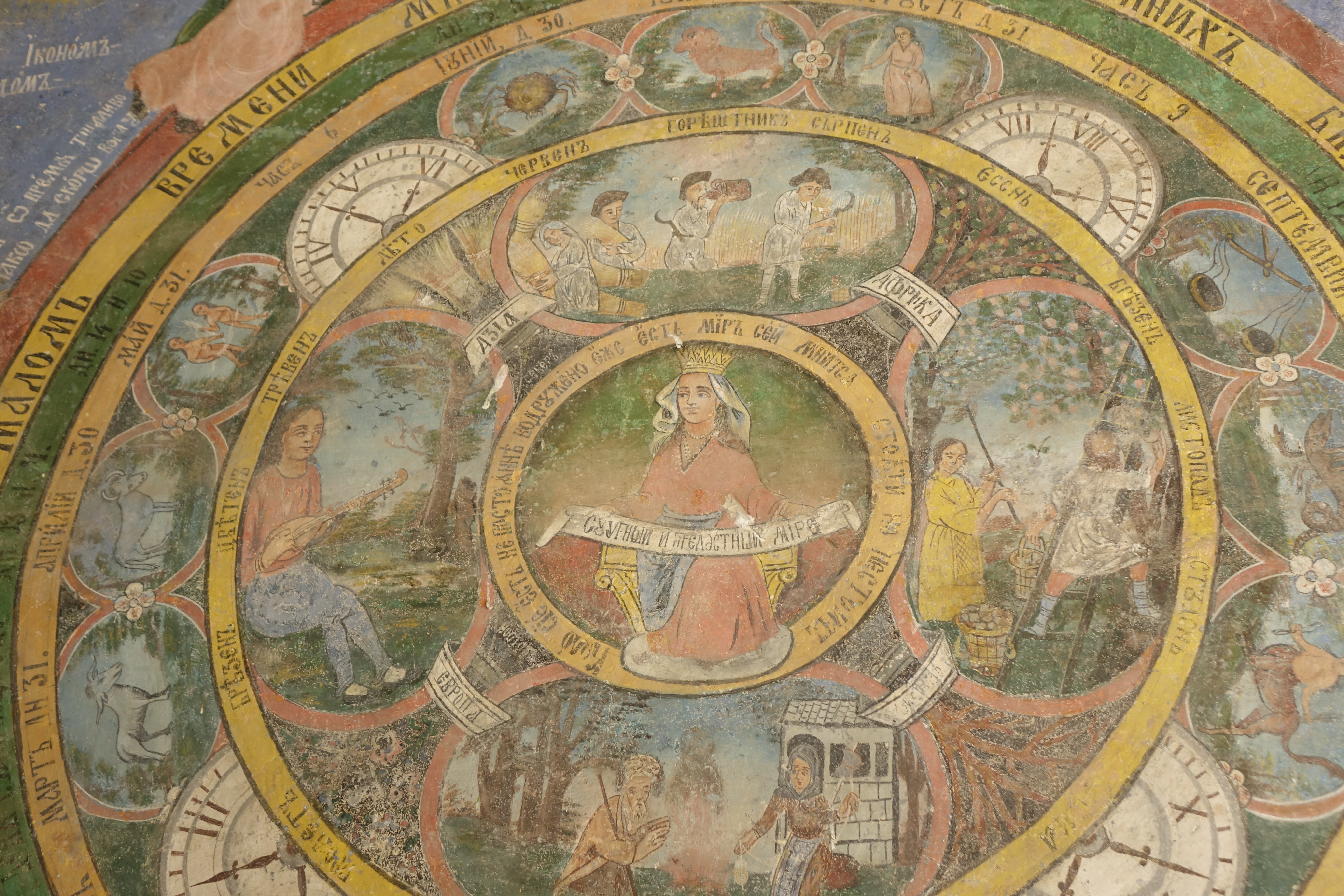
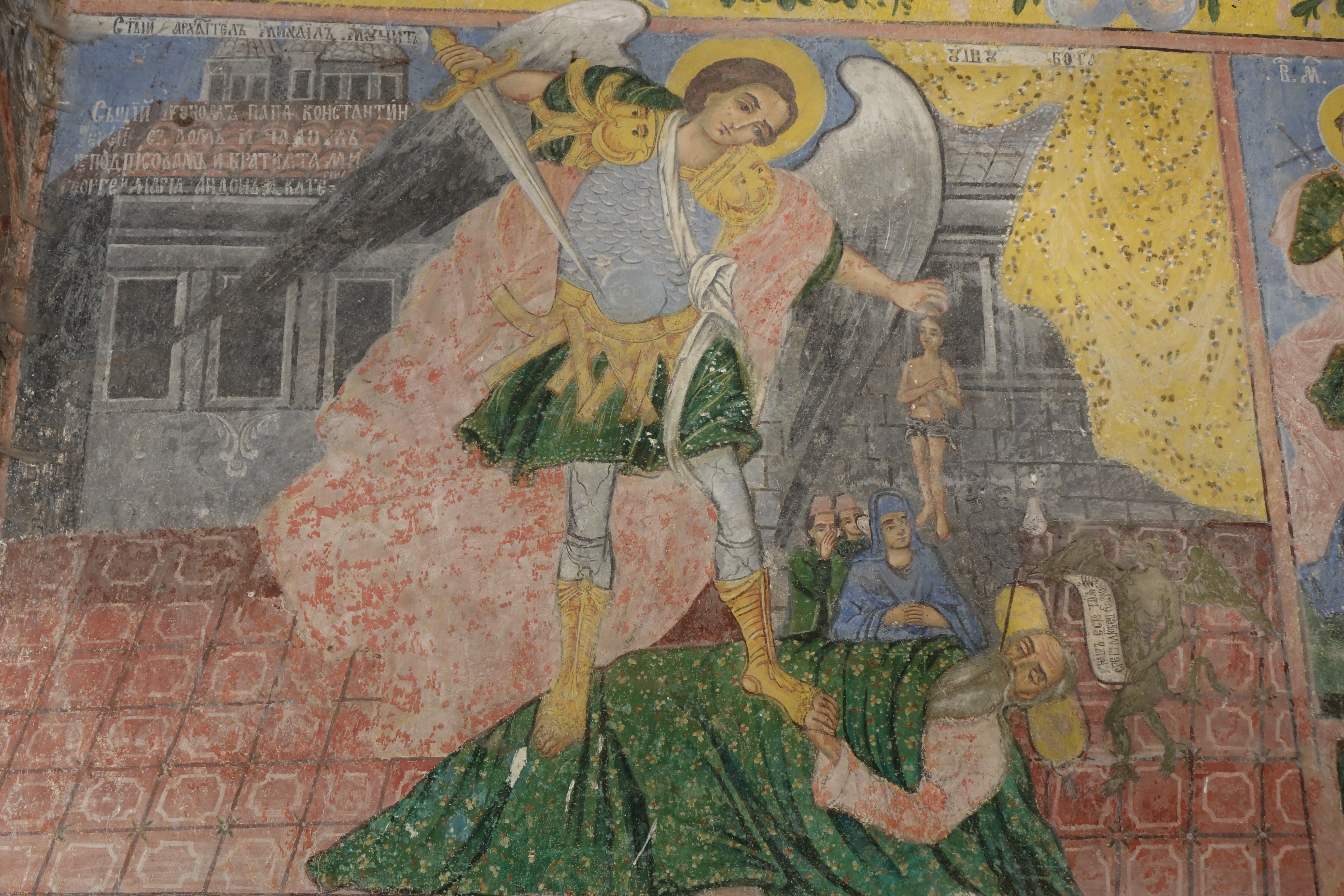
As we enter the church, we see its iconostasis standing before our eyes. It was probably done between 1844 and the early 1850s by the great masters of the Samokov art school Atanas Theladur and Stoycho Fandakov. The northern wing is probably a work of Debar school carvers.
(Picture 86) Presentation of the Virgin Mary Church in Blagoevgrad – interior. Photographer Krum Ivanov (Picture 87) Presentation of the Virgin Mary Church in Blagoevgrad – part of the iconostasis. Photographer Krum Ivanov
(Picture 88) Presentation of the Virgin Mary Church in Blagoevgrad – alter doors. Photographer Krum Ivanov
(Picture 89) Presentation of the Virgin Mary Church in Blagoevgrad – the pulpit. Photographer Krum Ivanov
(Picture 90) Presentation of the Virgin Mary Church in Blagoevgrad – part of the bishop’s throne. Photographer Krum Ivanov
The mandorlas on the altar doors are painted by Dimitar Molerov, and on the lowest row with “The Six-day” by Mihalko Golev.
(Picture 91) Presentation of the Virgin Mary Church in Blagoevgrad – “The Six-day”. Photographer Krum Ivanov (Picture 92) Presentation of the Virgin Mary Church in Blagoevgrad – icon panels with „The Eviction from paradise“. Photographer Krum Ivanov
More than 80 icons, painted mainly during the period 1854-1856, are preserved in the temple, most of which are located on the iconostasis and are made by representatives of Samokov and Bansko Art Schools. Several icons by the founder of the Samokov Art School Hristo Dimitrov from 1812 are also preserved here.
(Picture 93) Presentation of the Virgin Mary Church in Blagoevgrad – an icon of Virgin Mary with the child Jesus. Photographer Krum Ivanov (Picture 94) Presentation of the Virgin Mary Church in Blagoevgrad – an icon of St. Ivan Rilski (St. John of Rila). Photographer Krum Ivanov
The church of St. Dimitar in the village of Padesh
If we have more time, we can walk around the city to enjoy the small parish temples in the region. One of the suggested directions is to the villages of Padesh and Leshko. The village of Padesh is located 15 km southwest of Blagoevgrad. The church of St. Dimitar was built in 1898 and is located 3 km east of Padesh. It is a three-nave pseudo-basilica which was partially reconstructed in the early twentieth century.
(Picture 95) The church of St. Dimitar in the village of Padesh – a view from the west
(Picture 96) The church of St. Dimitar in the village of Padesh – the patronal icon above the entrance
The iconostasis with the icons painted by Dimitar Sirleshtov and Konstantin Marunchev from Bansko is a very interesting part of the interior.
(Picture 97) The church of St. Dimitar in the village of Padesh – interior
(Picture 98) The church of St. Dimitar in the village of Padesh – the icon of St. Nicholas
The church of St. Archangel Michael in Leshko
The village of Leshko is 4 km away from its neighboring village of Padesh and 19 km southwest of Blagoevgrad. In 1802 with the help of the Rila Monastery a monastery school was opened in the village. The church of St. Archangel Michael was built in 1816 with a main donor Stoyan.
(Picture 99)The church of St. Archangel Michael in Leshko – outside view
The church and the school building form the main cultural ensemble in the settlement, which is one of the oldest in the southwestern Bulgarian lands.
(Picture 100) The church of St. Archangel Michael in Leshko – the church and the school
The church of St. Archangel Michael is a one-nave and one-apse building with an open gallery on the south side. It is situated on a slope, and because of that it is embedded on one side.
In 1889 the interior of the church was completely frescoed by the late representatives of Bansko Art School Mihalko Golev and Dimitar Sirleshtov.
(Picture 101) The church of St. Archangel Michael in Leshko – frescos with the temple interior
A large part of the interior of the temple is covered with frescoes. When visiting the temple, you will enjoy the Bansko icon-painters’ imagination in depicting the biblical stories.
(Picture 102) The church of St. Archangel Michael in Leshko – The Crucifixion scene
Outside on the southern wall of the open narthex, there are scenes with moral-didactic content which are one of the most commented by the representatives of the art sciences. They are: “The sorceress, who milks the Devil instead of the Moon” as well as her punishment – two devils pulling out her tongue with pliers; a scene from the Apocalypse – the seven-headed beast and the harlot; “The righteous and sinful confessions”, as well as stories of “Mortal sins” and their punishments. One of the highly influential images of Death is here and it should never be missed.
(Picture 103) The church of St. Archangel Michael in Leshko – scenes with moral-didactic content
(Picture 104) The church of St. Archangel Michael in Leshko – “The sorceress is milking the Devil”
(Picture 105) The church of St. Archangel Michael in Leshko – St. Marina is beating the Devil
(Picture 106) The church of St. Archangel Michael in Leshko – women who are putting on lipstick, the Devil is holding the mirror
(Picture 107) The church of St. Archangel Michael in Leshko – the image of the Death from the Apocalypse
The iconostasis is typical for this period of time – painted mostly with geometric and plant ornaments.
(Picture 108) The church of St. Archangel Michael in Leshko – interior
(Picture 109) The church of St. Archangel Michael in Leshko – the cross of the iconostasis with the Crucifixion
(Picture 110) The church of St. Archangel Michael in Leshko – alter doors
The icons in the temple are royal and apostolic. The royal row of icons is made by the second representative of Bansko Art School – Dimitar Molerov who signed the icon of the Assembly of Archangels and wrote the year of 1861. The icons are remarkable for their exceptional mastery.
(Picture 111) The church of St. Archangel Michael in Leshko – the icon of the Assembly of Archangels
(Picture. 112) The church of St. Archangel Michael in Leshko – the icon of Virgin Mary with the child Jesus (Picture 113) The church of St. Archangel Michael in Leshko – the icon of St.John the Forerunner
The rest of the icons are executed by another icon-painter and they are characterized by a much sparser outlining of the icon imagery and a cooler coloring.
The church of St. John the Forerunner in the village of Bistritsa
Another interesting temple is the church of St. John the Forerunner in the village of Bistritsa. The village is located 10 km northeast of Blagoevgrad. The church of St. John the Forerunner was built in 1872 in the Dubova neighborhood.
(Picture 114) The church of St. John the Forerunner in the village of Bistritsa – a panoramic photo
(Picture 115) The church of St. John the Forerunner in the village of Bistritsa – a view from the west
The temple was built after the dream of grandma Dacha (Daffina), which she received when she was a little girl. The Prophetess is the main organizer of the construction, and as a courtesy her donor portrait is painted outside on the western wall, and the parishioners honor her having her grave east of the temple apse.
(Picture 116) The church of St. John the Forerunner in the village of Bistritsa – a donor portrait of grandma Dacha (Daffina)
((
(Picture 117) The church of St. John the Forerunner in the village of Bistritsa – grandma Dacha’s grave
In 1875 the painted iconostasis was made, the bottom space is filled with the typical for the time colored bouquets and individual flowers.
(Picture 118) The church of St. John the Forerunner in the village of Bistritsa – interior
(Picture 119) The church of St. John the Forerunner in the village of Bistritsa – alter doors and part of the royal icons
Today, a great number of the church icons have been replaced with more modern ones. Parts of the old icons are in the proskinarium.
(Picture 120) The church of St. John the Forerunner in the village of Bistritsa – the icon of St. John the Forerunner
(Picture 121) The church of St. John the Forerunner in the village of Bistritsa – the icon of the Annunciation
(Picture 122) The church of St. John the Forerunner in the village of Bistritsa – “St. Archangel Michael takes the soul of the rich man” icon
(Picture 123) The church of St. John the Forerunner in the village of Bistritsa –“Beheading of St. John the Forerunner“ icon
In 1882-1883 the representatives of Bansko Art School Mihalko Yovanov and Dimitar Sirleshtov painted the interior of the temple. Along with the canonical scenes, artists paint scenes which became popular in the nineteenth-century such as The Wheel of life, parts of the Apocalypse, The death of the righteous man and the death of the sinner, etc.
(Picture. 124) The church of St. John the Forerunner in the village of Bistritsa – frescoes in domed spaces
(Picture 125) The church of St. John the Forerunner in the village of Bistritsa – The Wheel of Life
(Picture 126) The church of St. John the Forerunner in the village of Bistritsa – The Judgement Day
(Picture 127) The church of St. John the Forerunner in the village of Bistritsa – a scene from the Apocalypse
(Picture 128) The church of St. John the Forerunner in the village of Bistritsa – the death of the sinner
In 1889, the same icon-painters decorated the open western gallery of 1889. There are also popular scenes there such as “The righteous confession” and “The sinful confessions”.
(Picture 129) The church of St. John the Forerunner in the village of Bistritsa – frescos in the outside gallery
The church of St. Dimitar in the village of Marulevo
The village of Marulevo is situated near Blagoevgrad in the southwest foothills of Rila Mountain and it is 14 km southeast of Blagoevgrad. The church of St. Dimitar, located in the center of the village, was built in 1860 with the donations and voluntary work of the local population. The church is a three-nave pseudo-basilica with an open gallery from the west and south.
(Picture 130)The church of St. Dimitar in the village of Marulevo– a view from the west
The walls of the church were painted in 1893 by Michalko Golev, a representative of Bansko Art School.
(Picture 131) The church of St. Dimitar in the village of Marulevo– a fresco of Christ the Pantocrator
The mural paintings in the women’s ward were painted in 1895 by another representative of the school – Dimitar Sirleshtov. Many of the compositions typical of these icon-painters from Bansko are presented here, such as Six-Day, Women-Saints, as well as the rare scene St. Archangel Michael binding Satan.
(Picture 132) The church of St. Dimitar in the village of Marulevo– “The Eviction from paradise” scene
(Picture 133) The church of St. Dimitar in the village of Marulevo–“St. Archangel Michael binding Satan” scene
The iconostasis is adorned with beautiful decorative paintings and carvings on the royal doors and the cross. It was made in 1893, probably by the same masters. Of great importance for its making is the financial help of rich laymen from the neighboring village of Hursovo.
(Picture 134) The church of St. Dimitar in the village of Marulevo– interior
The iconostasis icons were painted in 1894 and have artistic merits.
(Picture 135) The church of St. Dimitar in the village of Marulevo– the icon of the Three Saints
The church of St. Elijah in the village of Selishte
Going west to the nearby border with the Republic of Northern Macedonia, we can visit three churches in the villages of Selishte, Drenkovo and Logodash.
The village of Selishte is located 9 km west of Blagoevgrad. The church of St. Elijah was built here in 1862-1864. It is a spacious three-nave pseudo-basilica with a gallery and an overarched middle nave supported by 4 columns.
(Picture 136)The Church of St. Elijah in the village of Selishte – view from the west
According to the donor’s inscription, the temple was painted entirely in 1889. The icon-painter has not left his name but the decorative program of the temple and the style of the frescoes are associated with the icon-painting team of Michalko Golev and Dimitar Sirleshtov. The iconographic program includes traditional scenes. The Judgment Day composition is located inside the naos on the southern wall which is specific of the church painting of the Pirin region.
(Picture 137) The Church of St. Elijah in the village of Selishte – the Judgment Day composition
The theme is continued (behind the southern entrance) by an illustration of a chapter of Revelation of Saint John the Theologian and 16 scenes of the torture of sinners in Hell.
(Picture 138) The Church of St. Elijah in the village of Selishte – torture of sinners in Hell
On the railing of the gallery are composed three Virgin Mary themes: Nativity, the Entry into the Temple and Assumption. Especially rich is the decoration of the gallery where are depicted scenes from “Six-Day”, the Old Testament compositions “Cain’s Victims and and Abel” and “Cain Kills Abel”.
The iconostasis is painted, and is with wood-carved altar doors.
(Picture 139) The Church of St. Elijah in the village of Selishte – interior
(Picture 140) The Church of St. Elijah in the village of Selishte – alter doors
The iconostasis of the church features icons that are probably executed by the same icon-painter (1890).
(Picture 141) The Church of St. Elijah in the village of Selishte – the icon of Virgin Mary with the child Jesus.
(Picture 142) The Church of St. Elijah in the village of Selishte – the icon of St. Nicholas
The church of St. Dimitar in the village of Drenkovo
To the northwest of the road to the Republic of Northern Macedonia, we turn to the village of Drenkovo. It is located 13 km west of Blagoevgrad.
The church of St. Dimitar was built in 1890 in the Markovska area. Architecturally, it is a large three-nave pseudo basilica. In the interior, the naves are outlined by two rows of wooden pillars, the middle nave being higher.
(Picture 143)The church of St. Dimitar in the village of Drenkovo – a view from the east with the apse
(Picture 144) The church of St. Dimitar in the village of Drenkovo– a commemorative inscription
The ceilings, the mural paintings, the iconostasis, the pulpit, the bishop’s throne, the balcony railing, and the proskynetarion have a real artistic value. The artistic layout was executed in 1893-1896 by Mihalko Golev, a representative of Bansko Art School.
(Picture 145) The church of St. Dimitar in the village of Drenkovo– part of the mural painting decoration
(Picture 146) The church of St. Dimitar in the village of Drenkovo- the painted pulpit
(Picture 147) The church of St. Dimitar in the village of Drenkovo– the painted clock
The iconostasis has richly painted decoration.
(Picture 148) The church of St. Dimitar in the village of Drenkovo– interior
The icon inscriptions of the royal order inform that they were painted in 1892.
(Picture 149) The church of St. Dimitar in the village of Drenkovo– the icon of St. Paraskeva
The church of St. Archangel Michael in the village of Logodazh
Continuing from Selishte to the border with the Republic of Northern Macedonia, we reach the village of Lagodazh. It is located 3 km away from Selishte and 12 km west of Blagoevgrad.
The church of St. Archangel Michael was built in 1860 in one of its neighborhoods. It is a small stone one-nave and one-apse, semi-cylindrical overarched building, with a balcony in the west part and an open gallery on the south and west.
(Picture 150)The church of St. Archangel Michael in the village of Logodazh – a view from northwest
In the period from 1896 to 1898 the interior and the west and south facade were decorated with frescoes by the Bansko painter Mihalko Golev. The picturesque decoration is paid by the Christians in Logodazh and the neighboring village of Klisura.
(Picture 151) The church of St. Archangel Michael in the village of Logodazh – a fresco with the Death
On the western facade is painted the scene “Christ kills the Antichrist” which is rarely seen in the Orthodox iconography.
(Picture 152) The church of St. Archangel Michael in the village of Logodazh – Christ kills the Antichrist
The outer facade is decorated with moral and didactic scenes in the typical for M. Golev exceptional decorativeness. The mural decoration of the church reflects the widespread people’s taste and preferences typical of Late Renaissance decorative art in the Pirin region.
(Picture 153) The church of St. Archangel Michael in the village of Logodazh – didactic scenes
(Picture 154) The church of St. Archangel Michael in the village of Logodazh – the Sinner’s Death scene
Rila Monastery of St. John Rilski
If you have enough time and desire to worship, you can also visit the largest monastery on the Balkan Peninsula – Rila Monastery of St. John Rilski. In this Bulgarian holy place, one of the most significant examples of folk genius in architecture, painting, wood-carving, and applied arts are preserved.
Copyright: © 2019
Author:
Dr. Zhana Pencheva
South-West University “Neofit Rilski”
Translated by:
Dr. Ruska Krasteva
South-West University “Neofit Rilski”
Images:
Dr. Krum Ivanov, Dr. Zhana Pencheva, Prof. Dr. Sc. Vasil Markov
South-West University “Neofit Rilski”
Map data:
 Routes for Cultural Tourism in the Cross-Border Region Bulgaria-Greece